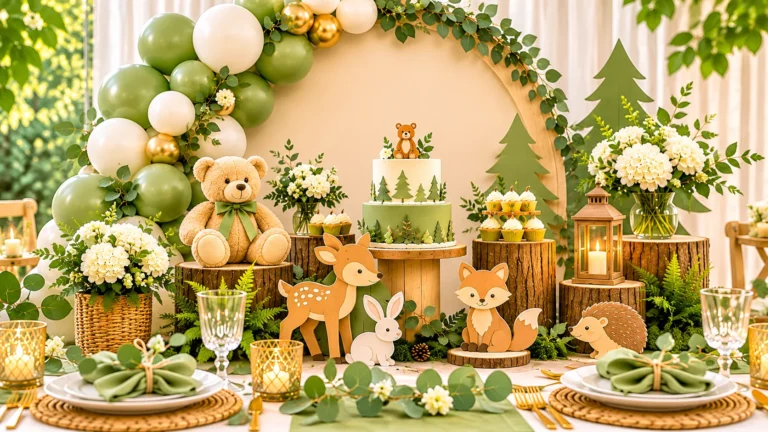
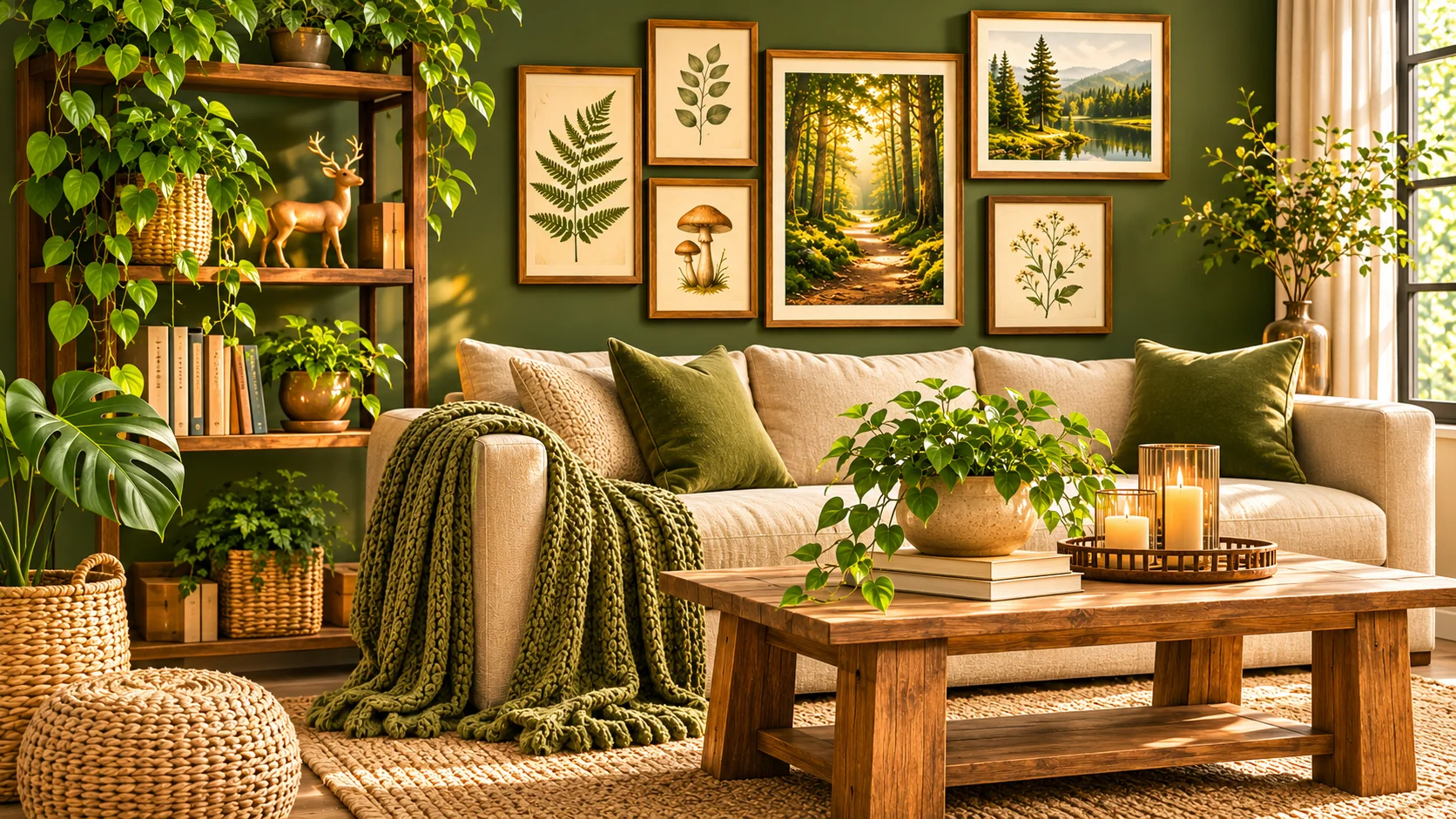
A home should feel like a place where you can slow down, relax, and reconnect with nature. Forest-themed home decor captures that feeling by bringing the colors, textures, materials, and peaceful atmosphere of woodland landscapes into your living space.
Inspired by deep green leaves, moss-covered stones, natural wood, and soft sunlight filtering through trees, this decorating style creates interiors that feel warm, organic, and inviting. You don’t need a cabin in the woods or a complete home makeover to achieve the look. A few thoughtful changes, such as adding forest green accents, introducing natural materials, or decorating with botanical artwork, can make an ordinary room feel closer to nature.
The secret is to create a balanced environment that feels inspired by the forest rather than overly themed. Here are 10 beautiful ways to bring woodland charm into your home while keeping your interiors comfortable, stylish, and practical.
Quick Takeaways
-
Use forest green, moss, olive, and warm brown to create a natural color palette.
-
Introduce wood, rattan, stone, linen, and other organic materials.
-
Decorate with leafy plants, botanical prints, and woodland-inspired artwork.
-
Layer different textures to create the richness of a forest landscape.
-
Use warm lighting and natural-looking decor to create a peaceful atmosphere.
1. Create a Forest-Inspired Color Palette
Color is one of the easiest ways to establish a forest-inspired atmosphere. Think about the shades you would see during a walk through a woodland landscape: deep green leaves, soft moss, rich tree bark, warm soil, muted beige, and delicate touches of sunlight.
These colors work beautifully together because they create a natural sense of balance without feeling overly bright or artificial.
Colors to Consider
Forest green: A rich, deep green that adds depth and creates a cozy, sophisticated atmosphere.
Moss green: A softer, muted shade that works beautifully on walls, upholstery, and decorative accessories.
Olive green: An earthy color that pairs especially well with natural wood and warm neutrals.
Warm brown: Inspired by tree trunks and forest soil, brown adds warmth and grounding.
Cream and beige: These lighter shades prevent darker greens and browns from making a room feel too heavy.
How to Use These Colors
Start with a neutral foundation, such as warm white or beige walls. Introduce forest green through a sofa, accent chair, curtains, or painted feature wall.
Then bring in smaller touches of brown, olive, and cream through cushions, rugs, ceramics, and wooden furniture.
For a more dramatic look, consider painting one wall in a deep forest green. Balance it with lighter furniture and natural textures so the room still feels welcoming.

2. Bring Nature Indoors with Greenery
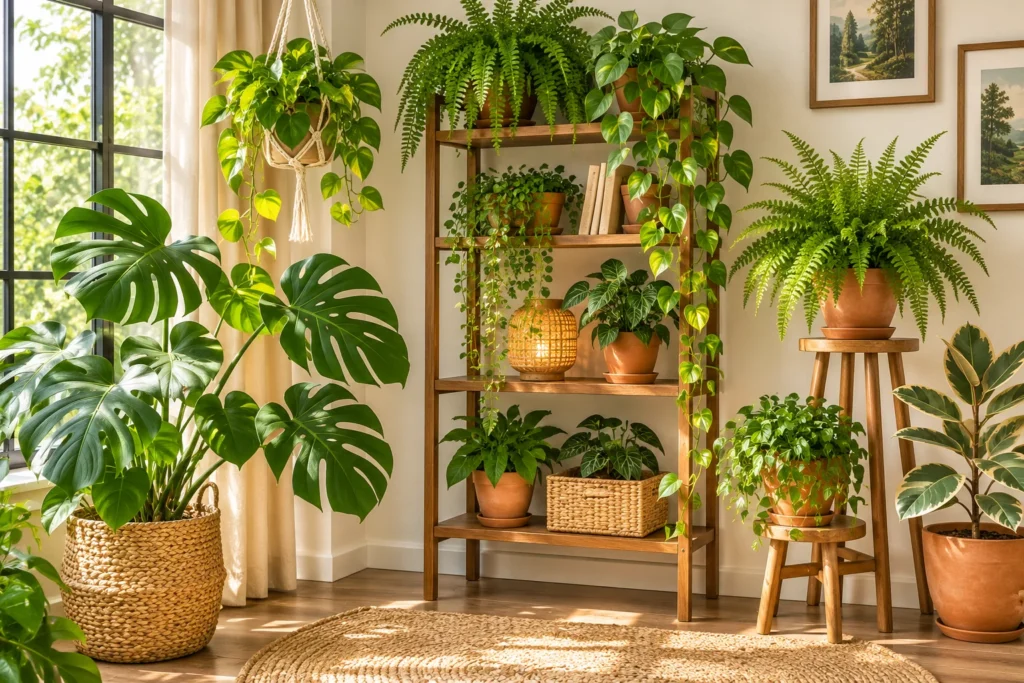
Plants are an essential part of woodland home decor. They introduce natural color, create visual movement, and soften the appearance of furniture and architectural lines.
A combination of different plant sizes and leaf shapes can make a room feel like a small indoor garden.
Choose Plants with Different Shapes
Consider combining:
-
Monstera for large, dramatic leaves.
-
Pothos for trailing greenery on shelves.
-
Snake plants for tall, architectural shapes.
-
Ferns for delicate, woodland-inspired foliage.
-
Rubber plants for bold, glossy leaves.
-
Peace lilies for soft green foliage and occasional flowers.
Choose plants according to the natural light and humidity in your room. Some varieties need bright indirect light, while others tolerate lower-light conditions.
Create a Layered Plant Arrangement
Instead of placing every plant on the floor, vary their heights.
Place a large plant beside the sofa, a medium-sized plant on a wooden stool, and smaller plants on shelves or side tables. Hanging planters can also introduce greenery without taking up valuable floor space.
Use ceramic, terracotta, woven, or natural-fiber planters to complement the woodland aesthetic.
If you have pets, check that your chosen plants are safe for them before bringing them home.
3. Use Natural Wood Furniture and Accents
Wood is one of the most important materials in forest-inspired interior design. It connects the room to nature and introduces warmth that painted or synthetic surfaces sometimes lack.
The beauty of wood is its versatility. Light oak creates an airy, Scandinavian-inspired appearance, while walnut and darker wood finishes add richness and depth.
Furniture That Works Beautifully
Consider adding:
-
A solid wood coffee table.
-
A reclaimed wood console.
-
Wooden floating shelves.
-
A rustic dining table.
-
Natural wood bedside tables.
-
Wooden stools or decorative benches.
You don’t need every piece of furniture to match. Combining different wood tones can create a more relaxed, collected appearance.
The key is to maintain a consistent undertone. For example, warm oak, walnut, and honey-toned wood generally work well together when balanced with complementary textiles and colors.
Budget-Friendly Alternatives
If replacing furniture isn’t practical, introduce wood through smaller details.
A thrifted wooden stool, secondhand side table, wooden picture frames, or DIY floating shelves can make a noticeable difference.
You can also refresh an existing piece with a suitable wood stain or natural-looking finish.
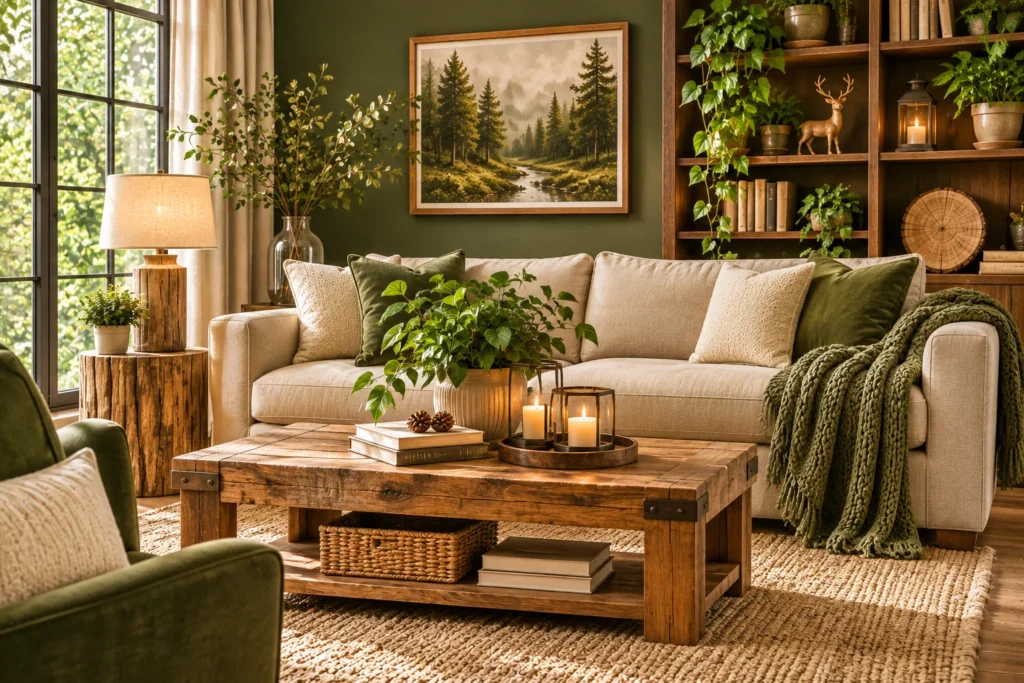
4. Add Woodland-Inspired Wall Art and Botanical Prints
Wall decor is an easy way to introduce forest imagery without changing the entire room.
Botanical illustrations, woodland photography, tree silhouettes, fern prints, and landscape paintings all work beautifully with a nature-inspired decorating scheme.
Choose Artwork That Feels Natural
Look for artwork featuring:
-
Forest landscapes.
-
Fern and leaf illustrations.
-
Tree branches and botanical studies.
-
Misty woodland photography.
-
Mountains and natural scenery.
-
Mushrooms and delicate woodland details.
For a sophisticated look, choose muted artwork rather than overly colorful or cartoon-like forest illustrations.
Black, dark walnut, and natural wood frames can help tie the artwork into the rest of the room.
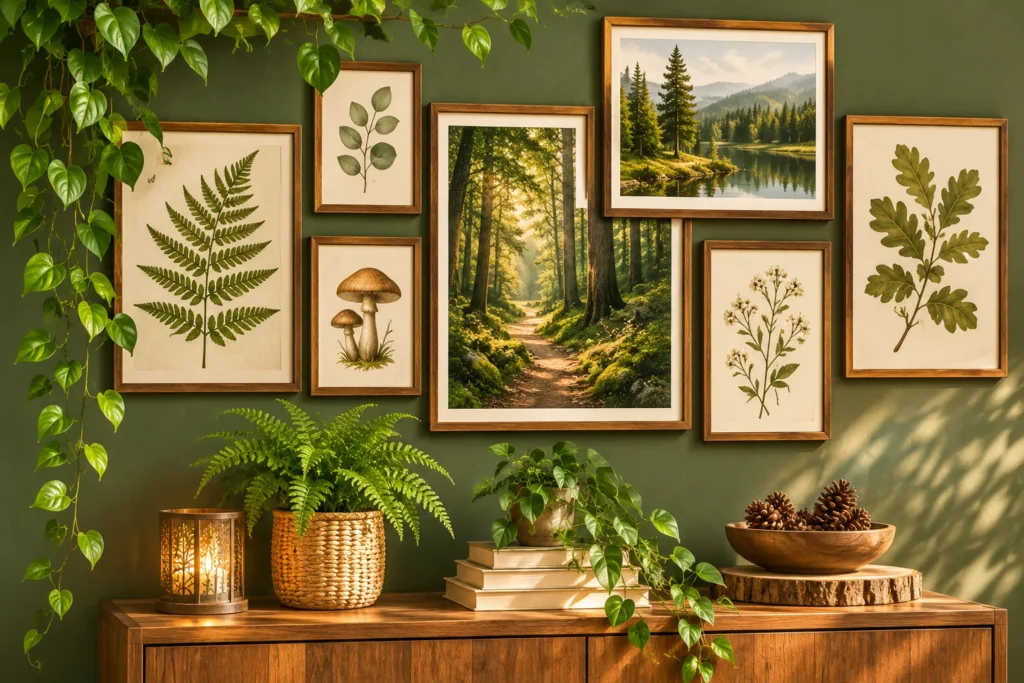
Create a Botanical Gallery Wall
A gallery wall can look especially beautiful above a sofa, console table, or bedroom dresser.
Mix different sizes of artwork while maintaining a consistent color palette. For example, combine two botanical prints with a woodland landscape photograph and a smaller framed fern illustration.
Leave a little breathing room between frames so the arrangement feels intentional rather than crowded.
5. Layer Natural Textures for a Cozy Woodland Feel
A forest is full of contrasting textures: rough tree bark, soft moss, smooth stones, delicate leaves, and fallen branches.
You can recreate this visual richness by combining different materials throughout your home.
Texture is particularly important when working with a limited color palette. It prevents neutral and green interiors from feeling flat.
Materials to Introduce
Linen: Use linen curtains, cushion covers, and bedding for a relaxed, breathable appearance.
Wool: Add wool throws and textured rugs to make seating areas feel warmer.
Rattan: Woven baskets, pendant lights, and occasional furniture introduce natural texture.
Jute: A jute rug or storage basket brings an earthy, understated quality.
Stone and ceramic: Stoneware vases, ceramic bowls, and decorative objects add a subtle organic element.
Burlap and woven fibers: Use these materials sparingly for a rustic woodland touch.
How to Layer Textures
Start with larger surfaces, such as a woven rug or linen sofa. Add a knitted throw, two or three textured cushions, and a ceramic vase on the coffee table.
Keep the arrangement varied but controlled. Too many rustic materials can make the room feel cluttered, so combine rougher textures with smooth surfaces.

6. Design a Cozy Forest-Inspired Bedroom
A bedroom is an ideal place to experiment with forest-themed home decor because the natural color palette encourages a calm and restful atmosphere.
The goal is to create a room that feels warm and comfortable without making it visually overwhelming.
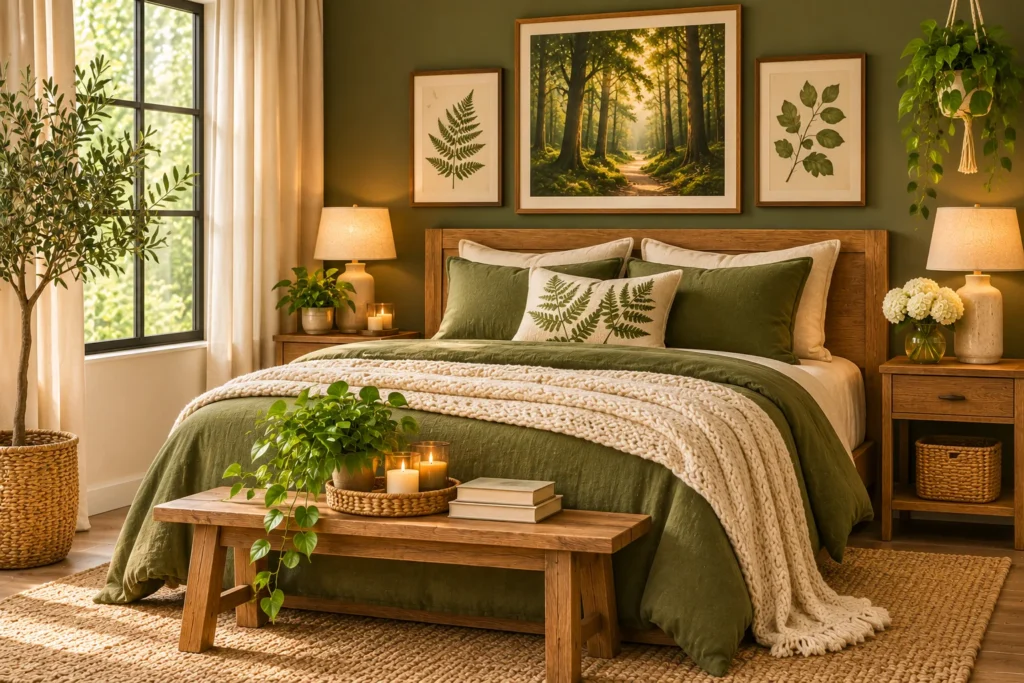
Choose a Natural Bedding Palette
Begin with cream, oatmeal, or soft beige bedding. Add forest green pillows or a textured green duvet cover to introduce depth.
A combination of olive, sage, and warm brown can create a softer woodland look than using dark green everywhere.
Introduce Natural Furniture
A wooden bed frame, woven bedside baskets, or a reclaimed wood nightstand can reinforce the organic theme.
If you prefer a softer look, choose upholstered furniture in linen or cotton.
Use Soft Lighting
Lighting makes a significant difference in a forest-inspired bedroom.
Choose bedside lamps with warm-toned bulbs and fabric, ceramic, or natural wood bases. Avoid relying entirely on bright overhead lighting when you want a relaxed evening atmosphere.
A simple botanical print above the bed can complete the look.
7. Bring Woodland Charm into Your Kitchen and Dining Area
Forest-inspired decor doesn’t have to stop at the living room and bedroom. The kitchen and dining area can also benefit from natural materials and earthy colors.
Small details are often enough to create a cohesive look.
Decorate with Natural Materials
Introduce wooden cutting boards, ceramic serving bowls, woven placemats, and linen table runners.
Open shelves can display stoneware dishes, glass jars, and a few small potted herbs.
For a stronger statement, consider forest green kitchen cabinets paired with warm wood countertops or brass hardware.
If you’re renting or working with an existing kitchen, use removable accessories rather than making permanent changes.
Create a Woodland-Inspired Dining Table
Use a natural wood dining table as the foundation.
Layer it with linen napkins, ceramic plates, simple glassware, and a small arrangement of fresh greenery. A low centerpiece made from branches or seasonal foliage can create a natural focal point without obstructing conversation.
8. Use Nature-Inspired Lighting to Create Atmosphere
Lighting can completely change the mood of a room. In a forest-themed interior, the aim is to create a soft, layered glow rather than harsh, uniform brightness.
Think of the gentle light filtering through tree branches.
Lighting Ideas for a Woodland Interior
Rattan pendant lights: Their woven construction introduces texture and creates interesting light patterns.
Wooden table lamps: These bring natural warmth to side tables and bedside spaces.
Fabric lampshades: Linen or cotton shades soften the appearance of artificial light.
Ceramic lamps: Earthy finishes complement botanical artwork and wooden furniture.
Wall sconces: These provide gentle accent lighting while freeing up table space.
Layer Different Light Sources
A comfortable living room might include a ceiling fixture, a floor lamp beside the sofa, and a table lamp on a console.
Use warm-toned bulbs for a cozy evening atmosphere, checking the fixture’s recommended bulb specifications.
Where possible, add dimmers so you can adjust the brightness throughout the day.
9. Add Small Woodland Details Without Overdoing It
You don’t need oversized tree murals or forest-themed furniture to make your home feel connected to nature.
Often, the smallest details create the most convincing atmosphere.
Decorative Elements to Consider
-
Wooden bowls and carved objects.
-
Ceramic vases in earthy shades.
-
Botanical candles and candleholders.
-
Decorative branches in a tall vase.
-
Mushroom-inspired ceramic accessories.
-
Natural stone coasters.
-
Woven storage baskets.
-
Landscape-inspired decorative trays.
The trick is to choose a few meaningful pieces rather than filling every surface with woodland accessories.
For example, style a coffee table with a small stack of books, a ceramic vase containing leafy branches, and a wooden decorative bowl.
On a bookshelf, combine books with small plants, framed botanical prints, and a few natural objects.
10. Create a Natural Outdoor Connection
One of the most appealing aspects of forest-inspired interiors is the connection between indoor and outdoor spaces.
Even a small balcony, patio, or window area can contribute to the overall woodland atmosphere.
Make the Most of Natural Views
If your windows overlook trees or greenery, keep window treatments relatively simple so the outdoor scenery remains visible.
Light linen curtains are a lovely option because they soften daylight without making the room feel closed in.
Decorate a Small Balcony
Use wooden or woven outdoor furniture, weather-resistant cushions in olive or sage, and several plants suited to your climate.
A combination of tall plants, trailing greenery, and smaller potted varieties can make a compact balcony feel like a private garden.
Bring the Look to a Window Nook
A comfortable chair, a small wooden side table, and a potted plant can transform an unused window corner into a peaceful reading spot.
This is particularly effective in apartments where a full outdoor garden isn’t possible.
Common Mistakes to Avoid
Forest-themed interiors are most successful when they feel natural and balanced. A few decorating mistakes can make the space feel overly dark, crowded, or more like a themed display than a comfortable home.
1. Using Too Much Dark Green
Deep forest green is beautiful, but covering every wall and furnishing in a dark shade can make a room feel visually heavy.
Better approach: Balance darker greens with cream, beige, warm wood, and lighter textiles. If you love dramatic interiors, keep some surfaces visually lighter.
2. Choosing Too Many Decorative Forest Motifs
Tree wallpaper, mushroom ornaments, animal figurines, and woodland prints can quickly become overwhelming when used together.
Better approach: Choose one or two noticeable forest-inspired motifs and let natural materials and colors establish the rest of the theme.
3. Mixing Too Many Different Wood Finishes
Combining several wood tones without a consistent visual connection can make the room feel disjointed.
Better approach: Choose one dominant wood tone and introduce one or two complementary finishes through smaller pieces.
4. Forgetting About Lighting
Dark green walls, brown furniture, and heavy textiles can make a poorly lit room feel gloomy.
Better approach: Use layered lighting, warm bulbs, mirrors, and lighter accessories to maintain a welcoming atmosphere.
5. Overcrowding the Room with Plants
Plants bring life to an interior, but too many large pots can interrupt walkways and make furniture arrangements difficult.
Better approach: Vary plant sizes and distribute greenery around the room. Keep frequently used pathways clear.
6. Ignoring Texture
A room decorated entirely in green paint and matching fabrics can look flat rather than naturally layered.
Better approach: Introduce contrasting materials such as linen, wool, rattan, wood, ceramic, and stone.
Key Pieces to Consider for Forest-Themed Home Decor
You don’t need to purchase everything at once. Start with a few versatile pieces that establish the look and build your woodland-inspired interior gradually.
1. Forest Green Sofa or Accent Chair
An upholstered piece in deep green can become the focal point of a living room.
Look for durable upholstery in velvet, textured woven fabric, or a practical performance material. If your room is small, a green accent chair may be a more flexible option than a large sofa.
2. Natural Wood Coffee Table
A coffee table in oak, walnut, or reclaimed wood adds warmth and connects different elements of the room.
Choose a size that leaves comfortable circulation around the seating area. A rounded table can also soften a room with many straight furniture lines.
3. Botanical Wall Art
Framed fern illustrations, tree photography, and muted woodland landscapes provide an easy way to reinforce the theme.
Choose artwork with colors that repeat elsewhere in the room. Natural wood frames are especially suitable.
4. Woven Area Rug
A jute, wool, or natural-fiber rug introduces texture and helps define the seating area.
For a living room, choose a size that allows at least the front legs of the main seating furniture to rest on the rug. This helps the arrangement feel connected.
5. Ceramic and Terracotta Planters
Planters in earthy brown, cream, muted green, or stone finishes complement natural foliage.
Choose different heights and shapes rather than buying an identical set. Make sure each planter has appropriate drainage or a removable inner pot.
6. Warm Table and Floor Lamps
Lighting fixtures with wooden, ceramic, woven, or fabric details complement the woodland aesthetic.
Use a floor lamp beside a reading chair and a smaller table lamp on a console or side table to create layers of illumination.
Budget-Friendly Ways to Create a Woodland-Inspired Home
A beautiful forest-inspired interior doesn’t require a large decorating budget. Focus on the changes that make the greatest visual difference.
Rearrange existing furniture: Move wooden furniture into more prominent positions and create a comfortable seating arrangement around a natural focal point.
Refresh accessories: Replace a few bright cushions with forest green, olive, or beige covers.
Shop secondhand: Look for wooden stools, vintage botanical prints, ceramic vases, and woven baskets at thrift stores and flea markets.
Create your own botanical artwork: Frame pressed leaves or inexpensive botanical illustrations, making sure any collected natural materials are dry and suitable for display.
Paint a small accent area: A forest green wall or painted shelving unit can establish the theme without requiring a full-room makeover.
Use affordable textiles: A simple linen-look curtain, knitted throw, or textured cushion can introduce the layered appearance associated with woodland interiors.
Propagate suitable houseplants: Some plants, including pothos, can be propagated from cuttings. This is an inexpensive way to expand your indoor greenery.
Frequently Asked Questions
1. What colors work best for forest-themed home decor?
Forest green, moss green, olive, earthy brown, warm beige, and cream are excellent choices. You can also introduce muted rust, charcoal, and soft mustard as occasional accent colors.
2. How can I decorate a small apartment with a forest theme?
Start with lighter neutral walls and introduce forest green through cushions, artwork, bedding, and smaller furniture pieces. Use vertical shelving for plants, choose compact wooden furniture, and avoid overcrowding the floor with large planters.
3. Is forest-themed decor suitable for modern homes?
Absolutely. Combine clean-lined furniture, restrained botanical artwork, natural wood, and a sophisticated green color palette. Avoid excessive rustic accessories if you prefer a contemporary appearance.
4. What plants are best for a woodland-inspired interior?
Monstera, pothos, snake plants, ferns, and rubber plants are popular choices. Select varieties according to your room’s lighting, humidity, and available space, and check pet safety before purchasing.
5. How can I make a forest-themed living room feel brighter?
Use cream or beige upholstery, lighter wood finishes, mirrors, sheer curtains, and layered lighting. You can also keep darker green shades to one accent wall or a few statement pieces.
6. Can I create a forest-inspired bedroom without painting the walls?
Yes. Use green bedding, botanical artwork, natural wood furniture, woven baskets, and soft earthy accessories. These changes can establish a woodland atmosphere while keeping the walls neutral.
7. What materials work best with woodland home decor?
Natural wood, linen, wool, jute, rattan, wicker, stone, terracotta, and ceramic are all suitable. Mixing these materials creates depth and makes the interior feel more connected to nature.
8. How do I make forest-themed decor look elegant rather than rustic?
Keep the color palette controlled, choose refined furniture silhouettes, and use botanical artwork with understated framing. Combine natural materials with smooth finishes, quality textiles, and thoughtfully placed lighting.
Conclusion
Forest-themed home decor is about creating a home that feels connected to nature through thoughtful colors, organic materials, greenery, and comfortable textures.
You can embrace the style with a dramatic forest green living room, a peaceful woodland-inspired bedroom, or simply a few botanical details throughout your apartment. The most important thing is to create balance and choose elements that complement the way you live.
Start with one small change, such as adding leafy plants, introducing natural wood, or refreshing your cushions with earthy colors. Save these ideas for your next decorating project and bring a little woodland charm into your everyday surroundings.