
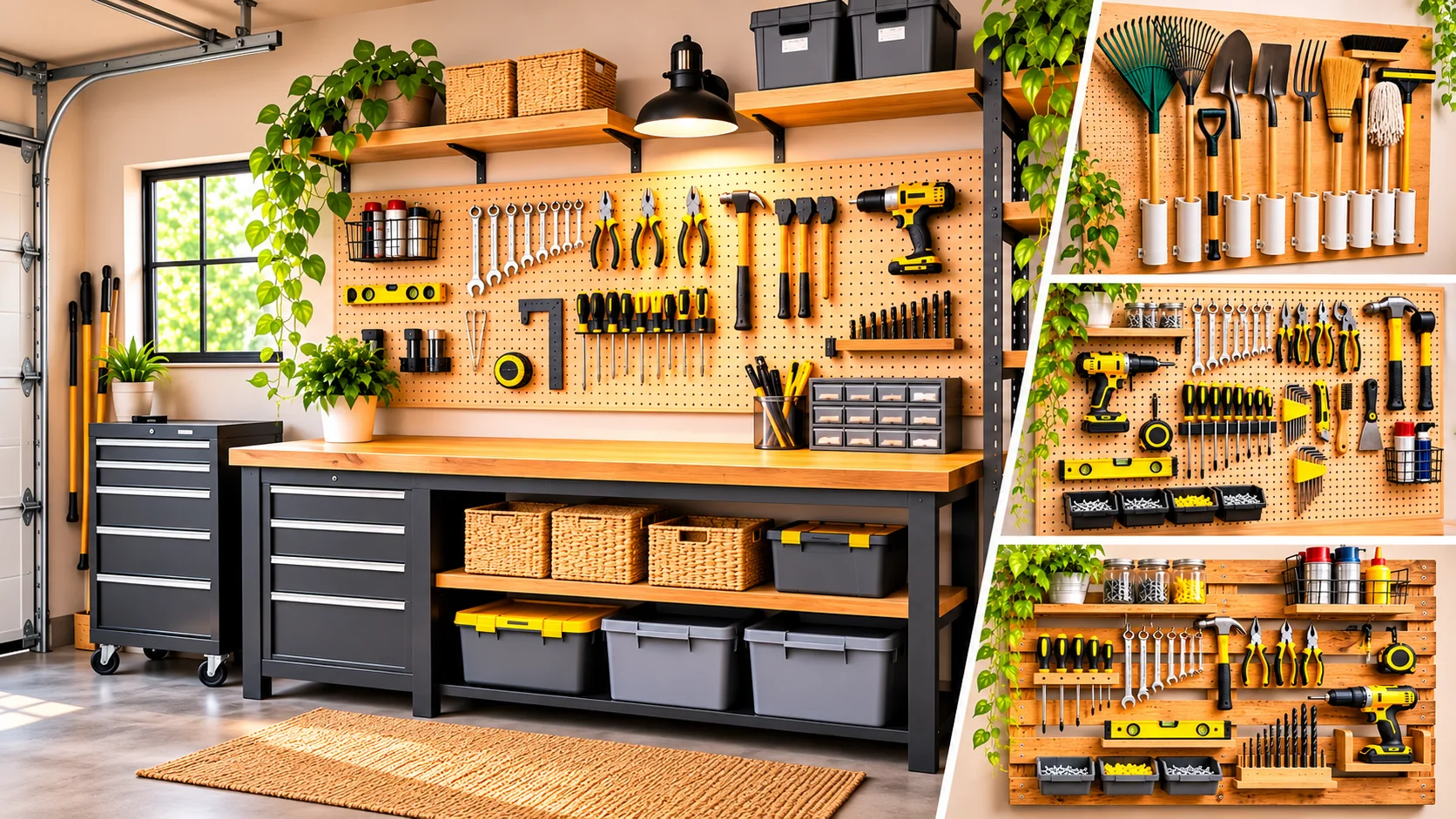
Keeping your tools organized doesn’t have to be expensive or complicated. With a little creativity and a few practical storage solutions, you can transform a messy garage, workshop, or utility room into a clean and functional space.
Whether you have a large collection of power tools or just a few essential hand tools, the right storage system makes it easier to find everything when you need it. From homemade pegboards and wooden tool racks to repurposed containers and rolling storage carts, there are plenty of creative ways to organize your tools without spending a fortune.
The best part? Many DIY tool storage ideas use affordable materials you may already have at home.
Here are 12 DIY tool storage organizing ideas to help you maximize space, reduce clutter, and create a workshop that works for you.
1. Build a DIY Pegboard Tool Organizer
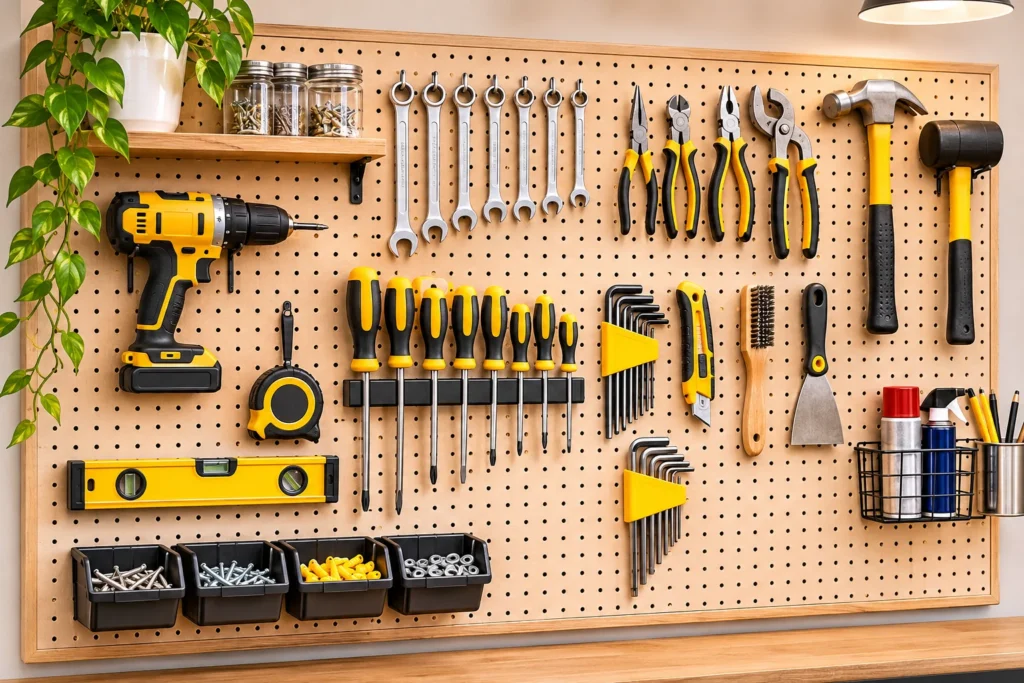
A pegboard is one of the most practical ways to organize hand tools while keeping everything visible and easy to reach.
Instead of leaving screwdrivers, pliers, hammers, and wrenches scattered across a workbench, you can arrange them neatly on a wall-mounted pegboard.
How to create it:
- Install a wooden or metal pegboard above your workbench.
- Add hooks, baskets, and small shelves.
- Arrange tools according to their type and size.
- Leave enough space between frequently used tools.
- Add simple outlines to show where each tool belongs.
Styling tip: Paint the pegboard black, white, or a neutral color to give your workshop a clean and coordinated appearance.
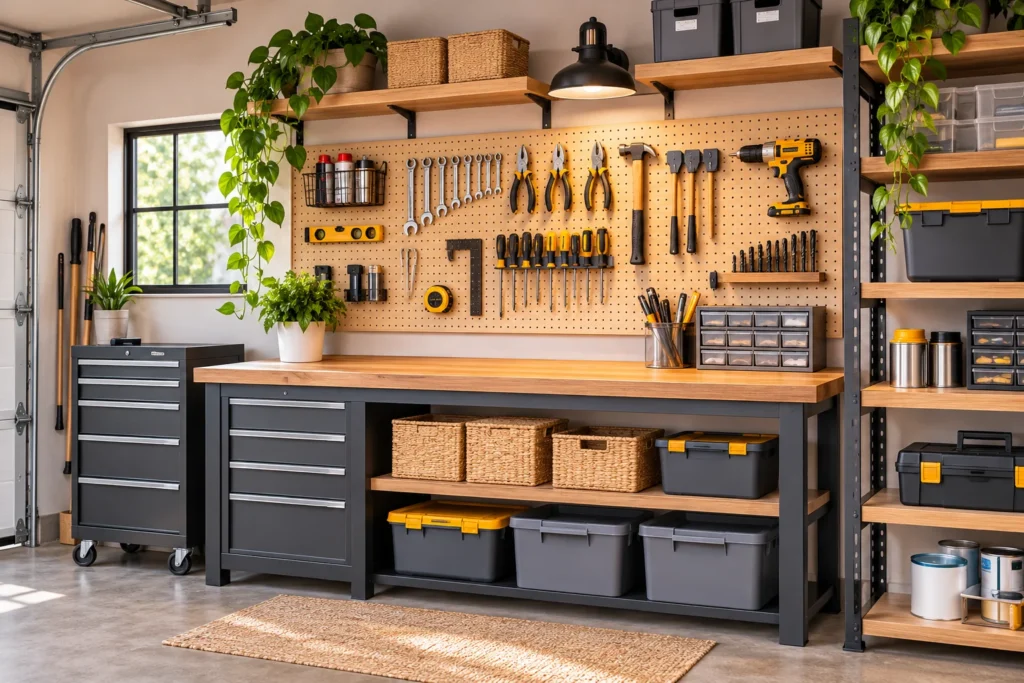
2. Make a Wooden Wall-Mounted Tool Rack
A wooden tool rack is an easy DIY project that works particularly well for garages and small workshops.
It provides dedicated spaces for frequently used tools without taking up valuable floor space.
What you need:
- A wooden board.
- Small wooden blocks or hooks.
- Screws and mounting hardware.
- Sandpaper.
- Wood stain or paint.
Attach the hooks or wooden supports to the board, leaving enough room for each tool. Mount the rack securely on the wall and arrange your tools by category.
This solution is especially useful for storing hammers, screwdrivers, pliers, and other hand tools.
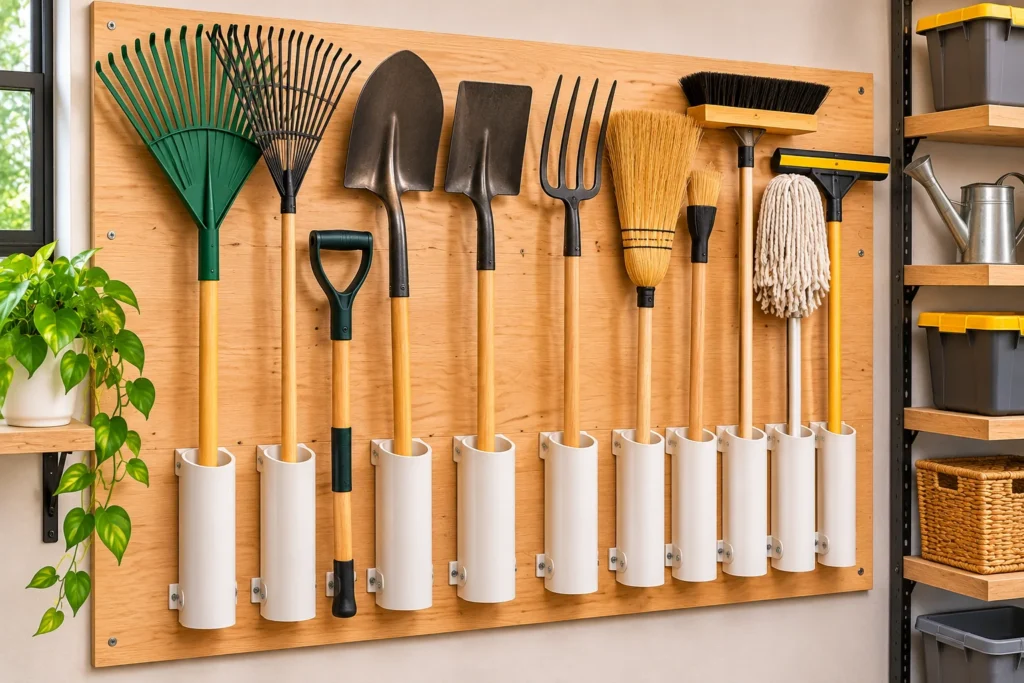
3. Create a DIY PVC Pipe Tool Holder
PVC pipes can be repurposed into inexpensive storage holders for long-handled tools and workshop accessories.
Cut PVC pipes into sections and attach them to a wooden board or suitable storage frame. Each section can hold an individual tool.
Ideas for using PVC pipe storage:
- Store screwdrivers vertically.
- Organize smaller hand tools.
- Hold paintbrushes and workshop accessories.
- Create separate compartments for different tool sizes.
Use appropriate pipe sizes for the tools you want to store and secure the holders properly before use.
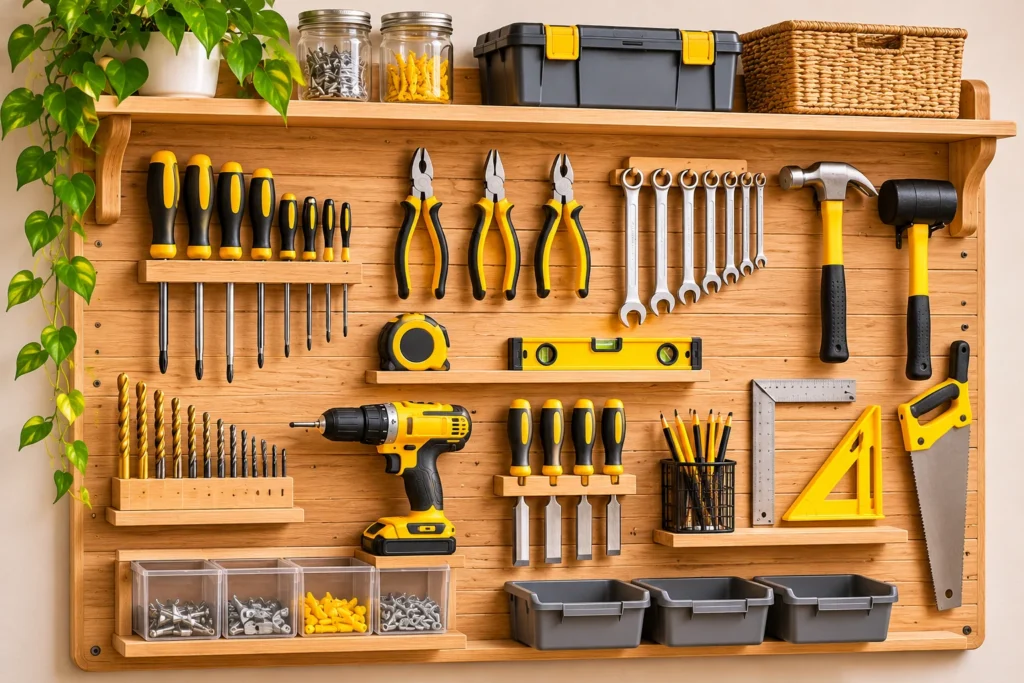
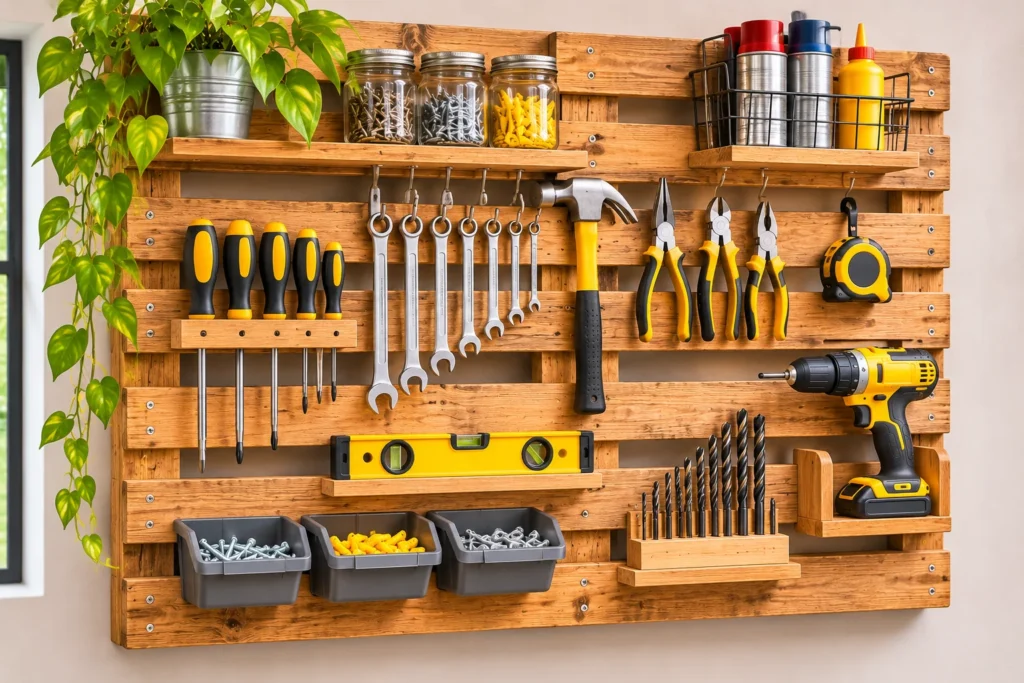
4. Turn an Old Wooden Pallet into Tool Storage
An old wooden pallet can become a useful tool organizer with minimal modifications.
Its existing structure provides several spaces for arranging tools, garden equipment, and workshop supplies.
How to make it:
- Choose a clean pallet in good condition.
- Sand rough surfaces and remove loose nails.
- Add hooks or small shelves where needed.
- Apply a suitable protective finish.
- Secure the pallet to a wall or use it as a freestanding organizer if properly stabilized.
You can customize the pallet with paint or wood stain to match your garage or workshop.
5. Organize Small Tools in Clear Storage Containers
Small accessories such as screws, nails, washers, drill bits, and wall anchors can quickly become difficult to manage.
Clear containers make it easier to identify what you need without opening multiple boxes.
How to organize them:
- Use transparent plastic containers with secure lids.
- Separate items by size and type.
- Add clear labels to every container.
- Arrange frequently used supplies near your workbench.
- Store containers on shelves or inside drawers.
For an even more organized system, use a small drawer organizer with several compartments.
6. Build a DIY Rolling Tool Storage Cart
A rolling storage cart is a practical solution if you regularly move between different work areas.
Instead of carrying tools individually, you can keep essential equipment together and move the entire cart whenever needed.
Features to include:
- Multiple shelves for different tool categories.
- A top surface for frequently used items.
- Small compartments for accessories.
- Durable wheels with locking mechanisms.
- A handle for easy movement.
You can build a simple cart using plywood, wooden boards, and suitable hardware.
Make sure the cart is stable, its weight is distributed evenly, and the wheels are appropriate for the tools being stored.
7. Use Magnetic Strips to Store Metal Tools
Magnetic strips are a space-saving way to organize certain metal hand tools.
They can be installed above a workbench or inside a workshop cabinet, making selected tools easy to see and access.
Tools you can organize:
- Metal screwdrivers.
- Small wrenches.
- Hex keys.
- Metal drill accessories.
Choose a magnetic strip designed for the weight and type of tools you intend to store. Install it securely and check that each item stays firmly in place.
Avoid using magnetic strips for heavy tools unless the product is specifically rated for that purpose.
8. Make a DIY Toolbox Drawer Organizer
Toolbox drawers can quickly become messy when different tools are stored together.
A homemade drawer organizer helps create separate spaces for screwdrivers, pliers, measuring tools, and other essentials.
How to make one:
- Measure the inside dimensions of your drawer.
- Cut thin plywood or suitable dividers to size.
- Arrange the dividers into separate compartments.
- Secure them in place.
- Label sections if you have several tool categories.
You can also use small plastic trays or repurposed containers to create an affordable drawer organization system.
9. Create a Dedicated Power Tool Storage Shelf
Power tools are often bulky and difficult to organize in standard toolboxes.
A dedicated shelf gives drills, sanders, circular saws, and other equipment their own storage spaces.
Design ideas:
- Build individual shelf compartments for each tool.
- Add a lower section for larger equipment.
- Create separate spaces for chargers and accessories.
- Use small labeled containers for drill bits and attachments.
- Keep power tools away from moisture and excessive dust.
Before building the shelf, measure your equipment carefully to ensure each tool fits comfortably.
10. Repurpose Glass Jars for Small Workshop Supplies
Glass jars can provide simple storage for small workshop accessories.
Instead of throwing away suitable jars, clean and reuse them to organize items that are easy to lose.
What to store:
- Screws and nails.
- Nuts and bolts.
- Small washers.
- Wall anchors.
- Craft and repair accessories.
Add labels to the jars and arrange them on a shelf or inside a cabinet.
For a more practical setup, use sturdy containers with secure lids and avoid storing heavy items in fragile glass jars.
11. Build a Fold-Down Workbench with Storage
If your garage or workshop has limited space, a fold-down workbench can provide a useful working surface without permanently occupying the floor.
When the workbench is not being used, it can fold against the wall to create more room.
How to organize it:
- Install a sturdy wall-mounted work surface.
- Use suitable folding brackets designed for the expected load.
- Add a narrow shelf above or below the workbench.
- Install small tool holders nearby.
- Keep essential accessories in labeled containers.
Make sure the wall, mounting hardware, and folding brackets are appropriate for the weight and intended use.
12. Create a Complete DIY Garage Tool Organization Wall
If you want a more comprehensive storage solution, combine several organizing methods into one wall system.
A dedicated tool organization wall can make even a busy workshop feel more structured.
What to include:
- A pegboard for hand tools.
- Wooden racks for larger tools.
- Magnetic strips for suitable metal accessories.
- Small shelves for storage containers.
- Hooks for extension cords and accessories.
- A designated area for frequently used equipment.
Arrange everything by category so that tools are easy to locate and return after each project.
You can also add labels to create a consistent organization system for the entire workshop.
How to Organize Your Tools on a Budget
You don’t need expensive cabinets or professional workshop furniture to create an organized tool storage system.
Try these affordable ideas:
Reuse materials: Repurpose suitable wooden boards, containers, jars, and pallets.
Start with one area: Organize your workbench or most frequently used tools before tackling the entire garage.
Use vertical space: Wall-mounted racks and pegboards can free up valuable floor space.
Label everything: Simple labels help you identify tools and supplies quickly.
Choose multifunctional storage: Use shelves, drawers, and rolling carts that can accommodate several categories of equipment.
Keep similar tools together: Group screwdrivers, measuring tools, power tools, and accessories separately.
Common Tool Storage Mistakes to Avoid
Even a well-designed storage system can become difficult to use if it isn’t planned properly.
Here are a few mistakes to avoid:
1. Overcrowding Storage Areas
Trying to fit too many tools into a small space can make everything difficult to access.
Better approach: Keep frequently used tools within easy reach and store less-used equipment separately.
2. Ignoring Wall Space
Leaving walls empty while filling the floor with toolboxes wastes valuable storage space.
Better approach: Install suitable wall-mounted shelves, pegboards, and racks.
3. Forgetting to Label Containers
Unlabeled boxes and jars can make finding small accessories frustrating.
Better approach: Use clear labels and group similar supplies together.
4. Storing Tools in Damp Areas
Moisture can damage metal tools and affect certain electrical equipment.
Better approach: Keep tools in a dry, suitable storage area and follow the manufacturer’s storage recommendations.
5. Using Weak Mounting Hardware
Poorly secured shelves and wall organizers can become unsafe when loaded with heavy equipment.
Better approach: Choose mounting hardware appropriate for the wall type and expected load.
Frequently Asked Questions
1. What Is the Best Way to Organize Tools in a Garage?
The best approach is to combine wall-mounted storage, labeled containers, drawers, and shelves. Keep frequently used tools near your workbench and group similar items together.
2. How Can I Store Tools Without Buying Expensive Cabinets?
You can use DIY pegboards, wooden racks, repurposed pallets, PVC pipe holders, clear containers, and homemade drawer dividers.
3. How Do I Organize Small Tools and Screws?
Use clear containers, divided organizers, or labeled drawers. Separate screws, nails, bolts, and other accessories by type and size.
4. Are Pegboards Good for Tool Storage?
Yes. Pegboards are useful because they keep many hand tools visible and accessible while making use of vertical wall space. Choose suitable hooks and secure the board properly.
5. How Can I Organize Tools in a Small Workshop?
Use vertical wall storage, compact shelves, rolling carts, and multifunctional furniture. Keep the floor and main walkways as clear as possible.
6. What Materials Can I Reuse for DIY Tool Storage?
Suitable wooden boards, pallets, PVC pipes, glass jars, and plastic containers can all be repurposed into practical storage solutions.
7. How Do I Keep My Tools Organized Long-Term?
Return tools to their designated locations after each project, label storage areas, and regularly remove unnecessary items from your workbench.
Final Thoughts
Creating an organized workshop doesn’t require expensive equipment or complicated storage systems. With these 12 DIY tool storage organizing ideas, you can make better use of your walls, drawers, shelves, and unused materials.
From simple pegboards and wooden racks to rolling carts and complete garage organization walls, there is a practical solution for almost every space and budget.
Start with the tools you use most often, choose storage solutions that fit your workshop, and build your organization system one step at a time.
Save your favorite DIY tool storage ideas and transform your cluttered workspace into a neat, functional, and inspiring place to work!