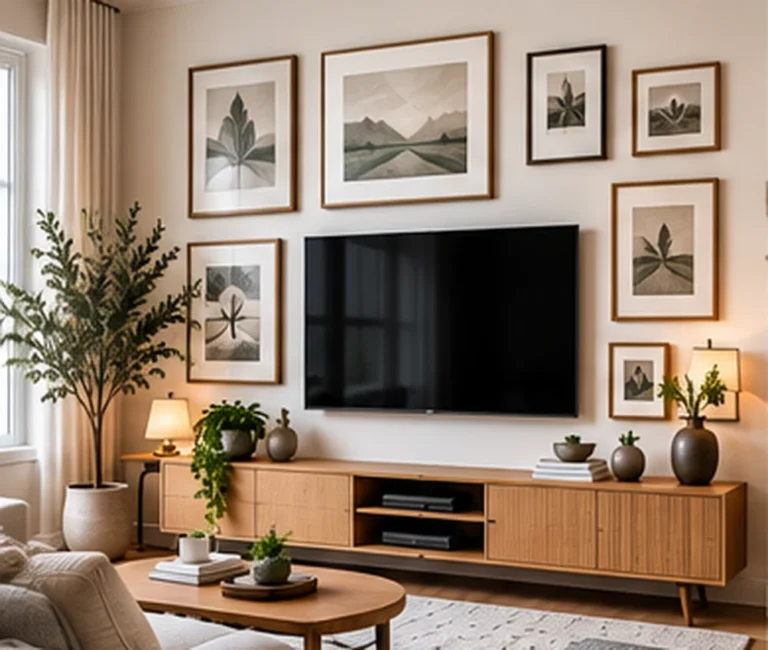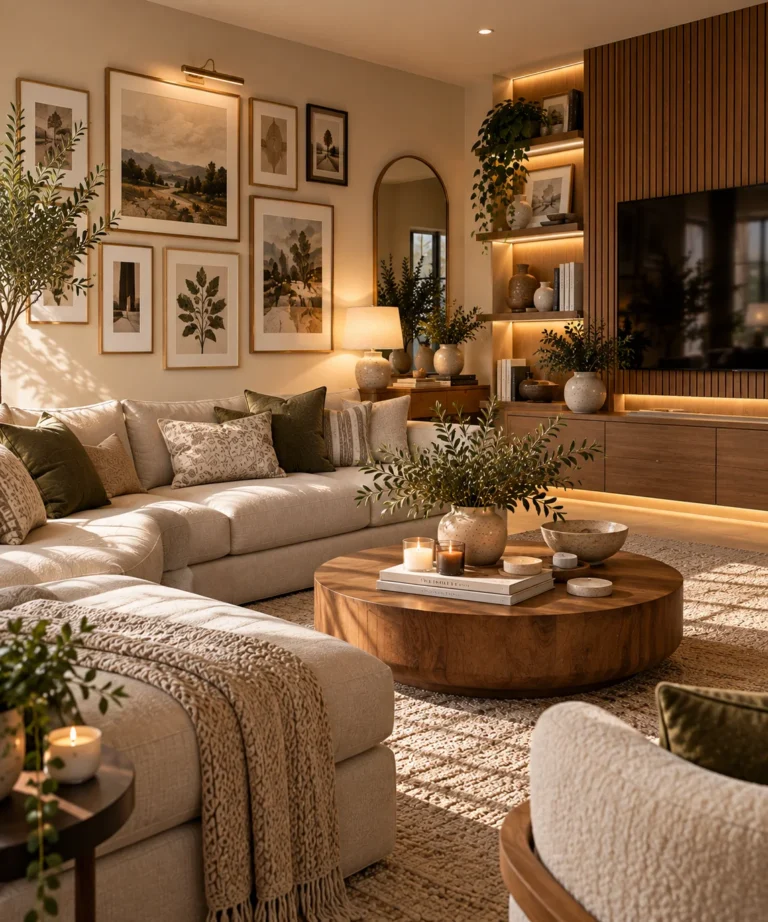
Arranging furniture in a small living room can feel like solving a puzzle. The sofa takes up half the space, the coffee table blocks the walkway, and adding even one more chair can make the entire room feel crowded. The solution isn’t necessarily buying smaller furniture or getting rid of everything you love. It’s choosing the right layout, balancing proportions, and making every piece work a little harder.
The best way to arrange furniture in a small living room is to start with the room’s natural focal point, establish clear walking paths, and select furniture that fits the space without overwhelming it. A thoughtfully placed sofa, a properly sized rug, and a few well-chosen multifunctional pieces can make even a compact apartment living room feel comfortable, open, and inviting.
Here are nine practical furniture arrangement ideas to help you create a living room that looks pulled together and works beautifully for everyday life.
Quick Takeaways
- Start with the sofa. Place it against a wall or float it strategically to establish the main seating area.
- Keep walkways clear. Aim for roughly 30–36 inches of walking space where possible, adjusting to the room’s dimensions.
- Choose furniture with the right proportions. Slim arms, raised legs, and compact silhouettes help preserve visual openness.
- Use a rug to define the seating zone. A rug that accommodates the front legs of the main seating pieces often creates a more cohesive arrangement.
- Make every piece earn its place. Nesting tables, storage ottomans, and wall-mounted shelves provide useful functions without unnecessary clutter.
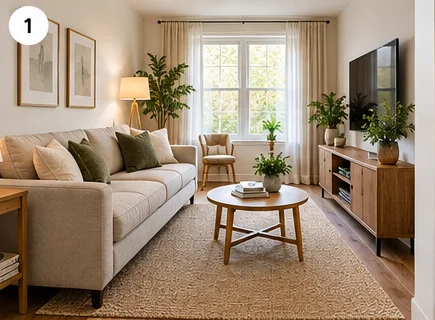
1. Start With the Sofa and Build the Layout Around It
The sofa is usually the largest piece of furniture in a living room, so its placement has the biggest impact on how the rest of the space functions. Instead of moving every item around at once, decide where the sofa belongs first and build the arrangement around it.
Place the sofa where it makes the most sense
In a narrow or compact living room, placing the sofa against the longest uninterrupted wall is often a good starting point. This keeps the center of the room open and leaves more flexibility for a coffee table, accent chair, or media console.
However, pushing every piece against a wall isn’t always the best solution. In a squarer room, a sofa positioned slightly away from the wall can create a more intentional seating area, especially when paired with a small chair or console behind it.
Consider these common layouts:
- Long, narrow room: Position the sofa along the longest wall and keep the opposite side relatively light.
- Square living room: Center the sofa around the focal point, then balance it with one compact chair.
- Open-plan apartment: Use the sofa’s back to subtly separate the living area from the dining space.
- Living room with a window: Keep the sofa low enough that it doesn’t unnecessarily block natural light or obstruct access to the window.
Measure before moving furniture
Measure the wall, sofa, door openings, and major walking routes. A compact sofa around 72–84 inches long may suit many small living rooms, but the right size depends on the room’s shape, other furniture, and how many people need to sit comfortably.
Leave enough space for doors to open fully and for people to move naturally through the room.
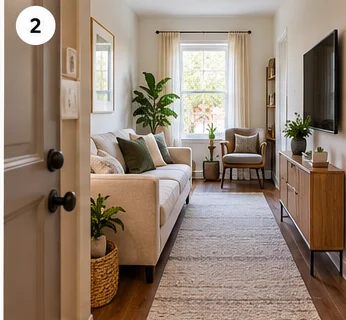
2. Protect Walking Space to Make the Room Feel Bigger
A room can contain relatively little furniture and still feel cramped if people have to squeeze between pieces. Good circulation is one of the most important parts of arranging a small living room.
Create a clear path through the room
Think about how you enter the room, reach the sofa, walk toward the window, or move into an adjoining dining area. These everyday routes should remain easy to navigate.
As a general guideline, aim for:
- 30–36 inches for a comfortable main walkway where the room allows.
- 14–18 inches between a sofa and coffee table for convenient reach and legroom.
- 16–18 inches between a seat and nearby furniture when comfortable movement and access are priorities, adjusting to the furniture and household needs.
These are flexible guidelines rather than strict requirements. In a very small apartment, you may need to work with less space, provided the arrangement remains safe and practical.
Avoid the furniture obstacle course
A common mistake is placing a side table beside the sofa, another table in front of it, and an extra chair near the entrance without considering how they interact. Individually, each piece may look attractive, but together they can interrupt the room’s flow.
Try moving smaller pieces toward the perimeter or replacing several tables with one versatile option. A nesting table set can be expanded when guests arrive and tucked away when you need more floor space.
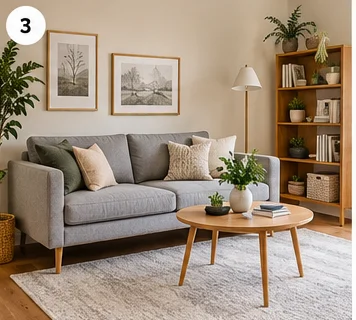
3. Choose Furniture That Fits the Room’s Proportions
Furniture doesn’t need to be tiny to work in a small living room. What matters is how its dimensions, shape, and visual weight relate to the available space.
A deep, bulky sofa with wide rolled arms can dominate a compact room, while a similarly sized sofa with slimmer arms and visible legs may feel lighter.
Look beyond length and width
When choosing furniture, pay attention to depth and height, too.
- Sofas: Look for streamlined arms and a depth that allows comfortable seating without consuming the entire room.
- Accent chairs: Consider armless chairs, compact upholstered chairs, or lightweight occasional chairs.
- Coffee tables: Choose a small round, oval, or rectangular design that leaves enough room to move around it.
- Media consoles: A low, narrow console can provide storage without visually overwhelming the wall.
- Side tables: Small pedestal tables and nesting tables can replace larger, heavier designs.
Raised legs can also make a difference. When more of the floor remains visible beneath a sofa or chair, the arrangement often feels less visually dense.
Don’t choose furniture that’s too small
There is a difference between appropriately scaled furniture and furniture that looks lost in the room. A tiny loveseat, miniature rug, and undersized coffee table can make the space feel disjointed rather than spacious.
Choose pieces that comfortably serve their purpose, then keep the number of items under control.
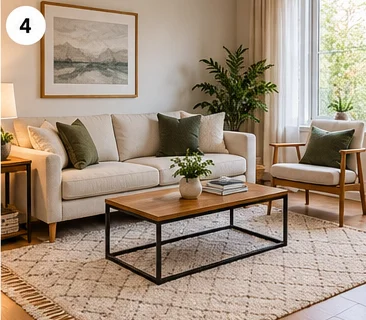
4. Use a Rug to Define the Seating Area
In a small living room, a rug does more than add softness. It visually connects the furniture and establishes a defined seating area, especially in studio apartments or open-plan homes.
Choose the right rug size
A rug that is too small can make the furniture arrangement appear scattered. Whenever possible, choose a rug that allows the front legs of the sofa and any nearby accent chairs to rest on it.
For many compact seating arrangements, a 5-by-8-foot rug or a 6-by-9-foot rug can work well, but measure the room and furniture before deciding. The larger option isn’t automatically better if it crowds the walls or interferes with doors.
Use color and texture strategically
Light neutral rugs in cream, warm beige, pale gray, or soft taupe can create a calm foundation. A subtle pattern can also help disguise everyday wear and introduce personality without overwhelming the room.
For a warmer look, combine a textured rug with a linen sofa, a wood coffee table, and one or two contrasting cushions. The variety of materials adds depth without requiring additional furniture.
Budget-friendly tip: If a large area rug isn’t practical for your budget, look for a simple, durable flatweave rug or check secondhand options. Prioritize the right proportions over an elaborate pattern.
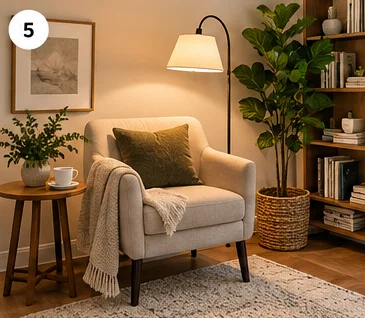
5. Make the Most of Corners and Awkward Spaces
Corners often become forgotten spaces, filled with random objects or left empty even when the room needs more function. With a little planning, these areas can add seating, storage, or atmosphere without crowding the center of the room.
Turn one corner into a useful zone
Choose the solution that suits your needs rather than trying to fill every empty corner.
- Reading corner: Add a compact chair and a slim floor lamp.
- Storage corner: Use a narrow cabinet or a small shelving unit.
- Decorative corner: Place a tall plant or a floor lamp beside the sofa.
- Display corner: Install a few floating shelves for books and selected decorative objects.
If the room has an awkward alcove, consider whether it can accommodate a narrow bookcase or a small desk. The aim is to use the available space without introducing another bulky piece.
Work with angled walls and unusual layouts
For rooms with slanted walls or architectural recesses, avoid forcing rectangular furniture into every available gap. A rounded accent chair, a small pedestal table, or a custom-sized shelf can work better than a large cabinet that leaves awkward spaces around it.
Keep the tallest objects away from the most congested part of the room. Concentrating too many tall pieces in one corner can make the entire space feel heavier.
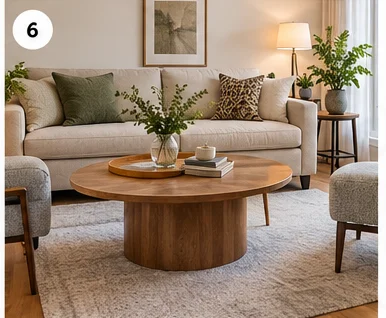
6. Select a Coffee Table That Leaves Room to Move
A coffee table can make the seating area more functional, but the wrong design can become the biggest obstacle in the room.
The best choice depends on the shape of the sofa, the distance between seats, and how you use the living room.
Which coffee table shape works best?
Round coffee table: Ideal for compact or square living rooms. Its curved edges can make movement around the table easier, particularly when the seating arrangement is tight.
Oval coffee table: A useful option for narrow rooms because it offers a longer surface without sharp corners at either end.
Slim rectangular coffee table: Works well with a standard straight sofa. Look for a narrow design with a shelf or drawer if you need extra storage.
Consider alternatives to a traditional table
A storage ottoman can serve as a footrest, extra seating, and a coffee-table alternative when paired with a suitable tray. Nesting tables can be separated when guests arrive, while a small C-shaped side table can slide close to the sofa when you need a surface for a drink or laptop.
Keep the table at approximately the same height as the sofa seat or slightly lower, depending on the design. This usually makes the arrangement easier to use and visually balanced.
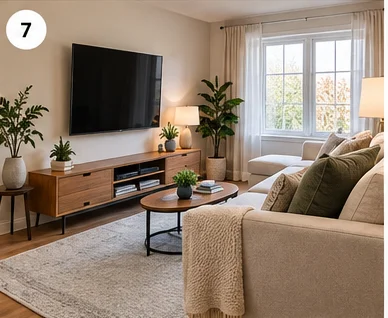
7. Arrange Seating Around a Focal Point
A focal point gives the furniture arrangement direction. It might be a television, fireplace, large window, architectural feature, or a piece of artwork.
Without a clear focal point, furniture can feel randomly distributed. With one, the seating area becomes easier to organize.
For a TV-centered living room
Position the sofa so the television can be viewed comfortably without forcing people to turn their necks. Mounting the television on the wall can free up floor space, although a slim media console may still be useful for equipment and storage.
The ideal viewing distance depends on screen size and resolution, so avoid placing the sofa too close simply to preserve space elsewhere.
For a conversation-focused living room
If you prefer talking, reading, or entertaining, arrange the sofa and accent chair so people can see one another without twisting awkwardly. A slight angle between seats can create a relaxed, conversational setup.
In a very small room, one well-chosen accent chair may be enough. Additional seating can come from a storage ottoman or a lightweight stool that can be moved when needed.
For a window-focused layout
If the room has an attractive view or plenty of natural light, keep the window visually accessible. A low sofa, an open-legged chair, or a small side table can complement the window without blocking the room’s brightest area.
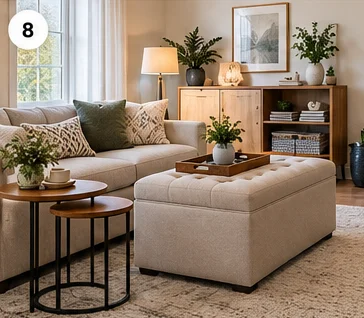
8. Use Multifunctional Furniture to Reduce Clutter
When space is limited, furniture that serves two purposes can make a noticeable difference. Instead of adding separate pieces for seating, storage, and display, choose a few items that can handle several tasks.
Furniture that works harder
- Storage ottoman: Hides blankets, magazines, and spare cushions while providing extra seating.
- Nesting tables: Offer flexible surfaces that can be separated when needed.
- Lift-top coffee table: Provides a raised work or dining surface and concealed storage.
- Slim console table: Adds a surface behind a sofa or along a wall without taking up much depth.
- Storage bench: Creates a place to sit while offering room for household essentials.
- Wall-mounted shelves: Provide vertical storage without occupying floor space.
Before purchasing anything, identify the specific problem you’re trying to solve. If books and accessories are scattered around the room, closed storage may be more useful than another decorative table.
Make storage look intentional
Too many visible baskets, boxes, and open shelves can create visual clutter. Use closed storage for everyday items and reserve open shelves for objects you genuinely want to display.
Keep frequently used items easy to reach. A living room should be practical enough for everyday life, not so carefully styled that putting things away becomes inconvenient.
Budget-friendly tip: Before buying new furniture, look at what you already own. A sturdy side table from another room, a basket for blankets, or a tray placed on an existing ottoman may solve the problem without additional spending.
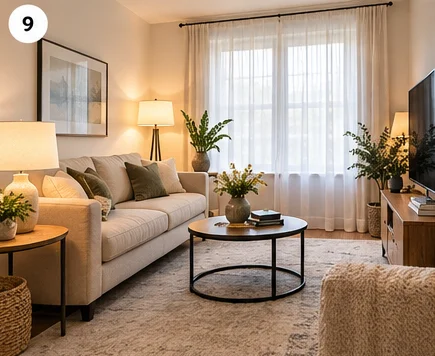
9. Use Lighting, Mirrors, and Color to Keep the Room Open
Furniture arrangement is only part of the equation. Lighting, reflective surfaces, window treatments, and color influence how spacious the finished room feels.
Layer the lighting
A single overhead light can leave a small living room feeling flat or harsh. Instead, combine ambient lighting with one or two task or accent lights.
For example, use an overhead fixture for general illumination, a floor lamp beside the sofa for reading, and a table lamp on a side table for a softer evening atmosphere.
Choose the placement carefully so lamp bases and cords don’t interfere with walking paths.
Use mirrors strategically
A mirror placed opposite or adjacent to a window can reflect daylight and visually expand the room. A large mirror above a slim console or on an open wall can also create a stronger sense of depth.
Avoid placing a mirror where it reflects a cluttered corner or an unattractive view. What it reflects matters as much as where it hangs.
Keep the color palette cohesive
A small living room doesn’t have to be entirely white. Cream, warm beige, soft greige, muted sage, and pale blue can all create an inviting foundation.
Choose two or three main colors and repeat them through the sofa, rug, cushions, curtains, and accessories. Introduce contrast through dark wood, black metal, or a few deeper accent colors rather than filling every surface with competing patterns.
Hang curtains high
Mount curtain rods several inches above the window frame, where the wall and ceiling allow, and extend them beyond the window’s sides when practical. This can make the window feel taller and wider.
Choose curtain lengths that reach the floor without creating excessive fabric on the ground. Sheer or lightweight curtains can soften the room while allowing daylight to filter through.
Common Mistakes to Avoid
Even attractive furniture can make a small living room feel awkward when the layout doesn’t support the way people move and use the space.
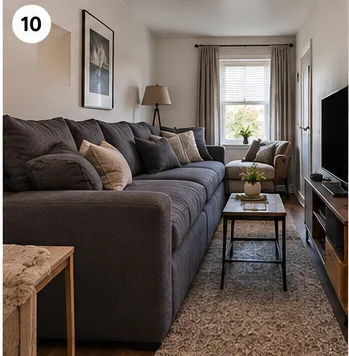
1. Choosing an oversized sofa
A deep sofa with wide arms can leave little room for other essentials. Choose a size that accommodates your household while preserving space for movement and a useful coffee table.
2. Using a rug that’s too small
A small rug can make the furniture appear disconnected. Select a rug that anchors the seating group, ideally with the front legs of the main seating pieces on it.
3. Adding too many furniture pieces
Extra chairs and tables consume valuable floor space. Keep the essential pieces and use flexible seating or nesting tables when additional options are needed.
4. Blocking windows and natural light
Tall furniture near a window can make the room feel enclosed. Use lower pieces where possible and preserve access to windows and window treatments.
5. Placing the coffee table too close
A table that touches the sofa makes sitting down and standing up awkward. Leave enough space for comfortable legroom and reach, generally around 14–18 inches where feasible.
6. Filling every empty surface
Too many decorative objects can compete for attention. Group a few meaningful pieces together and leave some surfaces open to create visual breathing room.
Key Pieces to Consider for a Small Living Room
If you’re planning to update your layout, prioritize furniture that improves comfort and function rather than buying a complete matching set.
1. A compact sofa or loveseat
Look for slim arms, comfortable seat depth, and a width that fits the main wall. Neutral upholstery is versatile, while raised legs help maintain a lighter visual appearance.
2. A round or oval coffee table
Choose a footprint that leaves enough clearance around the seating area. Wood adds warmth, while glass or a slender metal frame can help reduce visual weight.
3. A properly sized area rug
Measure the seating arrangement before choosing the rug. Flatweave or low-pile designs can be practical for compact rooms and are generally easier to place around furniture.
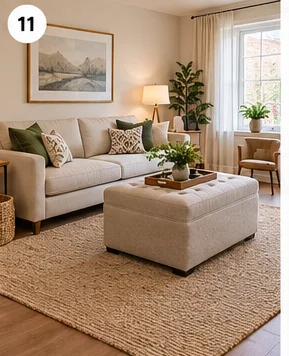
4. A storage ottoman
Choose a sturdy design with enough internal space for blankets or other everyday items. A tray can create a stable surface for drinks or decorative accessories.
5. A slim floor lamp
Place it beside the sofa or reading chair without narrowing the main walkway. A small footprint and a warm, comfortable light source make it especially useful in a compact room.
How to Arrange Furniture in a Small Living Room on a Budget
A better layout doesn’t require a shopping spree. Before purchasing anything, try these simple changes.
- Rearrange before replacing. Move the sofa to a different wall, rotate the rug, or relocate a chair to see how the room functions with a new arrangement.
- Remove one unnecessary piece. An extra table or oversized chair may be taking up more space than it provides in value.
- Shop your home. Repurpose a bedroom stool as a side table or use a basket you already own for spare cushions.
- Refresh the textiles. New cushion covers, a throw, or lighter curtains can change the atmosphere without replacing the main furniture.
- Use vertical space. Install renter-friendly shelves where appropriate or use a narrow bookcase to free up crowded horizontal surfaces.
- Declutter visible storage. Organize cables, remotes, magazines, and everyday accessories so the room feels more intentional.
A useful trick is to test a proposed furniture arrangement with painter’s tape on the floor. Mark the approximate footprint of the sofa, coffee table, and other large pieces before moving them. This helps you spot tight walkways and awkward proportions without doing the heavy lifting twice.
Frequently Asked Questions
1. Where should a sofa go in a small living room?
Start by testing the longest uninterrupted wall, particularly in a narrow room. If your living room has a strong focal point, such as a fireplace or television, arrange the sofa so it faces that feature while keeping entrances, windows, and main walkways accessible.
2. Should all furniture be pushed against the walls?
No. Placing furniture against the walls can work well in narrow rooms, but it isn’t always necessary. In a square living room or open-plan space, floating a sofa slightly away from a wall can create a more balanced seating area and better define the room’s purpose.
3. What is the best furniture layout for a small rectangular living room?
Place the sofa along one of the longer walls and arrange a compact coffee table in front of it. Depending on the width of the room, add one small accent chair or a slim side table. Keep a clear path along the opposite side or through the room toward adjoining spaces.
4. How much space should be between a sofa and coffee table?
Around 14–18 inches is a useful starting point for many seating arrangements. This typically allows comfortable legroom while keeping drinks, books, and other items within reach. Adjust the distance according to the table’s shape, sofa depth, and available floor space.
5. What color furniture makes a small living room look bigger?
Light and medium tones such as cream, beige, pale gray, soft sage, and natural wood can create an airy impression. However, darker furniture can also work in a small room when its proportions are appropriate and the surrounding layout, lighting, and color palette are balanced.
6. Can I use a sectional sofa in a small living room?
Yes, provided its footprint suits the room. A compact L-shaped sectional can provide generous seating and fit neatly into a corner, but measure its full length, chaise depth, and clearance around entrances before purchasing. Compare it with a sofa and separate chair to see which arrangement leaves more usable space.
7. How can I arrange furniture in a small living room that opens into a dining area?
Use the back of the sofa, a rug, or lighting to distinguish the living zone from the dining zone. Keep a comfortable route between both areas and avoid placing a console table or accent chair where it interferes with dining chairs or access to the kitchen.
8. How do I make a small living room look less cluttered without buying new furniture?
Remove items that don’t serve a clear purpose, clear crowded surfaces, and group decorative objects into small arrangements. Rearrange existing furniture to open up the main walkway, hide everyday clutter in baskets or cabinets, and keep windows as unobstructed as possible.
Conclusion
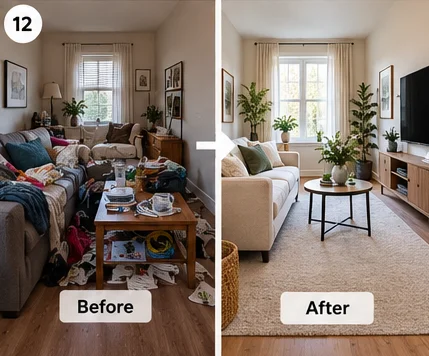
Learning how to arrange furniture in a small living room comes down to a few thoughtful decisions: place the largest piece first, preserve clear walking paths, choose furniture that fits the room’s proportions, and use rugs, lighting, and storage to bring everything together.
You don’t need a bigger apartment to create a more comfortable living space. Start by moving one piece of furniture, measuring the main walkway, or removing an item that no longer serves a purpose. Save these ideas for your next room refresh, and experiment until your living room feels both spacious and unmistakably yours.