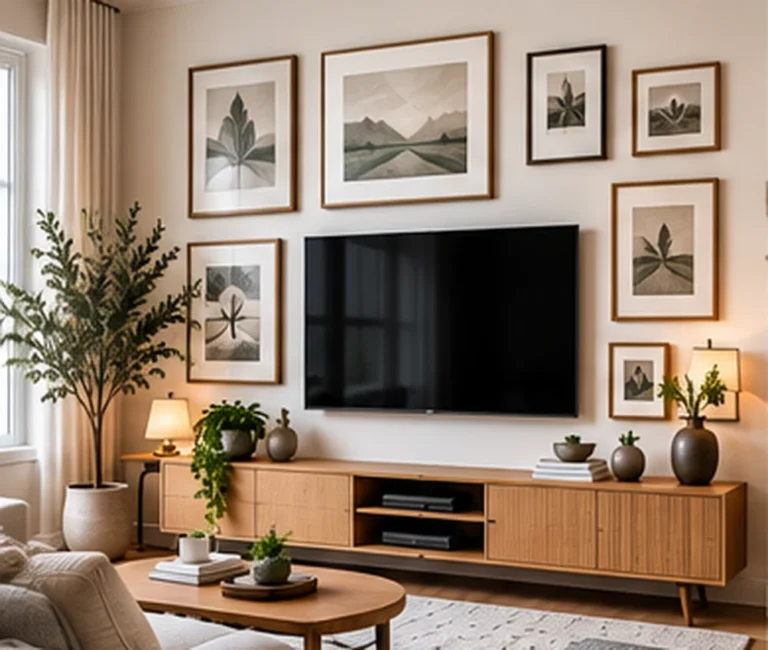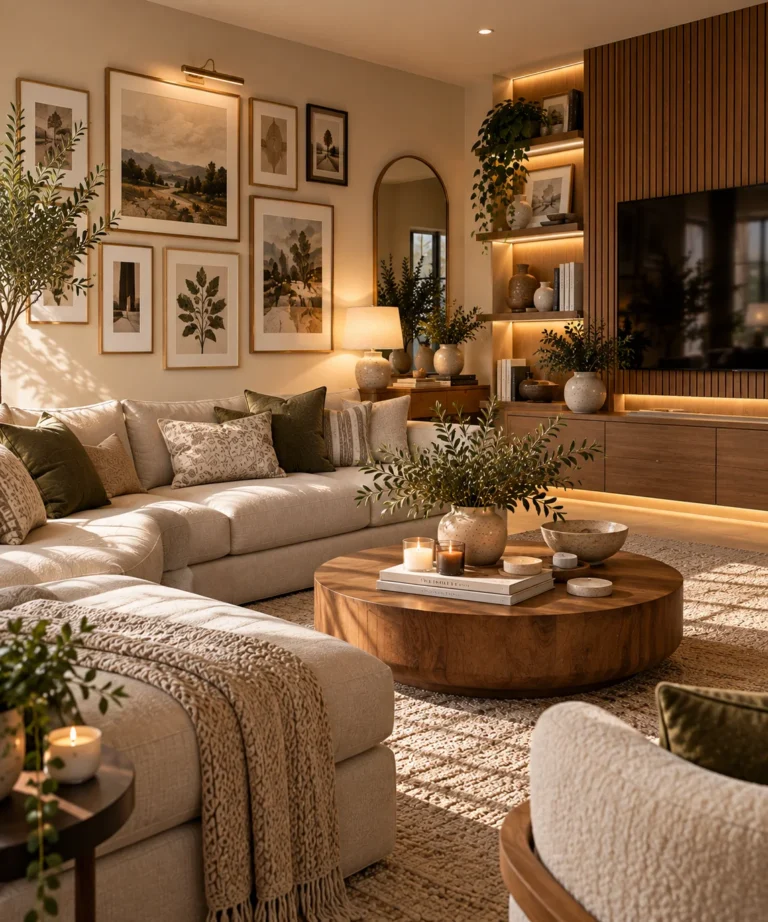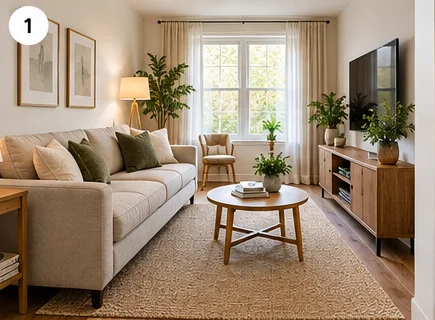
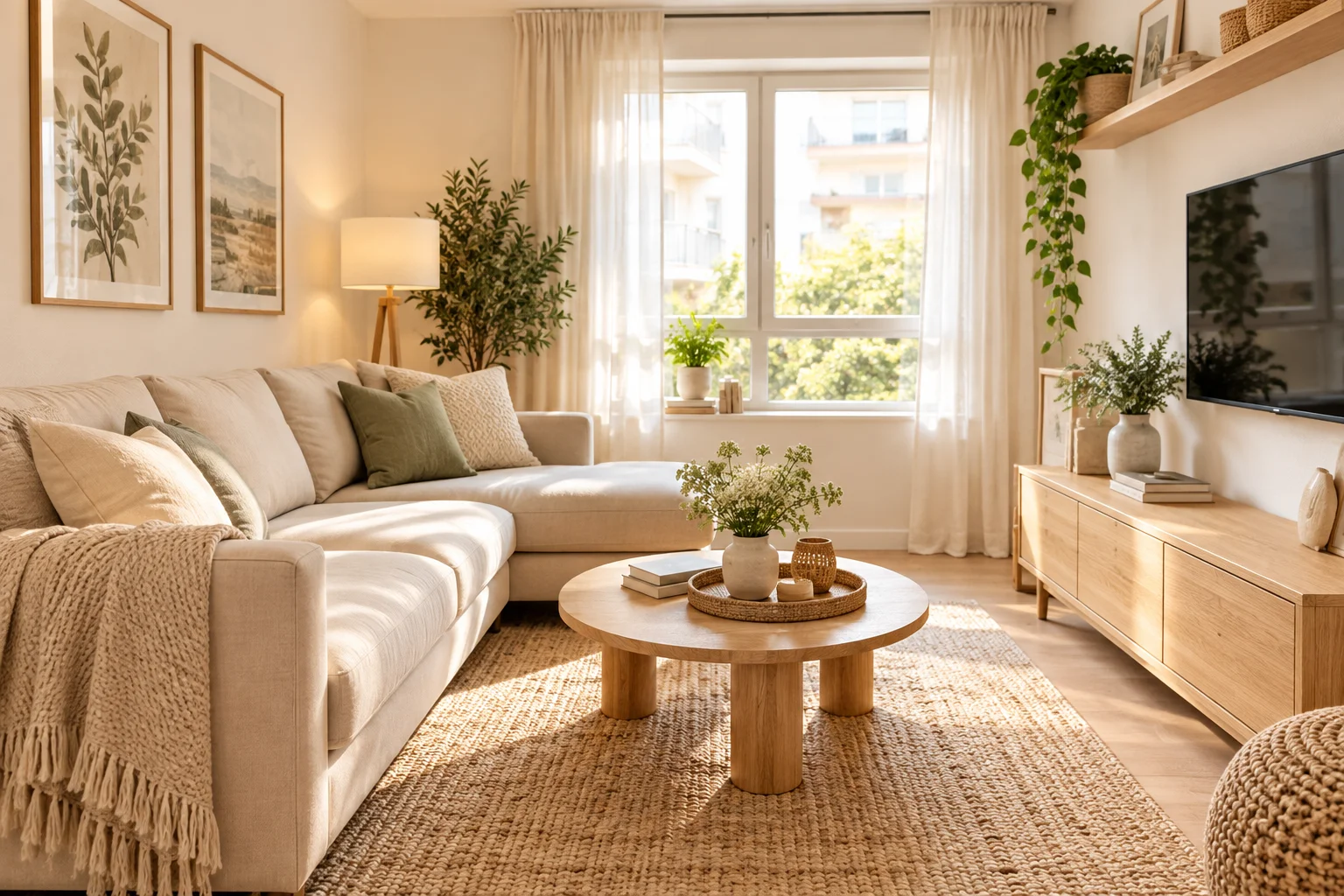
A small living room can feel cramped even when it has enough space for everything you need. Oversized furniture, heavy curtains, poor lighting, and too many decorative accents can make the room feel smaller than it really is. The solution isn’t necessarily to remove everything you love or spend money on a renovation. It’s to make smarter choices with furniture, color, lighting, and layout.
Learning how to make a small living room look bigger starts with creating an open visual flow. A lighter color palette, appropriately scaled furniture, mirrors, and thoughtful storage can make a compact space feel brighter, airier, and more comfortable without sacrificing personality.
These 12 practical decorating ideas will help you make the most of your living room, whether you live in a small apartment, rent a studio, or have a compact home.
Quick Takeaways
-
Choose furniture with the right proportions. Slim arms, exposed legs, and raised bases help preserve a sense of openness.
-
Use a cohesive color palette. Soft whites, warm neutrals, and pale earth tones help walls and furniture feel visually connected.
-
Hang mirrors strategically. Position a mirror to reflect natural light or an attractive view.
-
Keep the floor visible. Use appropriately sized rugs, floating shelves, and furniture with open bases.
-
Layer your lighting. Combine ceiling lights, floor lamps, and table lamps instead of relying on a single overhead fixture.
-
Reduce visual clutter. Closed storage and a few well-chosen accessories make a room feel calmer and more spacious.
1. Choose a Light, Cohesive Color Palette
Color influences how we perceive the size and openness of a room. Light colors reflect more light than dark colors in comparable finishes, while a coordinated palette reduces strong visual breaks that can make a compact living room feel busy.
This doesn’t mean your entire room needs to be white. Warm ivory, soft beige, pale greige, muted sage, and light taupe can all create an inviting backdrop.
How to Choose Colors That Open Up the Room
-
Paint walls in a light neutral that works with your natural lighting.
-
Choose a sofa in a related shade so it doesn’t create a sharp visual contrast against the walls.
-
Use pale wood, natural linen, and cream upholstery to add warmth.
-
Introduce stronger colors through small accessories, such as cushions, artwork, or a ceramic vase.
For example, warm white walls paired with a sand-colored sofa, pale oak coffee table, and oatmeal curtains create a cohesive look without feeling sterile.
If you love darker colors, use them as accents rather than avoiding them altogether. A deep green cushion or charcoal table lamp can add depth and personality without overwhelming the space.
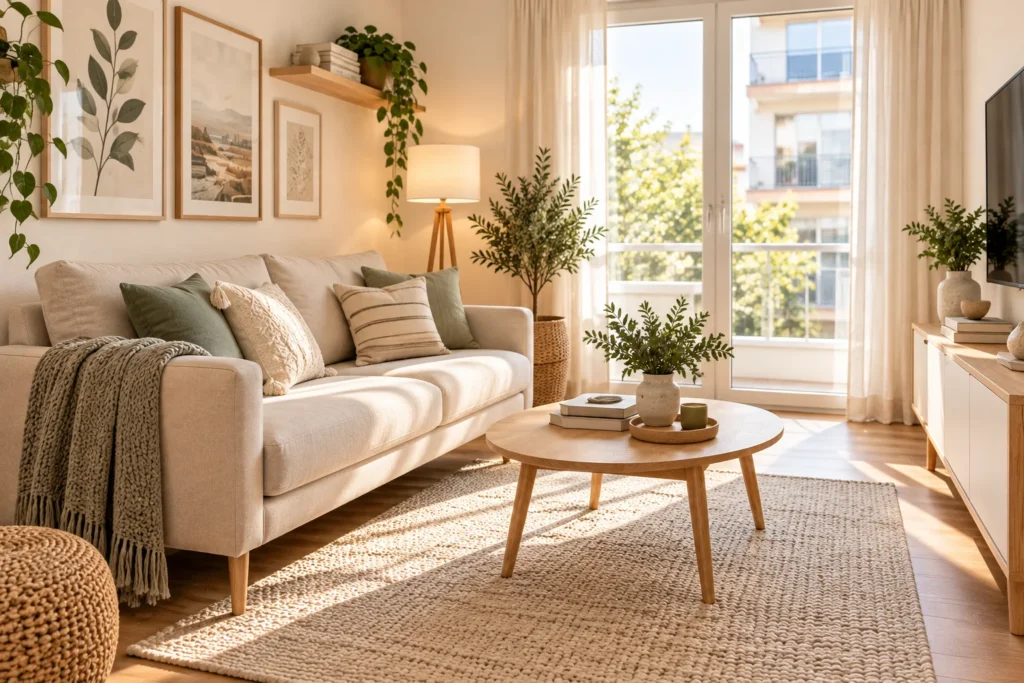
2. Select Furniture That Fits the Room
Furniture scale is one of the most important factors in a small living room. A large sectional, deep sofa, or bulky armchair can occupy much of the available floor area and restrict movement.
However, choosing the smallest furniture available isn’t always the answer. Tiny pieces can look awkward in a room that needs a comfortable seating area. Aim for furniture that provides the seating you need while leaving enough space to move around it.
What to Look For
-
Slim arms: Narrow sofa arms preserve seating space without increasing the overall width.
-
Exposed legs: Raised furniture allows more of the floor to remain visible.
-
Compact silhouettes: A two-seat sofa or apartment-size sofa may be more practical than a full-size sectional.
-
Open-base furniture: Tables and occasional chairs with visible legs feel lighter than solid, boxy designs.
Before buying anything, measure the sofa’s full width, depth, and height. A sofa that fits against the wall can still be too deep for the room.
As a general starting point, leave around 30–36 inches for major walkways when the layout allows. In tighter apartments, you may need a narrower route, but the goal is to avoid awkwardly squeezing past furniture.
Budget tip: If buying new furniture isn’t practical, rearrange what you already own. Removing a bulky side table or shifting an armchair can make a surprising difference.
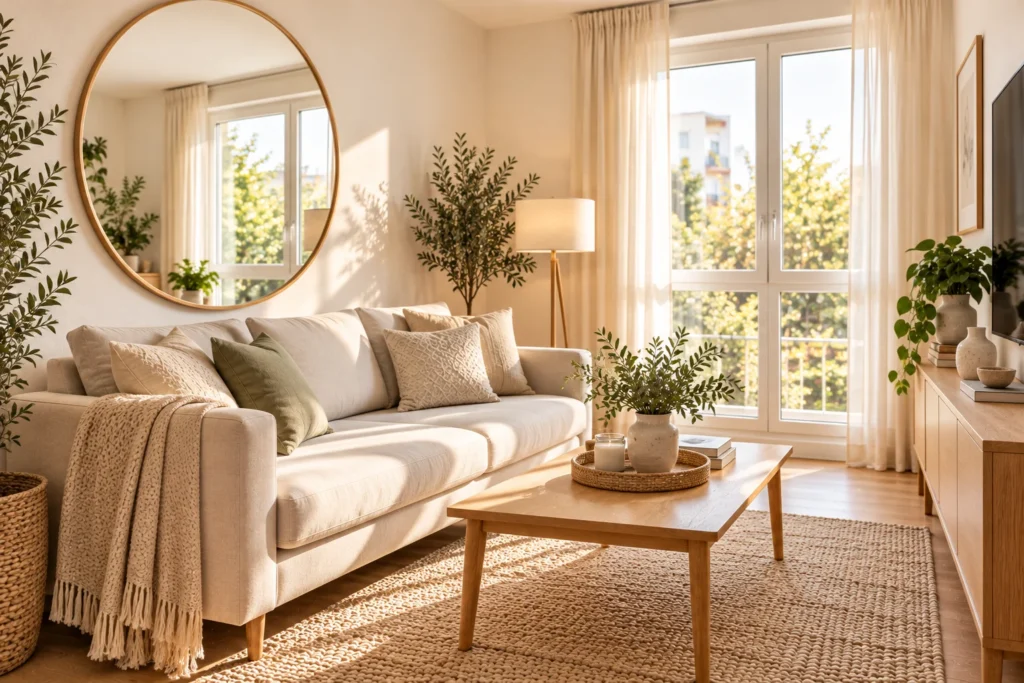
3. Use Mirrors to Create More Visual Space
Mirrors are a classic small-space decorating trick because they reflect light and create the impression of additional visual depth. When positioned thoughtfully, they can make a narrow living room feel brighter and less enclosed.
The placement matters more than the number of mirrors you use.
Where to Place a Mirror
-
Hang a large mirror opposite or adjacent to a window so it captures natural light.
-
Place a tall mirror on a narrow wall to introduce a sense of height.
-
Use a simple round mirror above a console table to soften a room filled with straight lines.
-
Position a mirror where it reflects an attractive view, greenery, or a well-styled part of the room.
Choose a mirror that suits the wall’s proportions. A very small mirror on a large empty wall may look disconnected, while an oversized mirror can overwhelm a tight space if it leaves little breathing room around the frame.
A slim frame in wood, brass, or matte black keeps the look refined.
Budget tip: A thrifted mirror can be refreshed with paint or a new frame. One well-placed mirror is often more effective than several small decorative ones scattered around the room.

4. Choose the Right Rug Size and Placement
A rug helps define the seating area, but choosing one that’s too small can make the entire room feel fragmented. A tiny rug surrounded by exposed floor may visually separate the furniture into disconnected pieces rather than creating one cohesive arrangement.
A properly proportioned rug brings the sofa, chairs, and coffee table together.
How to Size a Rug for a Small Living Room
-
Choose a rug large enough for at least the front legs of the sofa and accompanying chairs to sit on it.
-
Leave some visible flooring around the rug’s perimeter when possible.
-
Use a low-pile or flatweave design if you need to move chairs easily or have a tight walkway.
-
Choose subtle patterns and colors that complement the furniture rather than compete with it.
Common rug sizes such as 5 × 8 feet or 6 × 9 feet can work in compact living rooms, depending on the dimensions of the seating area. Measure the furniture arrangement before purchasing; the best size is the one that anchors the layout without blocking doors or circulation.
A pale neutral rug can brighten the space, while a lightly textured or low-contrast pattern adds character without making the floor feel visually crowded.
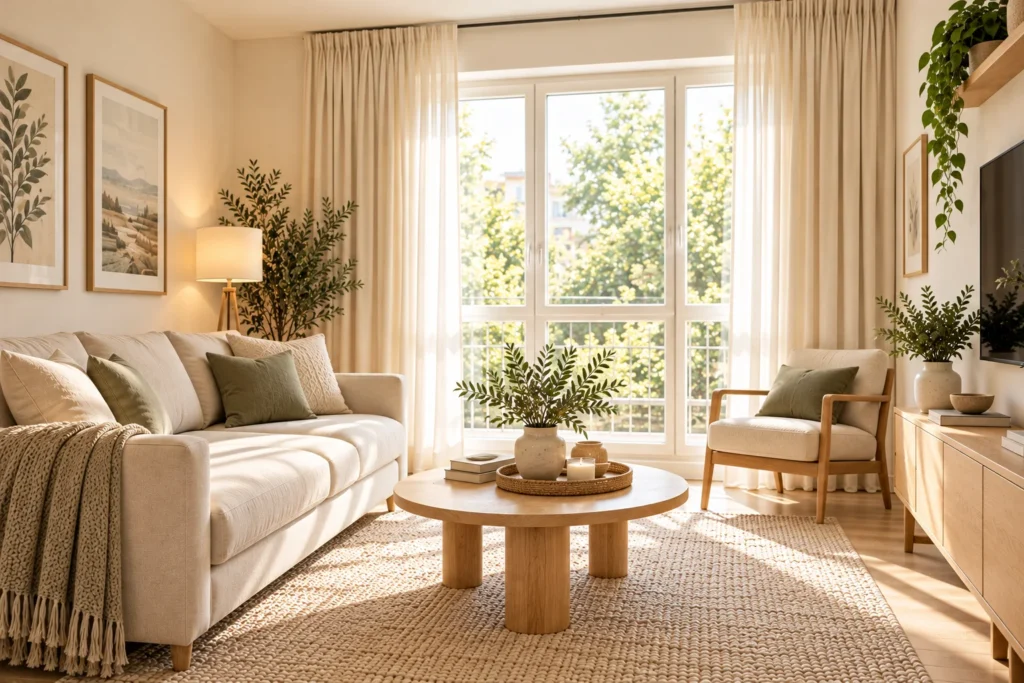
5. Hang Curtains High and Keep Them Light
Curtains can change how tall a room appears. When the curtain rod is positioned just above the window frame, the wall may look shorter than it really is. Raising the rod closer to the ceiling draws the eye upward and emphasizes vertical space.
Lightweight curtains also allow daylight to filter into the room, helping it feel more open.
Curtain Styling Tips
-
Mount the curtain rod a few inches above the window frame, or closer to the ceiling when the proportions suit the room.
-
Extend the rod beyond the window frame so the panels can sit mostly beside the glass when open.
-
Choose floor-length curtains that gently touch the floor or finish just above it.
-
Look for linen blends, cotton, or sheer fabrics in soft neutral colors.
Avoid short curtains that stop halfway down the wall, as they can make the window area appear compressed. Heavy, dark panels can also feel imposing in a small room, especially when they cover much of the glass.
If privacy is important, layer sheer curtains with lined side panels or use a discreet roller shade behind the decorative curtains.
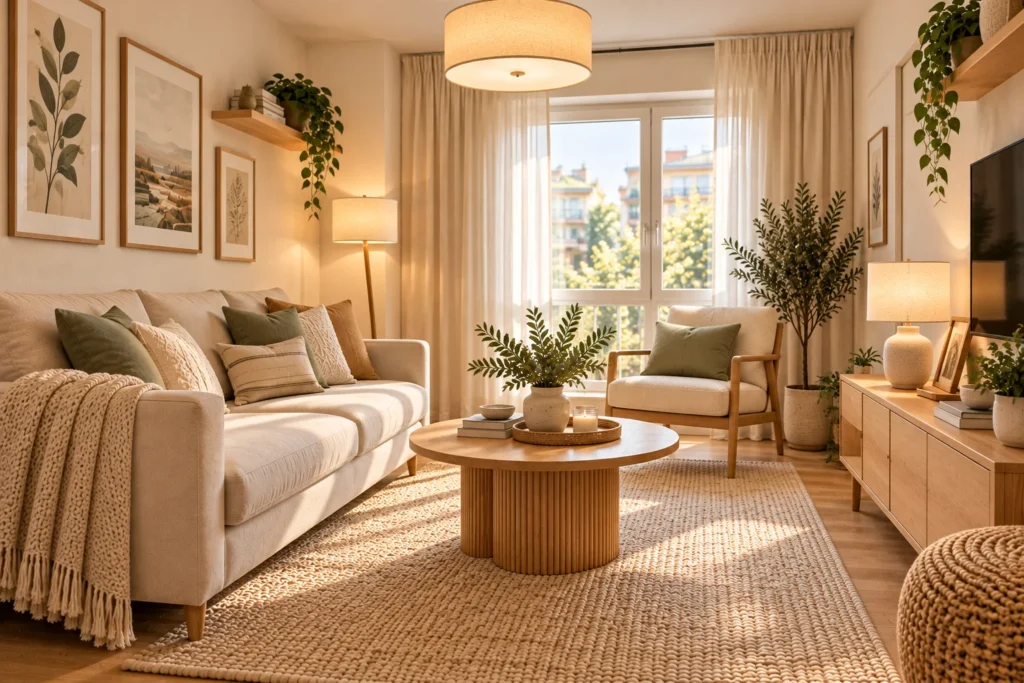
6. Layer Lighting to Brighten Dark Corners
A room with a single overhead light can feel flat, particularly when corners remain dark. Layered lighting distributes brightness throughout the space and makes the room feel more balanced.
The aim is to illuminate different parts of the room without filling every corner with a lamp.
Build a Simple Lighting Plan
-
Ambient lighting: A ceiling fixture or well-distributed overhead lighting provides general illumination.
-
Task lighting: A floor or table lamp makes reading and other activities more comfortable.
-
Accent lighting: A small lamp or directional light highlights artwork, shelves, or a decorative feature.
Place a floor lamp beside the sofa or behind an accent chair, provided it doesn’t obstruct the walkway. A table lamp on a slim console can brighten a darker wall without requiring additional floor space.
Choose warm-white bulbs for a welcoming atmosphere, and make sure their brightness suits the room’s size and intended use. In a room with little natural light, brighter, evenly distributed lighting can be especially helpful.
If you’re renting, plug-in sconces and floor lamps are useful alternatives to hardwired fixtures.
Budget tip: Replace mismatched bulbs with consistent color temperatures and add one strategically placed lamp before purchasing multiple new accessories.
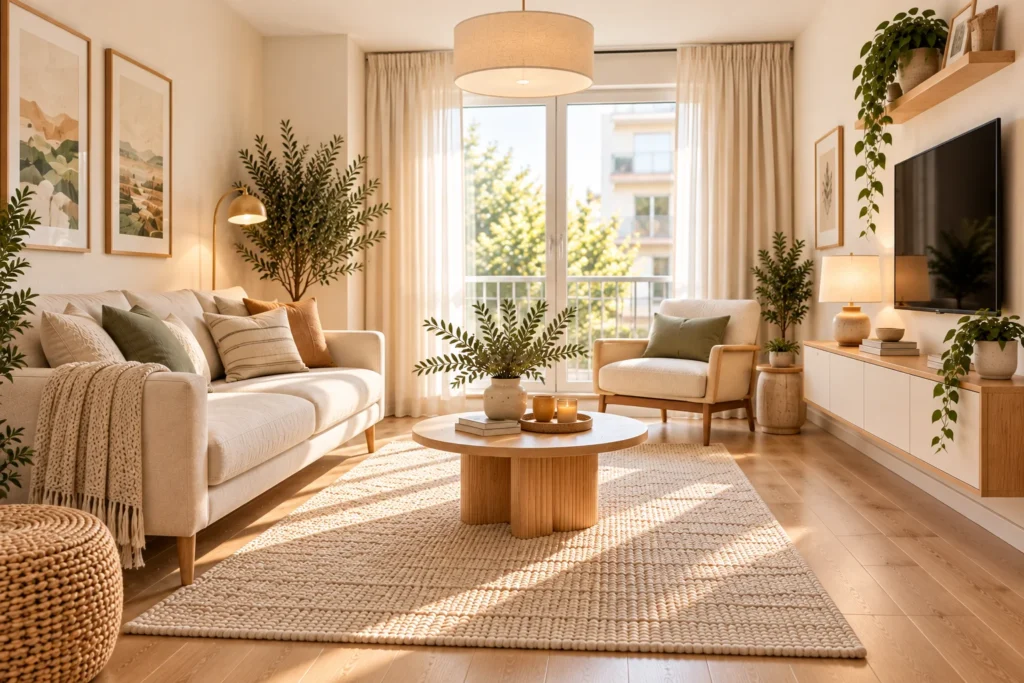
7. Keep the Floor as Open as Possible
Visible floor space helps a room feel less crowded. Furniture that sits directly on the floor with a heavy, solid base can create a visually dense arrangement, particularly when several pieces are grouped together.
Furniture with raised legs, wall-mounted storage, and open shelving can help preserve a sense of openness.
Practical Ways to Reveal More Floor
-
Choose a sofa or armchair with visible legs.
-
Replace a bulky TV cabinet with a shallow, wall-mounted media console if installation is permitted.
-
Use a floating shelf instead of a floor-standing bookcase for a small collection of books or decorative objects.
-
Consider nesting tables that can be separated when needed and tucked away afterward.
-
Keep the area immediately inside doorways and along main walkways clear.
Don’t feel obligated to replace every solid piece of furniture. One closed storage cabinet may be valuable for concealing everyday clutter. Balance it with lighter furniture elsewhere so the room doesn’t feel dominated by heavy shapes.
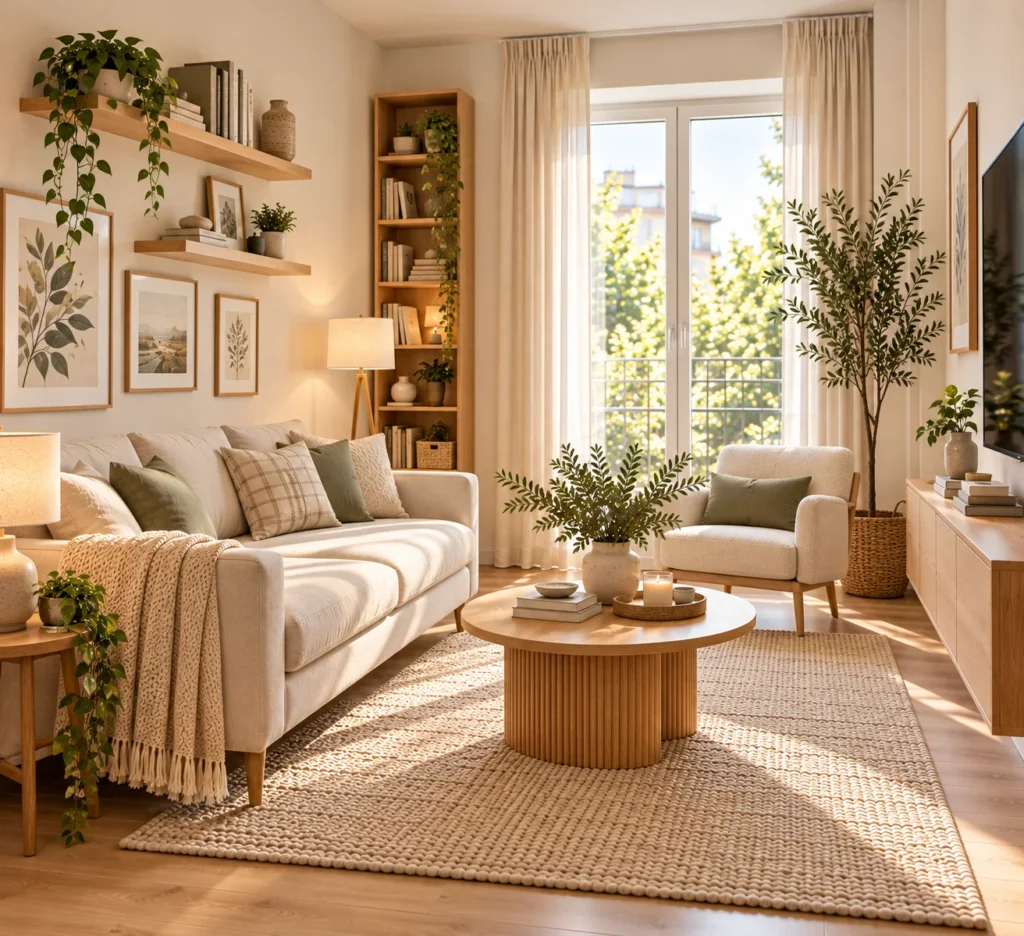
8. Make Smart Use of Vertical Space
When floor space is limited, look upward. Vertical storage and tall decorative elements draw attention toward the ceiling while freeing up valuable room for seating and movement.
The trick is to use height without making the walls feel crowded.
Ways to Use Vertical Space Effectively
-
Install a narrow bookcase that reaches toward the ceiling.
-
Hang artwork slightly higher if it helps the composition relate to taller furniture or the wall’s proportions.
-
Use floating shelves for books, framed photographs, and small plants.
-
Place a tall, slender plant in an empty corner.
-
Consider wall-mounted hooks or cabinets for items that would otherwise occupy floor space.
Keep open shelving edited rather than filling every shelf. A mix of books, a few decorative objects, and some empty space will look calmer than a tightly packed display.
For artwork above a sofa, the center of the composition often works well around 57–60 inches from the floor, although furniture height and the artwork’s size should guide the final placement.
9. Use Multi-Functional Furniture and Hidden Storage
A small living room often serves several purposes. It may be a place to relax, work, entertain guests, and store books, blankets, games, or children’s toys.
Furniture that performs more than one job helps reduce the number of separate pieces in the room. Less visual clutter can make the space feel more spacious and easier to maintain.
Multi-Functional Pieces Worth Considering
-
Storage ottoman: Provides a footrest, occasional seating, and a place to store blankets.
-
Nesting tables: Offer extra surface space when guests arrive and tuck away when they’re not needed.
-
Lift-top coffee table: Provides hidden storage and can double as a convenient work surface.
-
Slim console table: Creates a useful drop zone behind a sofa or along a wall.
-
Storage bench: Adds seating while concealing less attractive everyday items.
Choose pieces that fit your actual routines. A large storage ottoman may be useful, but it isn’t a space-saving solution if it blocks the walkway or takes up more room than the furniture it replaces.
For a very compact apartment, consider whether you need a traditional coffee table at all. A single small side table and a movable ottoman may provide everything you need.
Budget tip: Attractive baskets inside an existing console or cabinet can create organized storage without requiring new furniture.
10. Declutter and Style With Restraint
Clutter competes for attention. When every surface holds decorations, books, electronics, and everyday belongings, the room can feel visually busy even if its furniture is relatively small.
A carefully edited space allows the furniture, textures, and architectural features to stand out.
A Simple Decluttering Method
Start with the most visible surfaces: the coffee table, media console, side tables, and open shelves.
-
Keep everyday essentials within reach, but group them in trays or baskets.
-
Leave part of the coffee table empty.
-
Store cables, remote controls, and chargers in a designated place.
-
Limit decorative objects to a few pieces with different heights or textures.
-
Rotate seasonal accessories instead of displaying everything at once.
For coffee-table styling, try a small tray, one or two books, and a low vase. This creates a focal point without making the table difficult to use.
Remember that a spacious-looking living room doesn’t need to be completely minimal. A woven basket, textured cushion, framed photograph, or favorite decorative object adds personality. The goal is to give each item enough room to be appreciated.
11. Choose Patterns and Textures That Add Depth
A small living room can feel flat if every surface has the same finish. Texture creates depth and visual interest without requiring lots of additional furniture or decorative objects.
The key is to vary materials while keeping the overall color scheme connected.
How to Layer Textures
Combine a few complementary materials, such as:
-
Linen upholstery with a chunky knit throw.
-
Pale oak furniture with woven baskets.
-
Cotton cushions with a subtle bouclé accent.
-
A smooth ceramic vase with a textured wool rug.
-
Sheer curtains with natural wood or brushed-metal accents.
Patterns work well too, but scale and contrast matter. A low-contrast stripe, small geometric pattern, or delicate botanical print can add character without overwhelming the room.
If your sofa is patterned, keep the rug and curtains simpler. If the larger surfaces are plain, a patterned cushion or accent chair can provide a focal point.
Avoid combining too many competing patterns in a room with limited visual space. Repeating one or two accent colors throughout the room helps the design feel intentional.
12. Create a Layout That Improves Flow
Even beautifully chosen furniture can make a small room feel cramped when it’s arranged poorly. A good layout allows people to move naturally between the entrance, seating, windows, and other parts of the home.
Rather than pushing every piece against a wall automatically, start by identifying the room’s main function and the routes people need to take.
How to Arrange Furniture in a Small Living Room
-
Identify the focal point. This might be a window, fireplace, television, or favorite piece of artwork.
-
Place the main seating first. Position the sofa so it supports conversation or faces the focal point without blocking circulation.
-
Add smaller pieces carefully. Introduce a coffee table, side table, or accent chair only if the room can accommodate it comfortably.
-
Protect the main walkway. Aim for roughly 30–36 inches where possible, adjusting to the room’s actual dimensions.
-
Check the view from the entrance. Avoid placing tall furniture where it immediately blocks the view into the room.
In a narrow living room, placing a compact sofa along the longest wall often creates a useful seating zone. In a square room, a small sofa and one accent chair may feel more balanced than a large sectional.
Don’t overlook furniture depth. A shallow console, narrow side table, or round coffee table can be easier to navigate around than a deep rectangular piece with sharp corners.
Common Mistakes to Avoid
1. Choosing a Rug That’s Too Small
A tiny rug can make the seating arrangement look disconnected. Choose a rug that extends beneath the front legs of the main seating pieces whenever the layout allows.
2. Buying Oversized Furniture
Deep sofas and bulky armchairs can restrict movement. Measure the room and furniture, and consider compact silhouettes with slim arms and raised legs.
3. Blocking Natural Light
Heavy curtains that cover the glass can make the room feel darker. Use lighter fabrics and position curtain panels outside the window area when possible.
4. Overdecorating Every Surface
Too many accessories create visual competition. Edit your displays and leave some surfaces clear so the room feels calmer.
5. Relying on One Overhead Light
Uneven lighting can leave corners looking gloomy. Add a floor lamp or table lamp to distribute light around the seating area.
6. Ignoring Traffic Flow
Furniture that blocks doorways or creates narrow passages makes the room harder to use. Prioritize comfortable movement before adding decorative pieces.
Key Pieces to Consider for a Small Living Room
If you’re updating your furniture, prioritize pieces that provide comfort and function without dominating the room.
1. Apartment-Size Sofa
Look for a comfortable seat with slim arms, a moderate depth, and visible legs. Neutral upholstery is versatile, but muted green or warm brown can work just as well if coordinated with the room. Measure the full footprint rather than judging by the seating capacity alone.
2. Round or Oval Coffee Table
Curved edges can make it easier to navigate a tight seating arrangement. Choose a diameter or length that leaves comfortable clearance from the sofa and doesn’t interfere with the main walkway.
3. Large Wall Mirror
A mirror with a slim frame adds visual depth without taking up floor space. Position it to reflect daylight or an attractive part of the room rather than a cluttered corner.
4. Storage Ottoman
Choose one that works as a footrest, extra seat, and hidden storage unit. A firm, flat top makes it more practical when you want to use it as an occasional coffee table with a tray.
5. Slim Floor Lamp
A narrow base and simple silhouette provide useful lighting without occupying much floor space. Choose a style that complements the other metal, wood, or fabric finishes in the room.
6. Well-Proportioned Area Rug
Select a rug large enough to connect the seating pieces. A low-pile weave in ivory, sand, or a subtle pattern adds texture while keeping the arrangement visually cohesive.
Frequently Asked Questions
1. What color makes a small living room look bigger?
Warm white, ivory, pale beige, and light greige are popular choices because they reflect light and create a softer visual transition between surfaces. Pale sage and other muted colors can work well too. The best shade depends on your natural lighting, flooring, and existing furniture.
2. Does painting a small living room white make it look bigger?
It can, particularly when the room receives good natural light. White walls create a bright backdrop, but the wrong shade may look cold in a room with limited daylight. Warm whites, coordinated textiles, and layered lighting often produce a more inviting result.
3. Should all the furniture in a small living room be against the walls?
No. Positioning furniture against the walls can free up central space, but it isn’t always the most effective arrangement. A small sofa floated slightly away from a wall can work if it improves circulation or creates a better seating area. Prioritize the layout over a strict rule.
4. What size rug is best for a small living room?
The ideal size depends on the sofa, room dimensions, and furniture arrangement. A 5 × 8-foot or 6 × 9-foot rug may work in many compact spaces, but measure first. Aim to place at least the front legs of the main seating pieces on the rug.
5. How can I make a small living room look bigger on a budget?
Start by rearranging furniture, clearing unnecessary items, and using existing accessories more selectively. Hang curtains higher, improve bulb placement, add a mirror you already own, and use baskets to organize clutter. These changes can improve the room without requiring new furniture.
6. Do mirrors really make a small room look larger?
Mirrors can create the impression of additional depth by reflecting light and parts of the room. They work particularly well when they reflect a window or an attractive view. A mirror won’t physically enlarge the room, but thoughtful placement can make it feel more open.
7. How do I make a small living room look bigger without buying new furniture?
Begin with the layout. Move furniture away from important walkways, remove pieces that rarely serve a purpose, clear surfaces, and make better use of vertical space. You can also rearrange cushions, relocate lamps, and open up window areas to create a lighter, more cohesive look.
8. Can dark colors work in a small living room?
Absolutely. Dark colors can add depth, contrast, and a cozy atmosphere. Use them thoughtfully through accent walls, cushions, artwork, or furniture, and balance them with adequate lighting and lighter materials. A small room doesn’t have to be entirely pale to feel well designed.
Conclusion: Make Your Small Living Room Feel More Spacious
Making a small living room look bigger is less about its square footage and more about how the space is arranged, illuminated, and styled. A well-scaled sofa, a cohesive color palette, a thoughtfully placed mirror, and clear walkways can transform the room’s overall appearance.
You don’t have to tackle every idea at once. Start with the change that will make the biggest difference in your home, whether that’s moving furniture, replacing heavy curtains, or clearing a cluttered coffee table.
Save this guide for your next living room refresh, and choose two or three ideas to try this week. Small, considered changes can make your living room feel brighter, more comfortable, and much easier to enjoy.