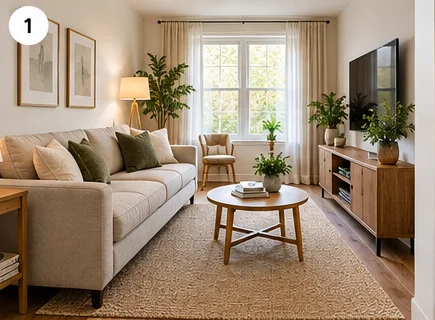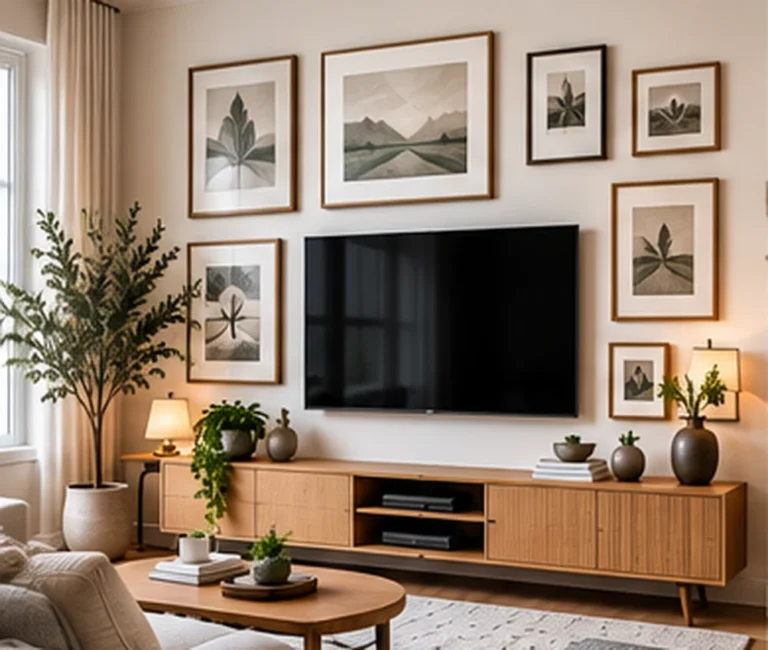
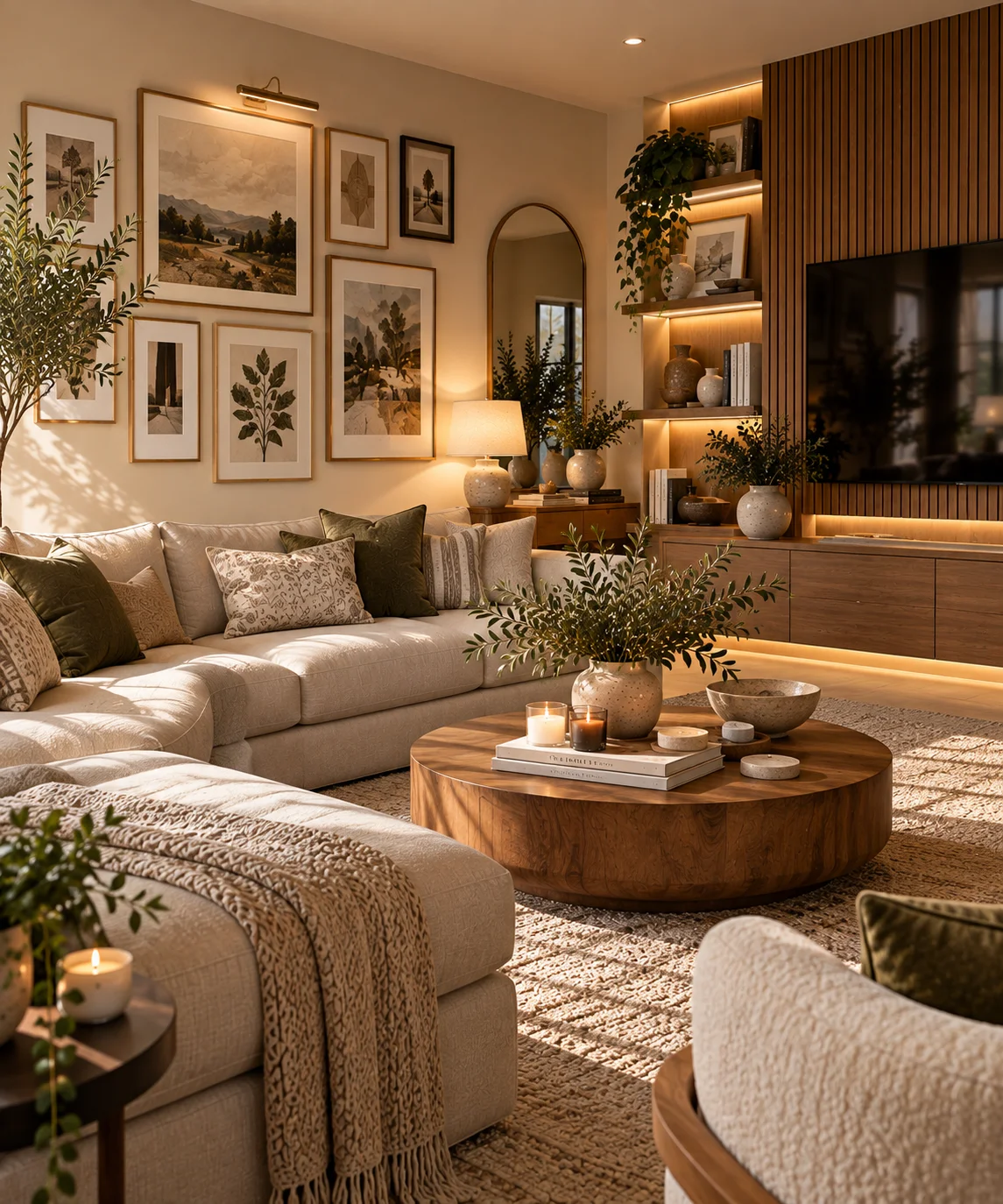
Your living room walls can do much more than fill empty space. The right wall decor can establish the room’s color palette, add personality, create a focal point, and make your furniture feel more intentional.
From oversized artwork and gallery walls to mirrors, floating shelves, textured accents, and painted feature walls, there are plenty of ways to transform a blank wall without making the room feel cluttered.
The key is choosing decor that suits the scale of your living room, works with your existing furniture, and creates visual balance.
Quick Takeaways
- Use oversized artwork when you want one strong focal point.
- Relate artwork size to the furniture underneath it.
- Mix art, mirrors, textiles, wood, and other materials to add depth.
- Gallery walls work best when the individual pieces share a visual connection.
- Don’t feel pressured to decorate every inch of wall space.
- Use paint, paneling, or wallpaper when you want the wall itself to become a design feature.
1. Make a Statement With Oversized Artwork
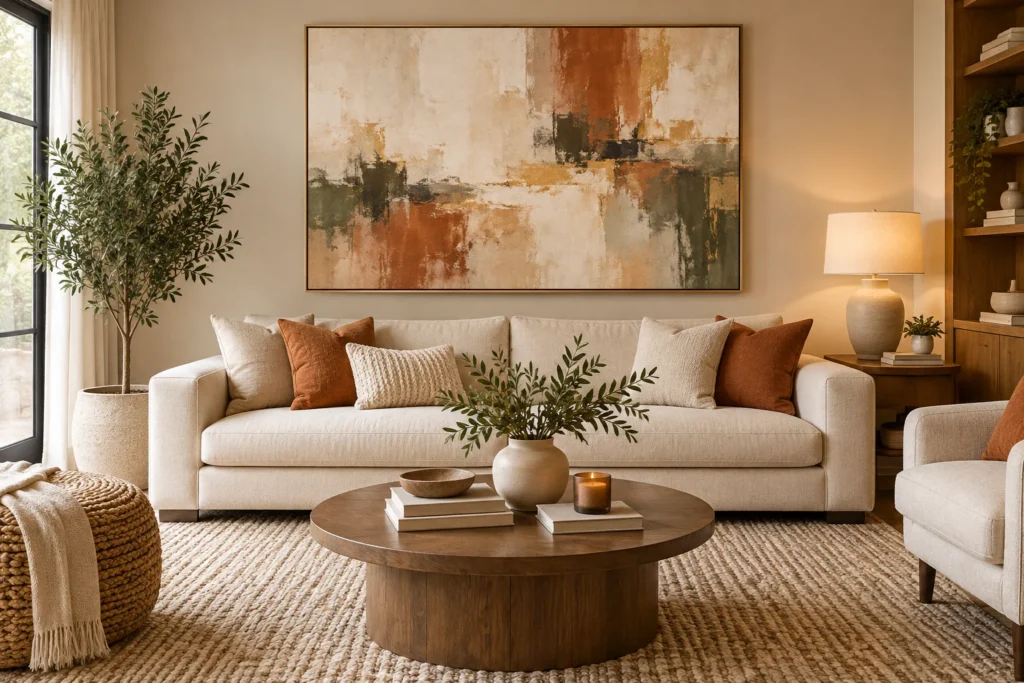
A single large artwork can instantly anchor a living room. Instead of trying to decorate every inch of wall, choose one piece with enough visual weight to hold the space.
Abstract paintings, large photographs, landscapes, and graphic prints can all work beautifully. Look for colors that connect with your sofa, rug, curtains, or accent furniture rather than choosing artwork in isolation.
How to Get the Proportions Right
As a general guideline, artwork displayed above a sofa often looks balanced when its overall width is roughly two-thirds to three-quarters of the sofa’s width.
Leave some breathing room between the top of the sofa and the artwork. Around 6–10 inches is a useful starting point, although the ideal distance depends on the furniture and frame size.
If your wall is particularly large, don’t automatically compensate by hanging several small pictures. One oversized piece can often create a stronger and more sophisticated focal point.
2. Create a Collected Gallery Wall
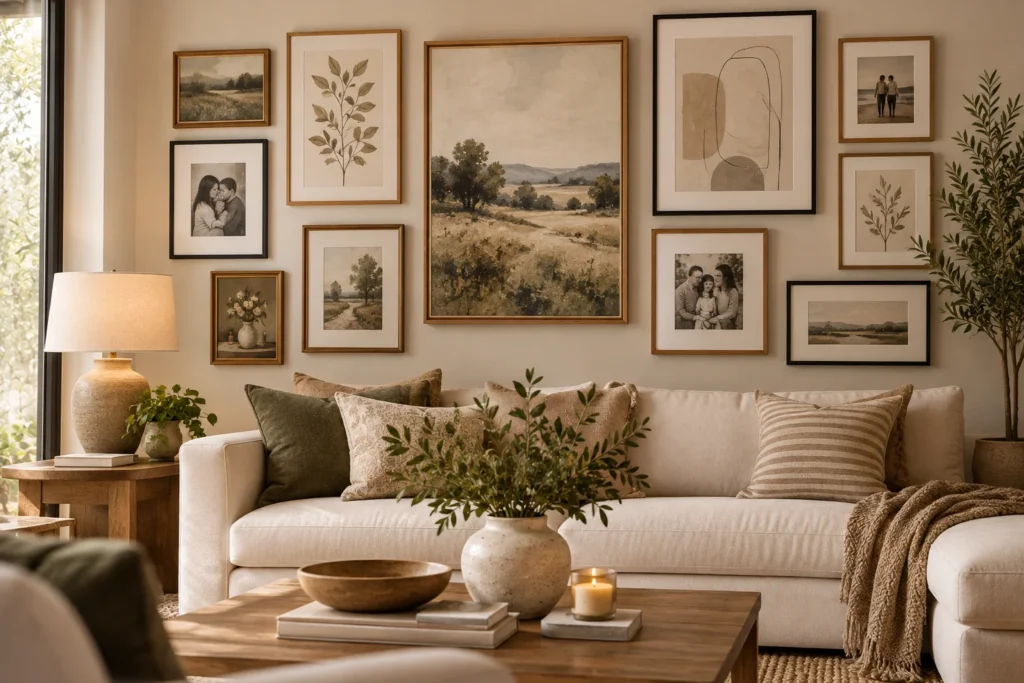
Gallery walls are ideal when you want your living room to feel personal and collected rather than overly coordinated.
Combine artwork, photographs, sketches, typography, or small decorative objects to create a collection that tells a story. You don’t need every frame to match. A shared color palette can create cohesion even when the frame styles differ.
Try the Paper-Template Method
Before putting holes in the wall, trace each frame on kraft paper or newspaper. Cut out the shapes and arrange them on the wall with painter’s tape.
This makes it much easier to experiment with spacing and composition before committing.
For a more polished arrangement, keep the gaps between frames relatively consistent. For a relaxed arrangement, vary the spacing slightly while maintaining an overall shape.
3. Add a Large Mirror
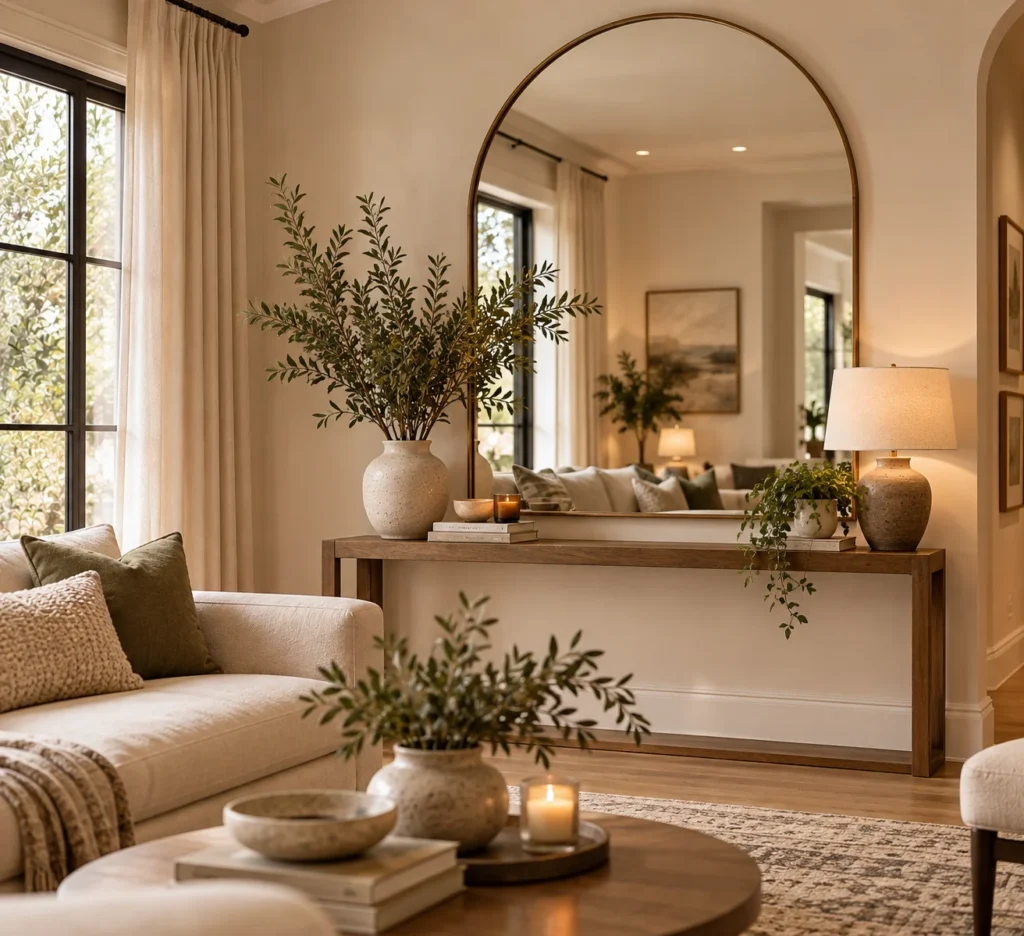
A mirror can act as both decoration and a functional design element. It reflects light and can make a room feel more open, particularly when positioned where it reflects a window, lamp, or attractive architectural feature.
Choose the shape according to the room’s existing lines.
- Round mirrors: Soften rooms dominated by straight furniture.
- Arched mirrors: Add an architectural feel.
- Rectangular mirrors: Work naturally above consoles and long furniture.
- Oversized leaning mirrors: Suit relaxed, contemporary interiors.
Avoid positioning a mirror where it reflects clutter or an uninteresting wall. What the mirror reflects becomes part of the room’s visual composition.
4. Style a Wall With Floating Shelves
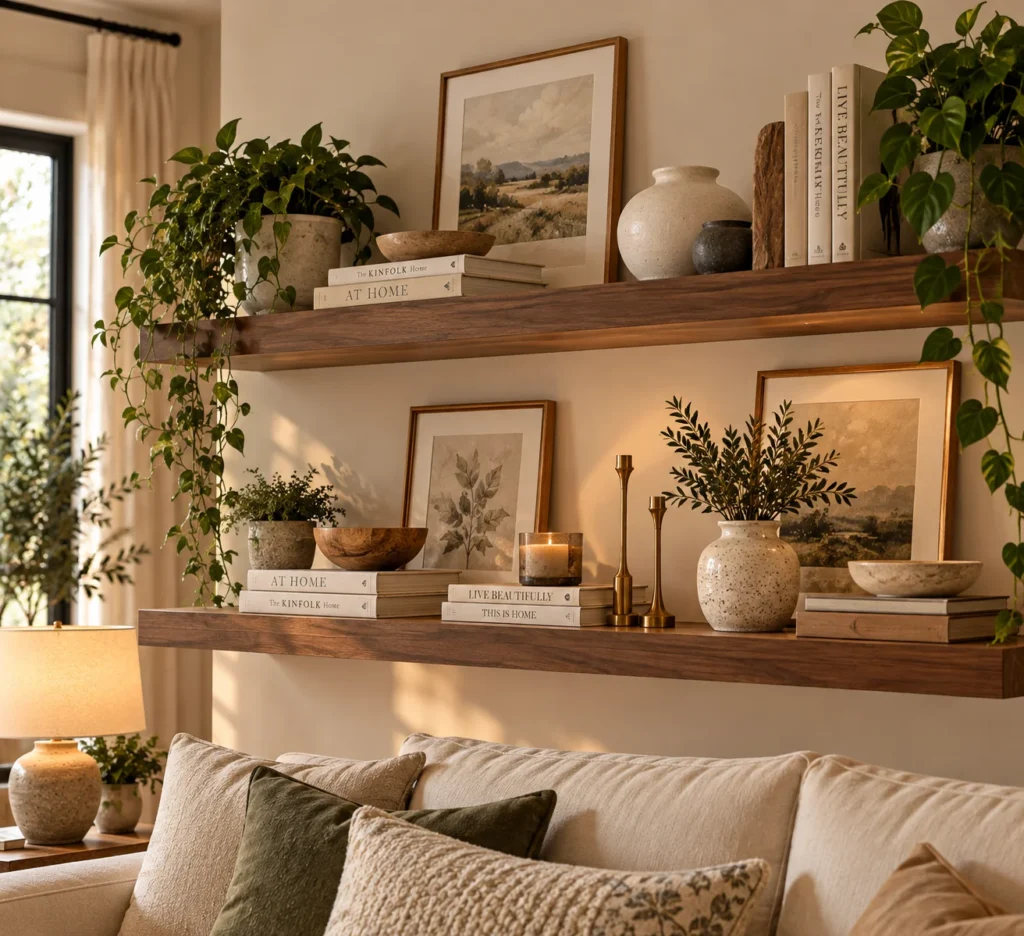
Floating shelves are especially useful when you want your wall decor to change over time. They give you a place for books, ceramics, framed artwork, small plants, and collected objects without requiring a permanent arrangement.
The secret is restraint.
Rather than filling every inch of shelf space, leave some areas empty. Combine objects of different heights and shapes, then repeat a few materials—such as wood, ceramic, glass, and metal—to make the display feel connected.
For a small living room, one or two long shelves can create a strong horizontal line without visually overwhelming the space.
5. Bring Texture to the Walls With Textiles
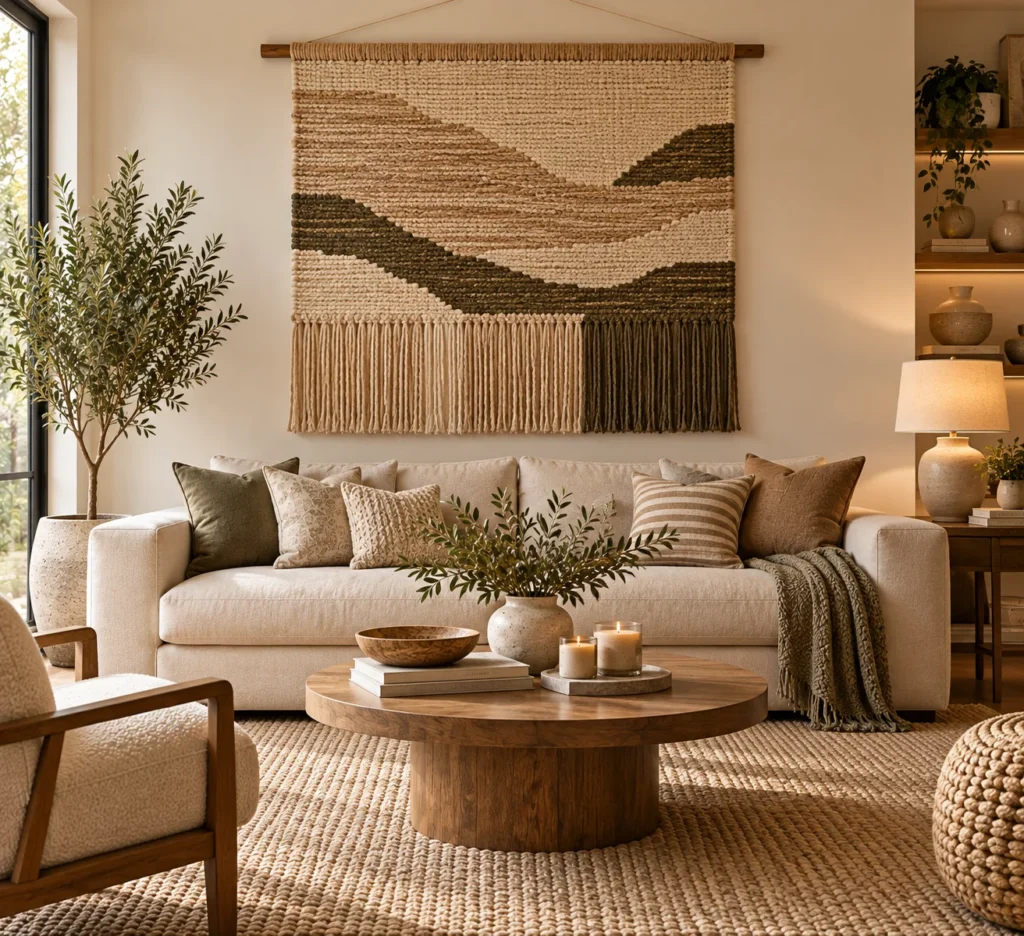
Wall decor doesn’t have to be framed.
Woven wall hangings, tapestries, quilted pieces, and other textile art introduce softness and texture that hard frames cannot provide. They’re particularly effective in rooms with lots of smooth surfaces, such as leather sofas, glass tables, or polished flooring.
Choose a textile that echoes colors already present in the room. A neutral woven piece can add warmth without introducing another competing accent color.
For a more contemporary look, choose a large textile with a simple geometric or abstract pattern rather than a highly detailed design.
6. Turn the TV Wall Into a Designed Feature
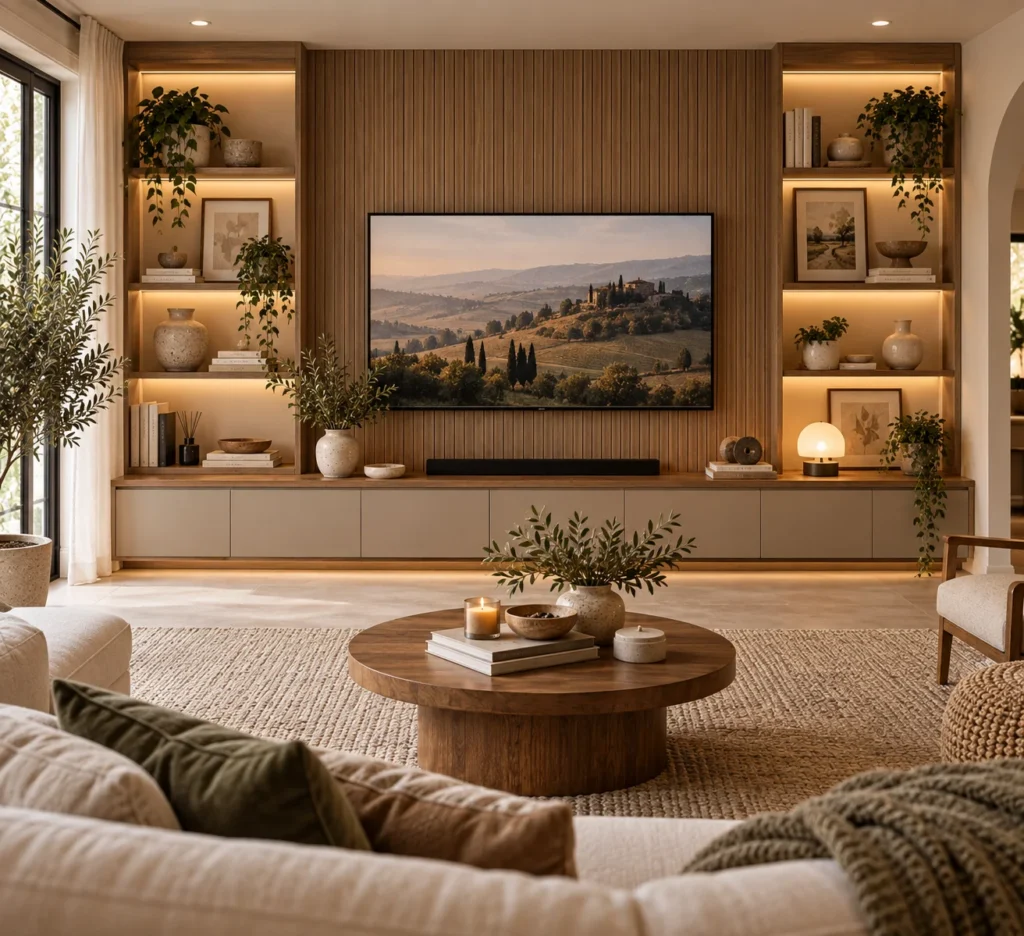
The television doesn’t have to be the least attractive element in the room.
If your TV sits on a large empty wall, create a composition around it using cabinetry, shelving, artwork, wood paneling, or architectural lighting. The goal isn’t to disguise the television completely but to make the entire wall feel intentional.
A simple approach is to combine a low media console with artwork or shelving on either side. In larger rooms, built-in cabinetry can provide both storage and visual structure.
Keep the area around the screen relatively uncluttered. Too many decorative objects can make the wall feel chaotic.
7. Use a Pair of Artworks for Symmetry

Two related artworks can be easier to style than a large gallery wall and more interesting than one small picture.
Choose pieces that share at least one characteristic—similar colors, subject matter, frame style, or dimensions. They don’t necessarily have to be identical.
This approach works particularly well above a sofa, console, or fireplace because the symmetry reinforces the furniture’s horizontal shape.
For a classic look, choose two matching frames. For something more relaxed, use different frames with artwork that shares similar colors or themes.
8. Create an Accent Wall With Color
Sometimes the most effective wall decor is the wall itself.
A carefully chosen paint color can provide the backdrop for everything else in the room. Deep green, muted blue, warm terracotta, creamy beige, and sophisticated charcoal can all create very different moods.
You don’t necessarily need a dramatically contrasting color. A slightly deeper version of your existing wall color can add dimension while keeping the room calm.
If you’re renting, removable wallpaper can offer a similar visual effect without permanent painting.
When choosing a color, consider the amount of natural light in the room. Darker shades can create a cozy atmosphere, while lighter colors generally help maintain a brighter and more open feeling.
9. Create Architectural Interest With Paneling
Wall molding, board-and-batten, fluted panels, and simple vertical battens can give a plain wall architectural character.
The best choice depends on the room’s style. Traditional molding works naturally in classic interiors, while simple vertical panels or fluted details can suit contemporary spaces.
You don’t need to cover every wall. A single feature wall behind the sofa or television can provide enough detail to transform the room.
Keep the Color Simple
Painting the paneling and wall the same color creates a subtle, sophisticated effect. A contrasting color makes the architectural detail more prominent.
For a timeless look, consider warm white, soft beige, muted green, or deep blue depending on the rest of your room’s palette.
10. Create a Layered Console-Wall Moment
If your living room has an empty wall behind a console, treat the entire area as one composition.
Start with a large mirror or artwork. Then add a table lamp, a few books, a vase, or a sculptural object on the console.
The combination of vertical wall decor and lower-level styling creates visual layers.
The trick is to vary heights rather than lining everything up at the same level. A tall lamp beside a shorter vase, for example, creates a more dynamic arrangement.
Choosing the Right Wall Decor for Your Living Room
Before buying anything, consider the wall’s size, the furniture below it, and the amount of visual activity already present in the room.
For a Small Living Room
Favor:
- One substantial artwork
- A large mirror
- Slim floating shelves
- Light-colored artwork
- Vertical compositions
Avoid filling every available surface. A few well-proportioned pieces can make a small room feel calmer and more spacious.
For a Large Living Room
Large walls can handle more visual weight. Consider oversized artwork, a substantial gallery wall, built-ins, paneling, or a combination of artwork and lighting.
Small decorative pieces scattered across a huge wall often look accidental rather than intentional.
For a Neutral Living Room
Use wall decor to introduce controlled contrast. Black frames, warm wood, muted greens, terracotta, brass, or textured textiles can keep a neutral room from feeling flat.
For a Colorful Living Room
Let the existing palette guide your artwork. You don’t need to introduce another accent color simply because the wall is empty.
Choose artwork that repeats one or two colors already present in the room for a more cohesive result.
How High Should You Hang Living Room Wall Decor?
A common starting point is to position artwork so its center sits around 57–60 inches from the floor, which roughly corresponds to average eye level.
However, furniture changes the equation.
Above a sofa or console, the artwork should relate visually to the furniture beneath it rather than being positioned according to a rigid measurement.
Think of the furniture and wall decor as one composition.
If artwork is too high, it can appear disconnected from the furniture. If it’s too low, it can make the area feel cramped.
Budget-Friendly Living Room Wall Decor Ideas
You don’t need an expensive art collection to create an interesting wall.
Try these affordable alternatives:
- Frame pages from vintage books or botanical illustrations.
- Print your own photographs in a consistent color palette.
- Look for oversized thrift-store frames and replace the artwork.
- Create inexpensive abstract art using leftover paint.
- Hang a vintage textile as a statement piece.
- Rearrange artwork you already own into a new composition.
- Paint one wall rather than purchasing multiple decorative pieces.
- Use floating shelves to rotate smaller pieces over time.
- Create a gallery wall from inexpensive prints and thrifted frames.
A particularly effective budget trick is to change the scale rather than the quantity. One large, inexpensive print can have more impact than five tiny pieces scattered across a wall.
Common Mistakes to Avoid
1. Hanging Everything Too High
Artwork floating far above the sofa can make the furniture and wall feel disconnected.
Better approach: Treat the sofa and artwork as a single visual grouping and keep the gap relatively modest.
2. Using Pieces That Are Too Small
A tiny frame can disappear on a large wall.
Better approach: Increase the artwork’s scale or group several smaller pieces together.
3. Matching Every Frame
Perfectly matching frames can sometimes make a room feel overly coordinated.
Better approach: Repeat one or two visual elements—such as color or material—while allowing some variation.
4. Decorating Every Empty Space
An empty wall isn’t necessarily a decorating problem.
Better approach: Leave some negative space so your strongest pieces can stand out.
5. Ignoring What’s Reflected in a Mirror
A beautiful mirror can become less effective if it reflects clutter, a blank wall, or an awkward angle.
Better approach: Check the reflection from the main seating positions before finalizing its location.
6. Forgetting the Furniture Underneath
Wall decor shouldn’t feel disconnected from the sofa, console, fireplace, or media unit below it.
Better approach: Consider width, color, shape, and visual weight together.
7. Adding Too Many Small Decorations
Too many small pieces can make a wall look busy without creating a clear focal point.
Better approach: Start with one dominant element and add smaller pieces only when they support the overall composition.
Key Pieces to Consider
Oversized Artwork
Look for a piece large enough to anchor the furniture below it. Abstract, landscape, and photographic prints are versatile choices.
Consider colors that already appear elsewhere in the room.
Large Mirror
Choose the frame material and shape according to the room’s existing furniture and architectural style.
A wood-framed mirror can add warmth, while black metal can create a more contemporary feel.
Floating Shelves
Prioritize sturdy construction and a depth that accommodates the objects you actually want to display.
Avoid overcrowding them with too many decorative pieces.
Picture Frames
Keep the frame palette intentional. Black, natural wood, white, brass, and mixed vintage frames each create different moods.
Textile Wall Art
Look for substantial woven pieces when the room needs softness and tactile interest.
Neutral textiles work especially well in rooms that already contain several colors or patterns.
Wall Sconces
If your electrical setup allows it, sconces can combine decoration with useful ambient or accent lighting.
Use them beside artwork, mirrors, fireplaces, or other architectural features to create a layered lighting scheme.
Styling Tips That Make a Difference
Repeat Colors
If your artwork contains olive green, echo that color in a cushion, vase, or throw elsewhere in the room.
Repeating colors helps different parts of the room feel connected.
Mix Textures
Pair smooth framed art with woven textiles, wood, ceramic, or metal.
A mixture of textures gives a neutral room more depth without requiring lots of color.
Vary Scale
Combine one dominant element with smaller supporting pieces instead of giving every object equal visual importance.
A large mirror with a small console lamp and a few decorative objects is more visually interesting than several objects of identical size.
Consider Sightlines
Look at the wall from the sofa, doorway, and main entrance. A composition that looks good straight-on may feel different from across the room.
Use Lighting Strategically
Picture lights, sconces, table lamps, and directional ceiling lights can make wall decor more noticeable after dark.
Good lighting can also emphasize artwork texture, architectural molding, and decorative objects.
FAQ
What should I put on a large empty living room wall?
Large artwork, a gallery wall, oversized mirrors, built-in shelving, wall paneling, or a combination of these can work well. Choose based on the wall’s proportions and the furniture nearby.
How do I decorate a living room wall without making it cluttered?
Start with one dominant element and add supporting pieces gradually. Leave negative space between groups rather than trying to fill the entire wall.
Should living room wall art match the furniture?
It doesn’t need to match exactly. Instead, look for connections in color, material, shape, or overall style.
Is one large picture better than several small pictures?
Neither approach is inherently better. A large piece creates a strong focal point, while several smaller pieces can feel more personal and collected.
What can I put on a wall behind a sofa?
Artwork, a gallery wall, a large mirror, textile art, shelves, or wall paneling are all possibilities. The width and scale should relate to the sofa.
How can I decorate my living room walls on a budget?
Try thrifted frames, printable artwork, DIY paintings, vintage textiles, rearranged artwork, paint, or inexpensive shelving. Changing scale and composition can have a surprisingly large effect.
Should every living room wall be decorated?
No. Leaving some walls relatively quiet can create balance and make the decorated areas more impactful.
How do I choose artwork for a neutral living room?
Start with the colors already present in the room. Artwork with warm beige, black, brown, muted green, cream, or soft blue can add interest without overwhelming a neutral palette.
Final Thoughts
The most successful living room wall decor ideas aren’t necessarily the most elaborate. They make the room feel intentional by balancing scale, color, texture, and negative space.
Start with the wall that feels most important—usually the one behind the sofa, fireplace, or television. Choose one strong direction, build around it gradually, and give each piece enough space to be appreciated.
Your walls don’t need to be completely filled to feel finished. Sometimes one beautifully proportioned piece is all a room needs.
Choose an idea that fits your home’s style and start small. A new piece of artwork, a carefully positioned mirror, or even a fresh coat of paint can completely change the way your living room feels.