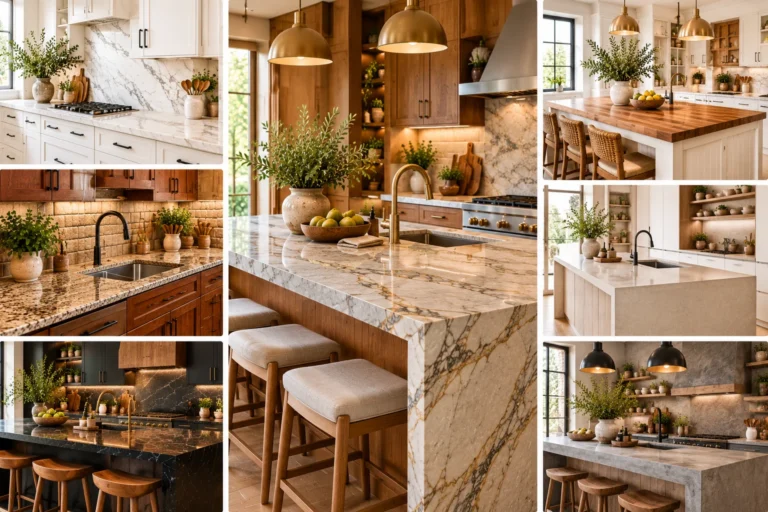
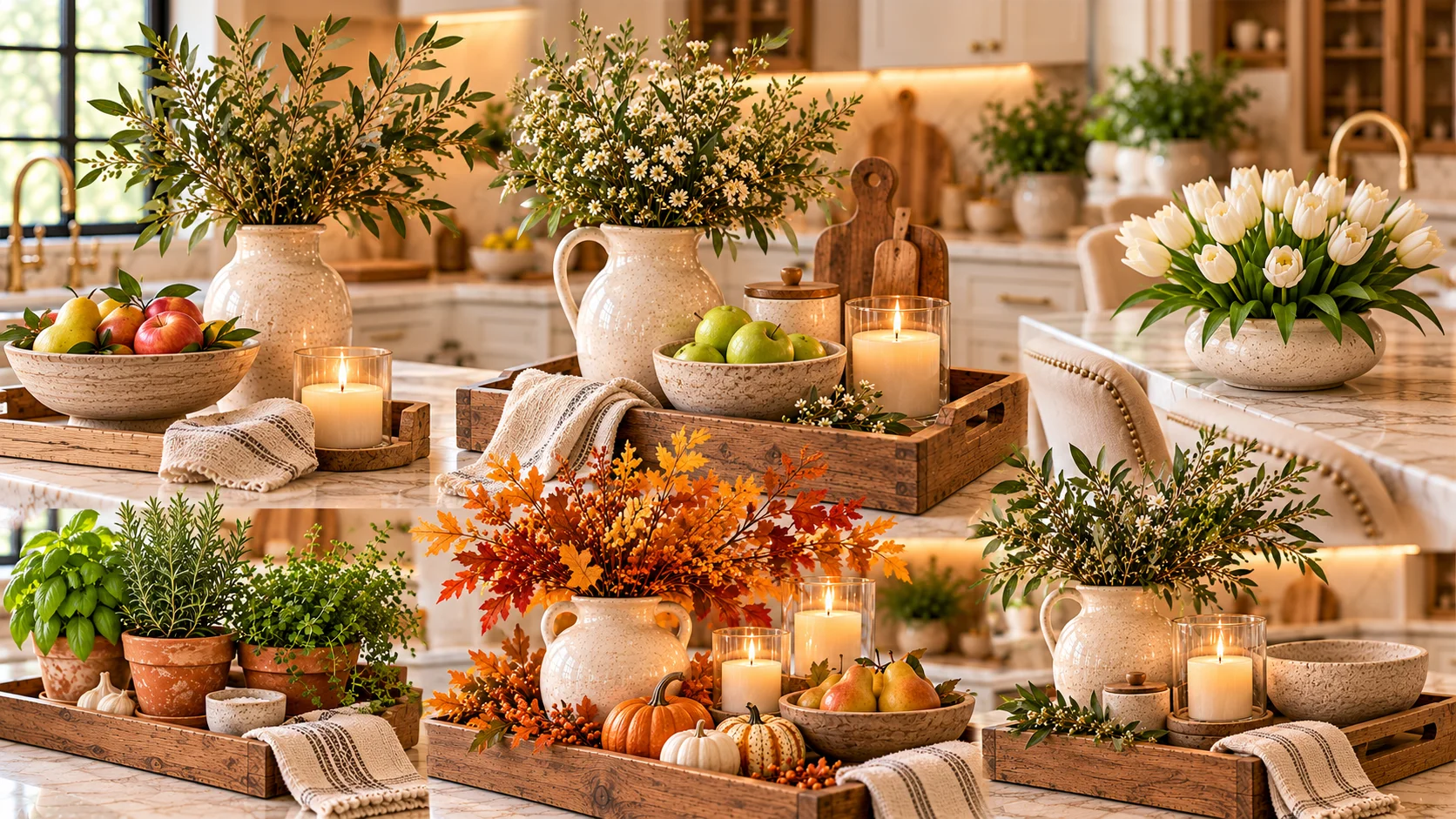
A kitchen island often becomes the natural gathering point of a home. It’s where family members chat over coffee, friends gather while dinner is cooking, and everyday tasks unfold. The right centerpiece can make this hardworking surface feel polished and inviting without getting in the way.
The best kitchen island centerpiece ideas balance style with function. A ceramic vase, a wooden tray, a bowl of fresh fruit, or a simple arrangement of greenery can add personality while keeping the kitchen practical. The key is choosing pieces that suit your island’s size, countertop material, and overall decorating style.
Quick Takeaways
- Choose a centerpiece that fits your island without crowding food-preparation areas.
- Use trays to group decorative objects and make them easy to move.
- Combine natural materials, such as wood, ceramic, greenery, and stone, for warmth.
- Keep tall arrangements away from important sightlines and pendant lights.
- Refresh seasonal centerpieces with fruit, flowers, branches, or simple textiles.
1. Style a Ceramic Vase with Fresh Flowers
A ceramic vase filled with fresh flowers is a timeless way to decorate a kitchen island. It adds color, natural texture, and a focal point without requiring an elaborate arrangement.
Choose a vase that complements your kitchen rather than matching every finish exactly. Cream, white, sand, and muted green work beautifully in neutral kitchens, while a deep blue or terracotta vase can introduce a stronger accent color.
For a relaxed look, arrange tulips, garden roses, eucalyptus, or seasonal branches loosely instead of creating a tightly packed bouquet. Keep the arrangement low enough to preserve conversation and sightlines if people regularly sit around the island.
Practical tip: Use a smaller vase for a narrow island and a wider arrangement for a generous island with plenty of unused surface space.

2. Create a Decorative Tray Arrangement
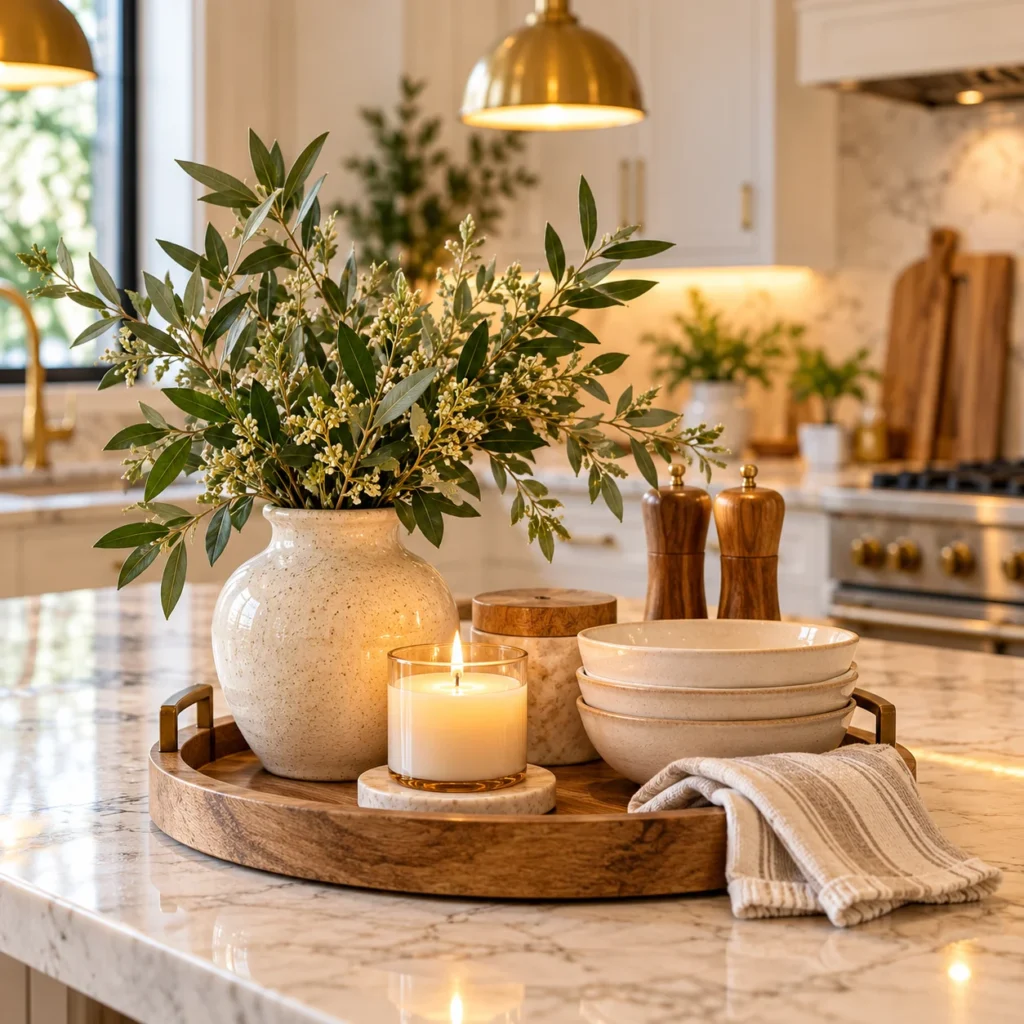
A tray makes several small objects feel like one intentional centerpiece. It also allows you to move the entire arrangement when you need the island for cooking, serving, or entertaining.
Start with a wooden, marble, metal, or woven tray. Add two or three complementary items, such as a small vase, a candle, and a decorative bowl. Vary their heights slightly to create visual interest while leaving enough empty space for the arrangement to breathe.
For a modern kitchen, try a dark tray with a sculptural vase and a simple bowl. In a farmhouse kitchen, a natural wood tray with ceramic accessories feels warmer and more relaxed.
Avoid filling every inch of the tray. A little negative space helps the objects look considered rather than cluttered.
3. Display a Bowl of Fresh Fruit
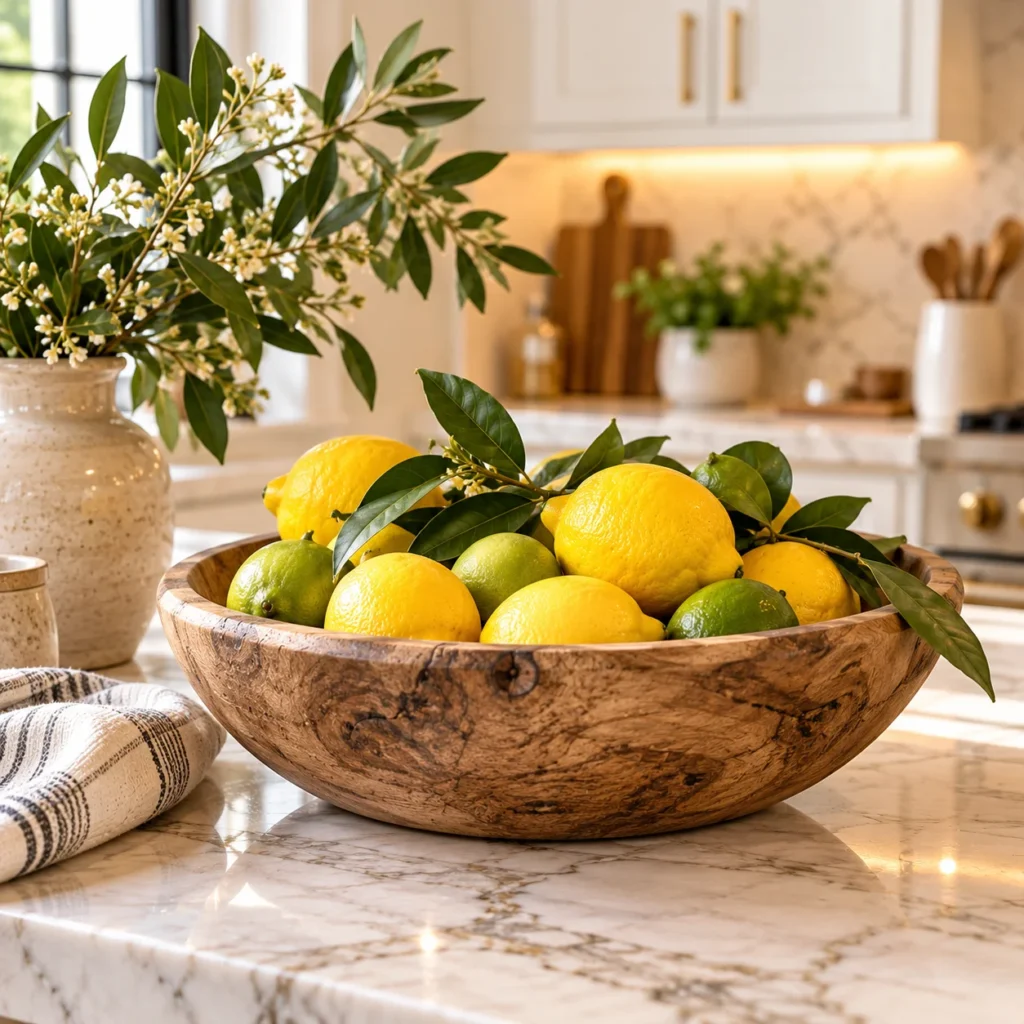
A fruit bowl is one of the easiest ways to combine decoration with everyday usefulness. Bright lemons, green apples, pears, and oranges introduce natural color and make the kitchen feel lived-in.
Choose a bowl that suits your kitchen’s style. A shallow wooden bowl brings warmth, a white ceramic bowl looks understated, and a sculptural stone bowl adds texture to a minimalist island.
Keep the arrangement simple by choosing one fruit or a coordinated mix of two or three varieties. Avoid piling fruit so high that the bowl becomes unstable, and keep it away from direct heat or strong sunlight that could shorten its freshness.
Budget tip: You can create an attractive centerpiece using fruit you already buy for the household instead of purchasing decorative objects.
4. Add a Greenery Arrangement
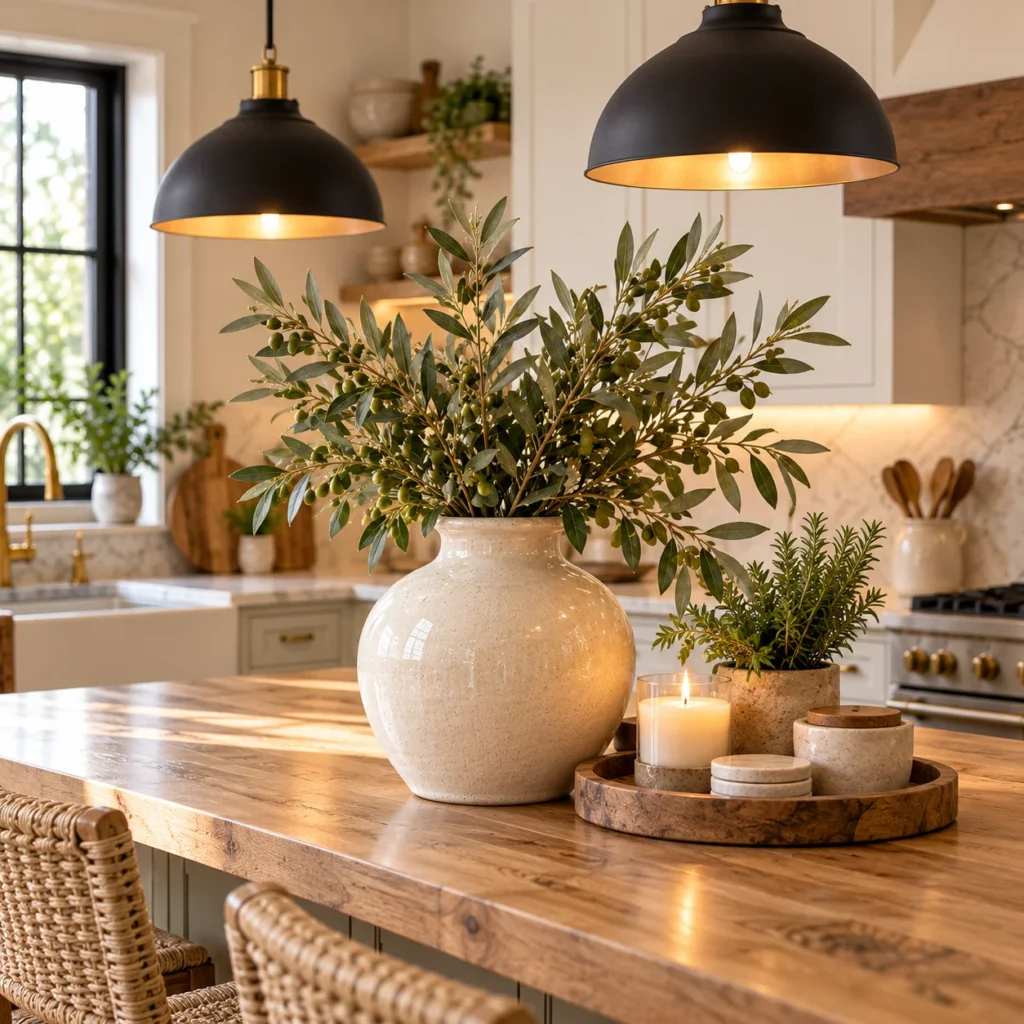
Greenery gives a kitchen island a fresh, organic feel. Unlike a colorful bouquet, leafy branches often work throughout the year and complement a wide range of cabinet colors and countertop materials.
Try eucalyptus, olive branches, or another foliage arrangement in a simple ceramic or glass vase. A compact potted herb arrangement can also look attractive while keeping fresh ingredients within reach, provided the plants receive suitable light.
For kitchens with little natural light, consider realistic faux greenery rather than placing a live plant in conditions where it will struggle. Choose a planter that complements the countertop without competing with the foliage.
Keep the arrangement away from the main chopping area and leave enough room to set down groceries, serving dishes, and everyday items.
5. Use a Wooden Board as a Styling Base
A beautiful wooden cutting or serving board can serve as the foundation for a casual kitchen island arrangement. Its natural grain introduces warmth, especially when the kitchen features white cabinets, marble-look countertops, or stainless steel appliances.
Lean a board against the backsplash if your island is positioned near a wall, or lay a serving board flat as a base for a small arrangement. Add a ceramic bowl, a small vase, or a salt cellar to create a simple composition.
Choose boards with interesting shapes or visible wood grain, but keep the arrangement away from the area used for raw food preparation. Boards used for decoration should remain clean and dry, and boards used for food should be handled and cleaned appropriately.

6. Create a Minimalist Centerpiece
A minimalist centerpiece can make a kitchen feel calm and uncluttered. Instead of arranging several decorative objects, choose one sculptural piece that adds shape, texture, or contrast.
A large ceramic vase, a low stone bowl, or a simple branch arrangement can work beautifully. The piece should have enough presence to suit the scale of the island without dominating the room.
Minimalist styling works particularly well in kitchens with clean cabinet fronts, subtle hardware, and uninterrupted countertops. If your island is small, one carefully chosen object is often more effective than a group of accessories.
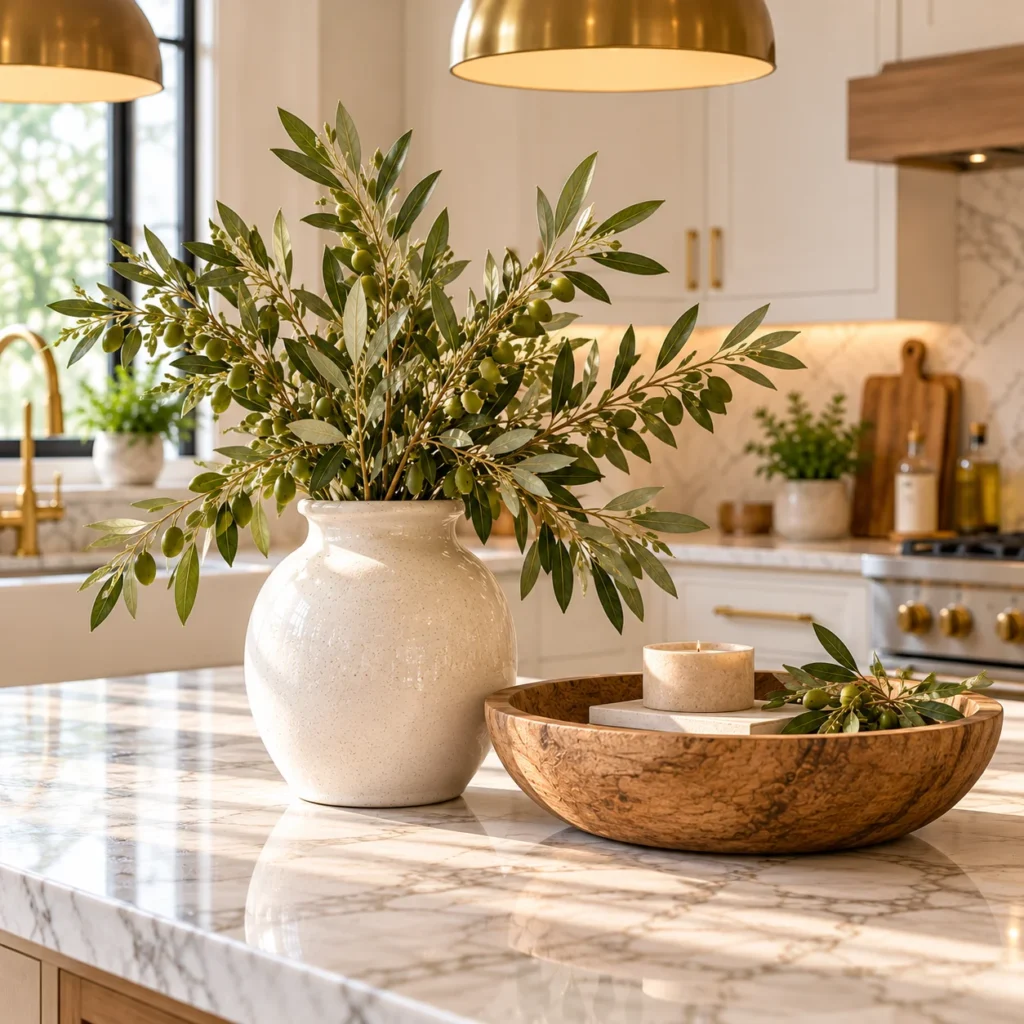
7. Arrange Candles for a Warm, Inviting Look
Candles can add a soft decorative touch to a kitchen island, particularly when the kitchen opens into a dining or living area. Grouping candles of different heights creates dimension while keeping the color palette simple.
Use a tray or low decorative plate to keep the arrangement contained. White, cream, and muted earth tones suit many interiors, while black candleholders can provide contrast in a modern kitchen.
For everyday use, consider flameless candles, especially if the island is close to food, children, pets, or frequently used cooking equipment. If using real candles, keep them away from greenery, curtains, and other combustible materials, and never leave them burning unattended.
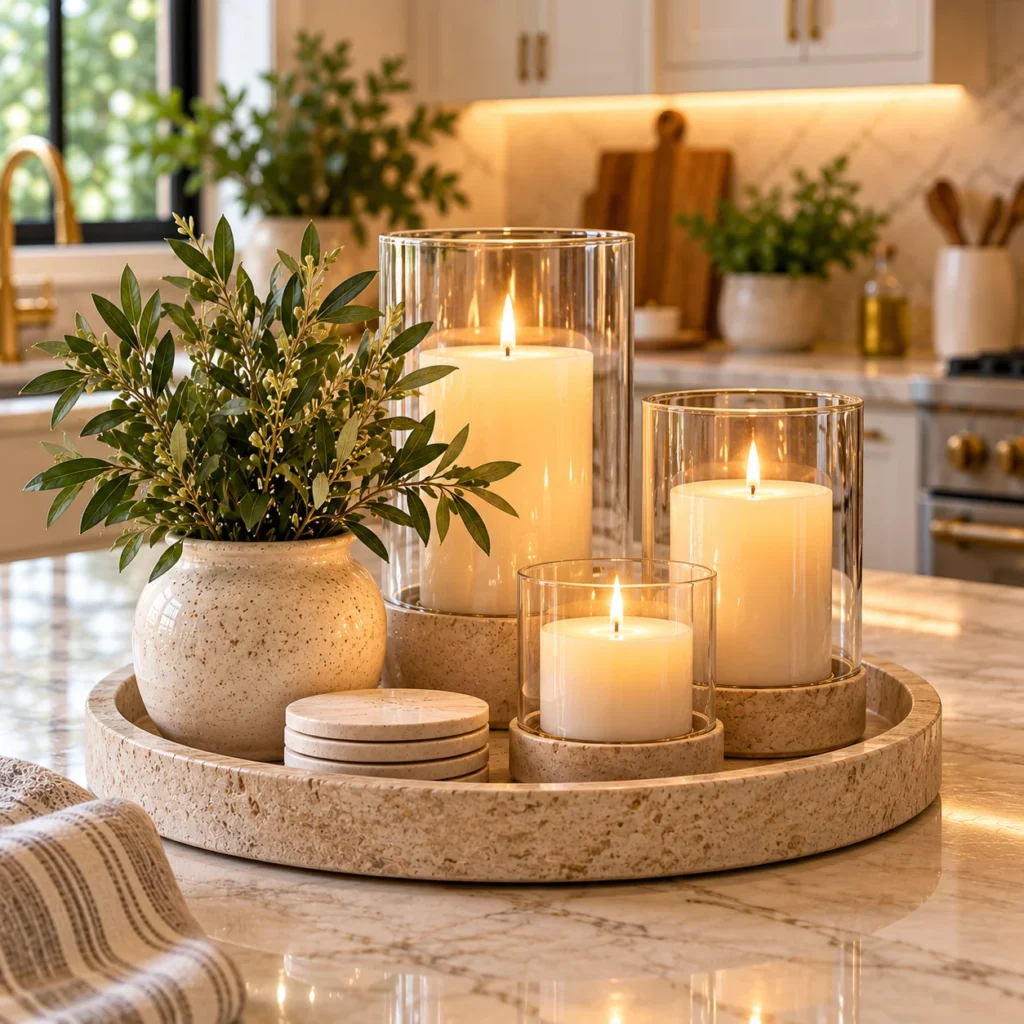
8. Bring in a Bowl of Seasonal Produce
Seasonal produce offers an easy way to refresh your centerpiece throughout the year. A bowl of citrus works well in a bright kitchen, while pears, apples, or small pumpkins can create a warmer autumn arrangement.
Choose produce with complementary colors rather than mixing every available shade. Green pears and yellow lemons feel fresh and understated, while oranges and deep red apples create a richer palette.
Use a bowl with enough depth to support the fruit and keep the display away from the busiest preparation zone. Remove bruised or spoiled produce promptly so the centerpiece remains attractive and hygienic.

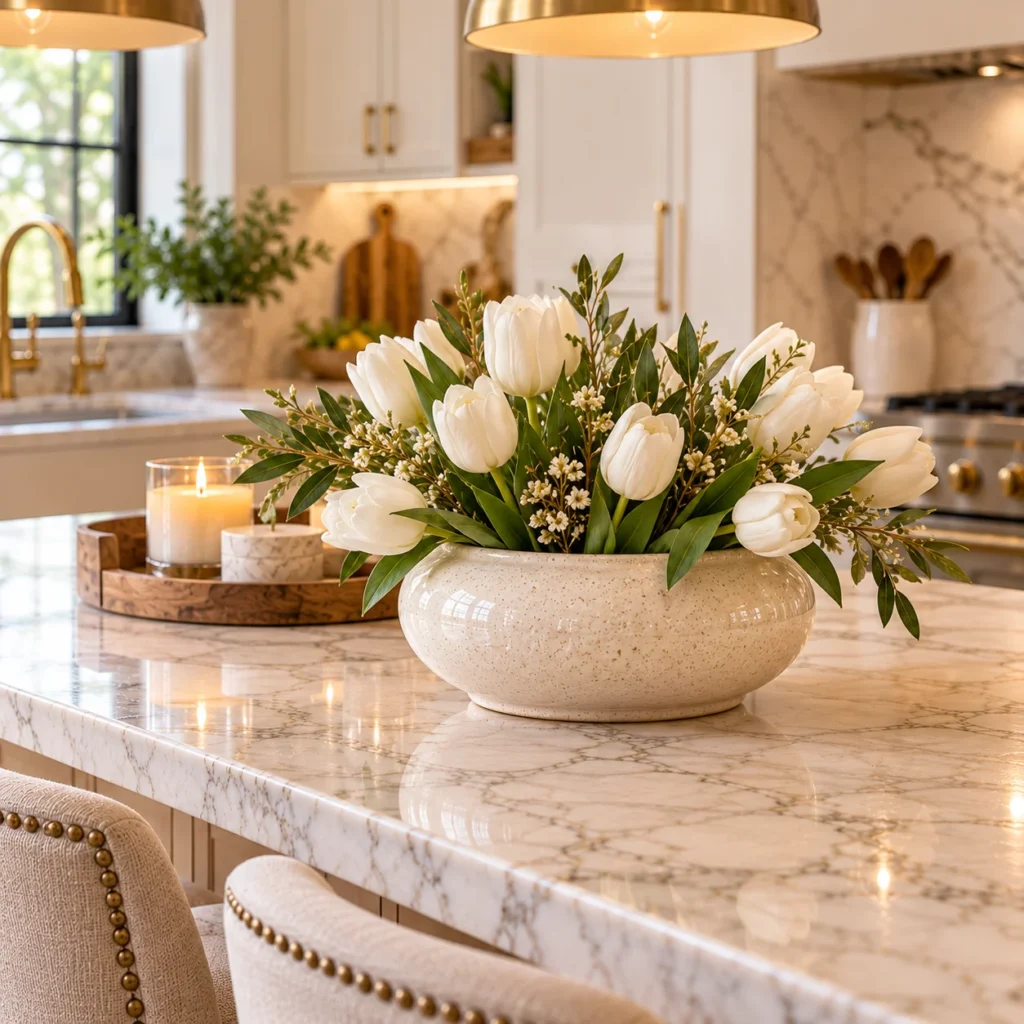
9. Try a Low Floral Arrangement
A low floral arrangement brings color to the island without blocking the view across the kitchen. It’s especially useful when the island includes seating and people regularly talk across the countertop.
Use a shallow vessel or compact vase and choose flowers with a relaxed shape. White roses, ranunculus, tulips, or small seasonal blooms can look elegant without requiring a large arrangement.
Coordinate the flower color with one or two tones already present in the kitchen, such as the backsplash, bar stools, or nearby artwork. Keep the vessel stable and use a waterproof liner if needed to protect the countertop.
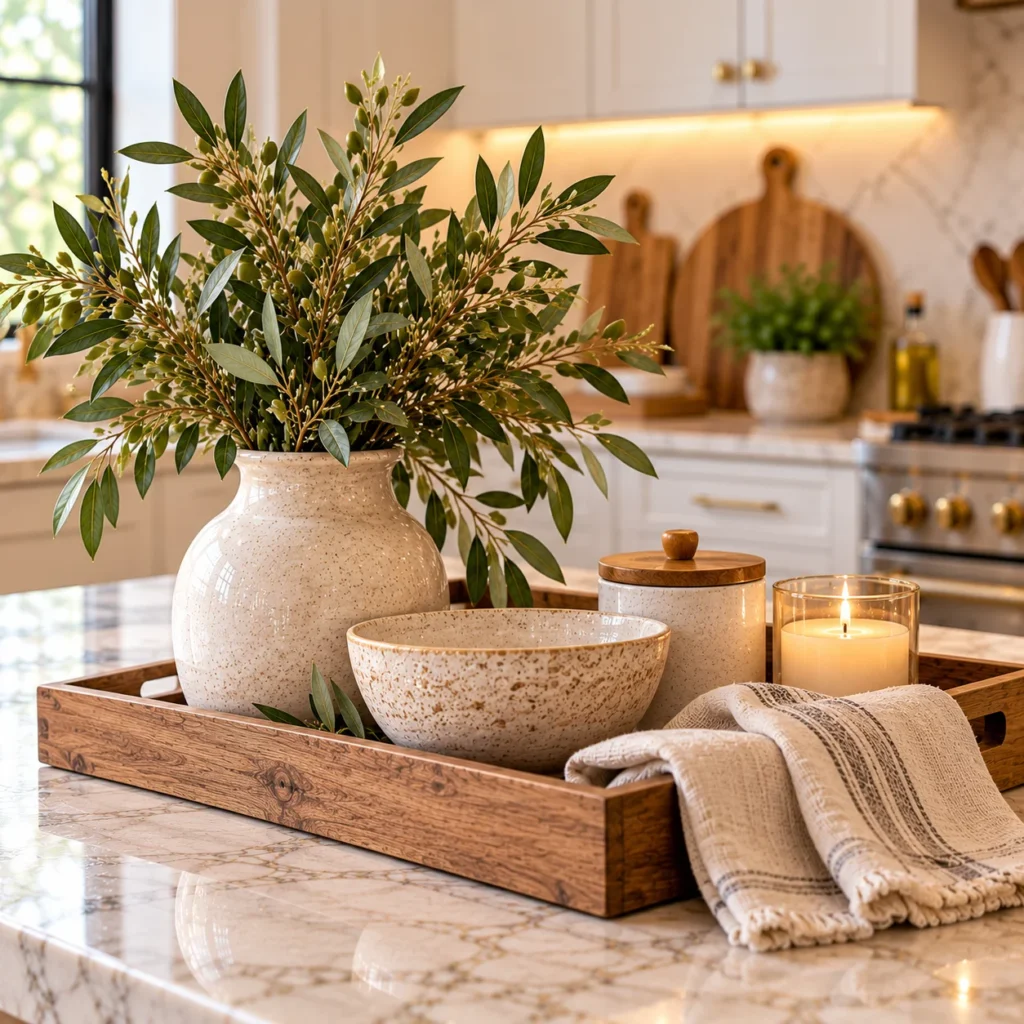
10. Style with a Ceramic Bowl and Decorative Objects
A ceramic bowl is versatile enough to suit traditional, modern, farmhouse, and organic-inspired kitchens. Its shape and glaze can add subtle texture even when the rest of the room is neutral.
Choose a bowl with a handmade appearance, a matte finish, or a softly irregular rim. Place it alone for a minimalist effect or combine it with a small vase and a folded linen napkin on a tray.
The objects should vary in scale but share a common thread, such as material, color, or shape. Avoid collecting too many small pieces, which can make the island feel like a storage surface rather than a styled focal point.
11. Add a Small Herb Garden
A small herb garden is a practical centerpiece for people who cook regularly. Basil, rosemary, thyme, and mint can add greenery while keeping useful ingredients close at hand.
Choose a compact planter or a few matching pots and place them where the herbs receive appropriate light. A sunny island near a window may work well, but most culinary herbs need more light than a dark kitchen can provide.
Use pots with suitable drainage and a tray to protect the countertop from water. If your island is used heavily for food preparation, place the herbs toward one end or move them to a nearby windowsill when extra workspace is needed.

12. Use a Sculptural Vase with Branches
Decorative branches create height and an architectural shape that can make a large island feel more balanced. This look works particularly well in kitchens with high ceilings, natural materials, or simple contemporary cabinetry.
Choose olive branches, seasonal flowering branches, or other foliage with an interesting silhouette. Place them in a substantial vase with a stable base so the arrangement does not tip easily.
Scale matters. A tall arrangement can look beautiful on a wide island but may interfere with pendant lights or sightlines in a compact kitchen. If the island is narrow or frequently used for serving, choose a shorter branch arrangement instead.

13. Create a Farmhouse-Inspired Centerpiece
A farmhouse-style centerpiece combines natural materials, simple shapes, and a relaxed, collected appearance. It can bring warmth to kitchens with shaker cabinets, wood accents, apron-front sinks, or vintage-inspired hardware.
Start with a wooden tray or a shallow woven basket. Add a ceramic pitcher, a small vase of greenery, or a bowl of fresh fruit. Cream, warm white, muted green, and natural wood create a cohesive palette.
Avoid using too many rustic accessories at once. A few well-chosen pieces feel more current than a crowded display of signs, jars, and decorative objects.

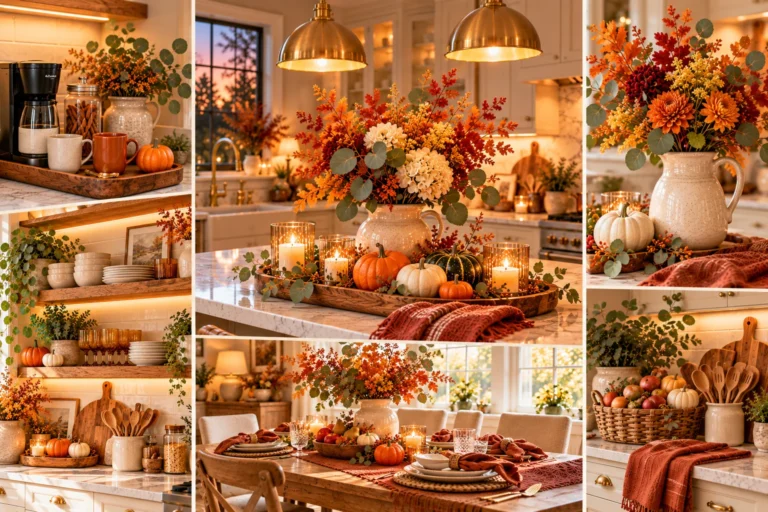
14. Make the Centerpiece Seasonal
A seasonal centerpiece gives the kitchen a fresh look without requiring a full redesign. Small changes in flowers, fruit, branches, or accent colors can reflect the time of year while keeping the underlying style consistent.
In spring, try tulips and soft greenery. Summer works well with lemons, simple wildflowers, and light ceramics. In autumn, use pears, branches, or a small arrangement of pumpkins. During winter, evergreen foliage and a restrained candle arrangement can add warmth.
Keep seasonal decorations proportionate to the island and avoid anything that interferes with cooking or serving. Store reusable pieces carefully so you can bring them back the following year.
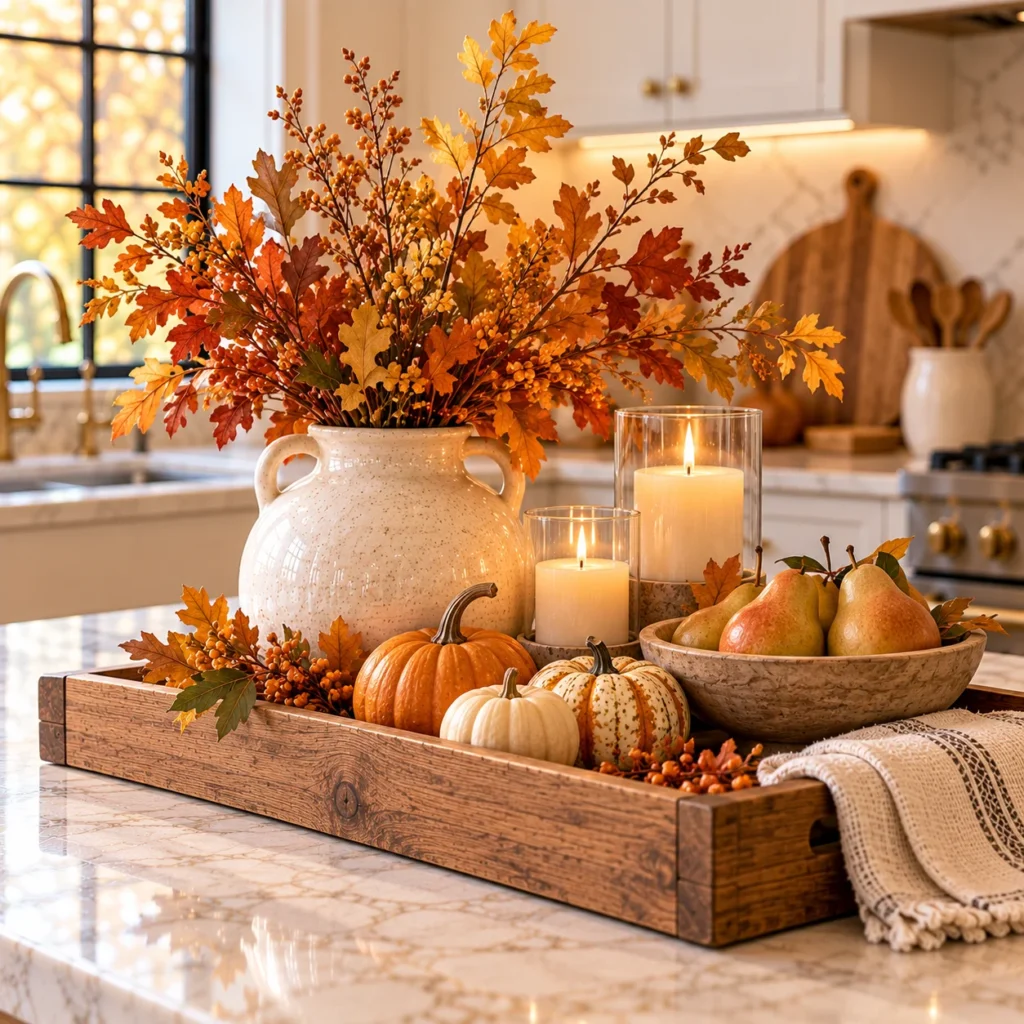
15. Combine Two or Three Materials for a Layered Look
A centerpiece feels more interesting when its materials complement one another. Wood, ceramic, glass, stone, and greenery each add a different texture, helping the arrangement feel layered without needing many objects.
For example, place a ceramic vase on a wooden tray and add a small glass candleholder. In a modern kitchen, a stone bowl and a clear glass vase create a subtle contrast. In a warm neutral kitchen, wood and matte ceramics provide a softer combination.
Limit the palette to a few materials and repeat colors already found in the room. This helps the centerpiece feel connected to the cabinetry, hardware, and countertops rather than like a separate decorative display.

How to Choose the Right Kitchen Island Centerpiece
The best centerpiece depends on your island’s size, its main purpose, and the style of your kitchen.
Consider the size and shape of the island
A large island can accommodate a tray arrangement, a generous bowl, or a substantial vase. A narrow island often looks better with one low centerpiece that leaves plenty of room for food preparation.
As a general guideline, keep the centerpiece contained within a smaller portion of the island rather than spreading decorations across the full surface. If your island includes seating, preserve comfortable space for plates, drinks, and elbows.
Match the materials to your kitchen
Consider the countertop, cabinet finish, hardware, and stools before choosing decorative pieces.
- White kitchens: Wood, greenery, cream ceramics, and natural stone add warmth.
- Dark kitchens: Light ceramics, clear glass, and fresh flowers provide contrast.
- Wood-heavy kitchens: White, sand, or muted green accessories balance the natural grain.
- Modern kitchens: Sculptural shapes and a restrained palette create a clean look.
- Farmhouse kitchens: Wooden trays, ceramic pitchers, and fresh produce feel relaxed and welcoming.
Keep everyday use in mind
A kitchen island often serves several purposes, from food preparation to casual dining. Make sure the centerpiece is easy to move and does not occupy the main chopping area.
Avoid delicate objects near the edge, unstable tall vases, and decorations that interfere with pendant lights or conversations. If the island is used for serving, a tray-based arrangement is especially practical because the pieces can be moved together.
Common Mistakes to Avoid
- Choosing a centerpiece that’s too large. An oversized vase or tray can consume valuable workspace. Match the arrangement to the island’s dimensions and leave useful surface area clear.
- Using too many decorative objects. A crowded display looks messy and is harder to clean. Start with two or three pieces and add more only if the scale calls for it.
- Blocking sightlines. Tall flowers or branches can obstruct conversation across the island. Choose a lower arrangement if people sit or gather around the countertop.
- Ignoring the kitchen’s color palette. Accessories that compete with the cabinets, backsplash, and hardware can make the space feel disconnected. Repeat one or two existing colors.
- Placing real candles near flammable materials. Candles can create atmosphere, but they need careful placement and supervision. Use flameless versions when a safer decorative option is preferable.
- Forgetting practical cleaning. Complicated arrangements collect dust and require frequent moving. Choose a tray or a few easy-to-clean objects.
- Putting plants where they cannot thrive. Live herbs and flowers need suitable light and care. Choose plants according to the kitchen’s conditions or use realistic faux greenery.
Key Pieces to Consider
- Ceramic vase: Look for a stable base, a finish that complements your kitchen, and a size suited to the island.
- Decorative tray: Wood, stone, metal, or woven trays keep small objects organized and easy to move.
- Fruit bowl: Choose a sturdy bowl with enough depth for everyday produce and a shape that complements the countertop.
- Low floral arrangement: A compact vessel and flowers that suit your color palette create a soft focal point without blocking views.
- Small planter: Herbs or greenery add a natural touch, provided the location offers suitable light and drainage.
- Sculptural decorative object: A simple bowl or vase can create impact on its own, especially in a minimalist kitchen.
Frequently Asked Questions
What should I put in the center of my kitchen island?
A ceramic vase, fruit bowl, decorative tray, low floral arrangement, or small herb garden can all work well. Choose a centerpiece that suits the island’s size and leaves enough room for daily tasks.
How do I decorate a kitchen island without making it cluttered?
Use one main arrangement and limit the number of objects. Group small pieces on a tray, leave some countertop visible, and keep the main preparation area clear.
Should a kitchen island centerpiece be tall or short?
It depends on the island’s purpose. Low arrangements are often better when people sit across from one another, while taller branches can work on a spacious island where they do not block views or interfere with lighting.
Can I use a fruit bowl as kitchen island decor?
Yes. Fruit adds natural color and is useful for everyday cooking and snacking. Choose a stable bowl, avoid overcrowding it, and remove fruit that is no longer fresh.
How often should I change my kitchen island centerpiece?
You can keep a simple arrangement year-round and refresh it whenever you want. Swapping flowers, fruit, greenery, or seasonal accents is an easy way to update the look without buying an entirely new set of decorations.
What is the best centerpiece for a small kitchen island?
A single ceramic vase, a small fruit bowl, or a compact tray is usually a practical choice. Avoid bulky arrangements that take up most of the available work surface.
How do I decorate a kitchen island for guests?
Use a low floral arrangement, a neat tray, or a bowl of seasonal produce. Keep enough space available for serving dishes and drinks, and move fragile decorative pieces before guests arrive.
Do kitchen island centerpieces need to match the rest of the kitchen?
They should complement the room, but they do not need to match every finish. Repeating a color, material, or texture from the cabinetry, hardware, or seating is usually enough to create a cohesive look.
Conclusion
A thoughtfully styled kitchen island can make the entire kitchen feel more welcoming. Fresh flowers, a wooden tray, seasonal fruit, greenery, or a simple sculptural vase can each create a beautiful focal point without sacrificing function.
Start with one arrangement that suits your island and everyday routine, then adjust the details until the balance feels right. Save these 15 kitchen island centerpiece ideas for your next styling refresh and try a look that brings both beauty and practicality to the heart of your home.