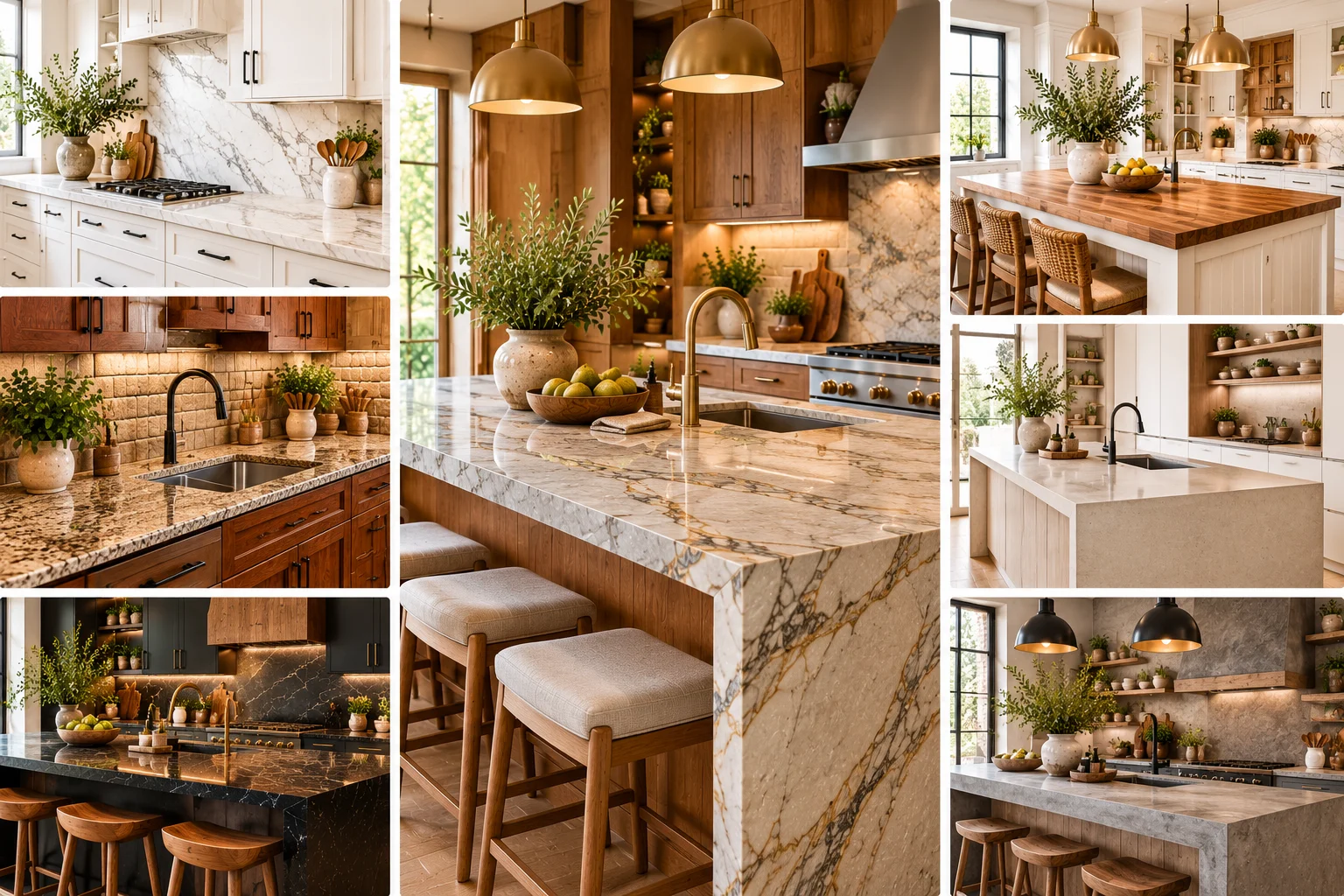
Kitchen countertops do more than provide a place to prepare meals. They influence the entire look of your kitchen, from the color palette and cabinet style to the atmosphere of the space. The best kitchen countertop ideas balance beauty, durability, maintenance, and your everyday cooking habits.
From timeless white quartz to dramatic natural stone, warm butcher block, and budget-friendly laminate, there are plenty of ways to create a kitchen that feels polished without sacrificing practicality. The key is choosing a surface that works with your cabinets, lighting, and lifestyle.
Quick Takeaways
- Choose quartz for a versatile surface with a wide range of colors and patterns.
- Consider granite or quartzite if you love the natural variation of stone.
- Use butcher block to bring warmth to white, cream, or dark cabinets.
- Explore porcelain and laminate for different combinations of style and maintenance needs.
- Coordinate the countertop with your backsplash, cabinet color, flooring, and hardware before making a final decision.
1. White Quartz Countertops for a Clean, Timeless Look
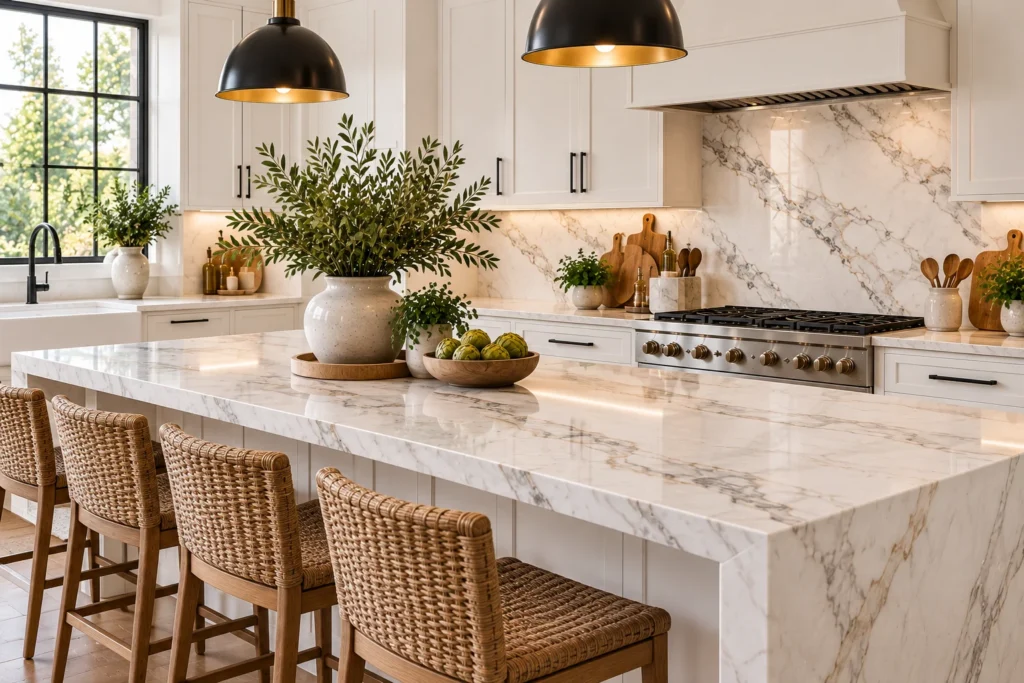
White quartz countertops are a popular choice for kitchens because they create a bright, streamlined appearance. Depending on the design, the surface may look nearly solid white or feature delicate gray veining that resembles natural marble.
Quartz is an engineered surface made with mineral materials and binders. Many varieties are nonporous and do not require routine sealing, although they can still be damaged by excessive heat, harsh chemicals, or impact.
How to style white quartz
Pair white quartz with warm white cabinets for a seamless, airy kitchen. If you prefer more contrast, combine it with navy, forest green, charcoal, or natural oak cabinetry.
A white countertop also works well with brass or brushed-nickel hardware, simple pendant lights, and a backsplash in a complementary shade. To prevent the room from feeling too stark, introduce wood accents, textured ceramics, or warm-toned lighting.
Budget tip: If your kitchen renovation budget is limited, consider using a premium-looking quartz on the main counters and a less expensive complementary material on a separate work surface, provided the transition is intentional.

2. Marble Countertops for Classic Elegance
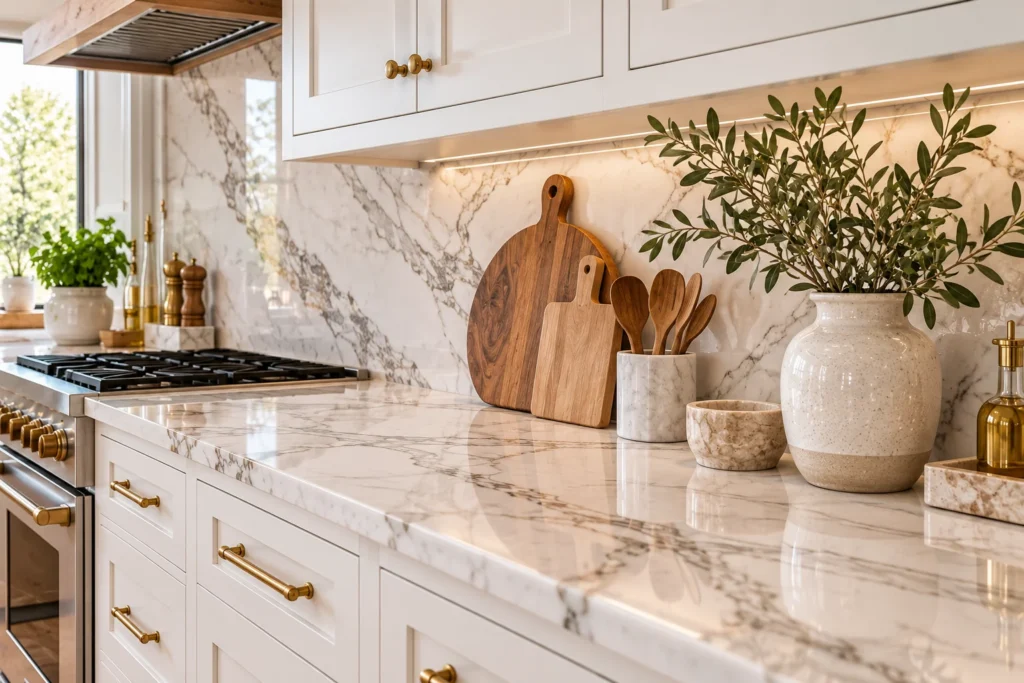
Marble brings distinctive veining and natural variation to a kitchen. White marble with gray veins feels classic, while warmer varieties can introduce beige, gold, or brown tones.
Its beauty comes with some trade-offs. Marble is relatively soft and can etch when exposed to acidic ingredients such as lemon juice, vinegar, or tomato products. It can also stain, so it is important to understand the care requirements before choosing it for a busy cooking area.
How to make marble work in your kitchen
Use marble where its appearance matters most, such as a baking station, island, or kitchen with a traditional or transitional design. Pair it with shaker cabinets, unlacquered or brushed brass hardware, and simple tile to let the stone remain the focal point.
If you love the marble look but want a different maintenance profile, compare marble-look quartz and porcelain slabs. Their appearance and performance vary by product, so review the manufacturer’s care guidance before deciding.
3. Granite Countertops for Natural Character
Granite is a natural stone available in a wide variety of colors, from pale cream and gray to deep black and richly speckled brown. Every slab has its own pattern, giving the kitchen a distinctive look.
Granite is generally durable and handles everyday kitchen use well, but it can chip at edges and some varieties may need periodic sealing. Care requirements depend on the specific stone and its finish.
Choosing the right granite pattern
For a light, relaxed kitchen, look for cream or gray granite with subtle movement. Dark granite can create a striking contrast against white cabinetry, while brown or gold undertones complement natural wood.
Whenever possible, view the actual slab before purchasing. Small samples may not show the full pattern, color shifts, or movement across a large counter.

4. Butcher Block Countertops for Warmth and Texture
Butcher block introduces the natural grain of wood, making a kitchen feel inviting and less formal. It works especially well in farmhouse, cottage, Scandinavian, and modern organic interiors.
Wood countertops require more care than many stone alternatives. They can scratch, absorb moisture, and be damaged by standing water or heat. The right finish and maintenance routine are essential, particularly around sinks and dishwashers.
Where butcher block works best
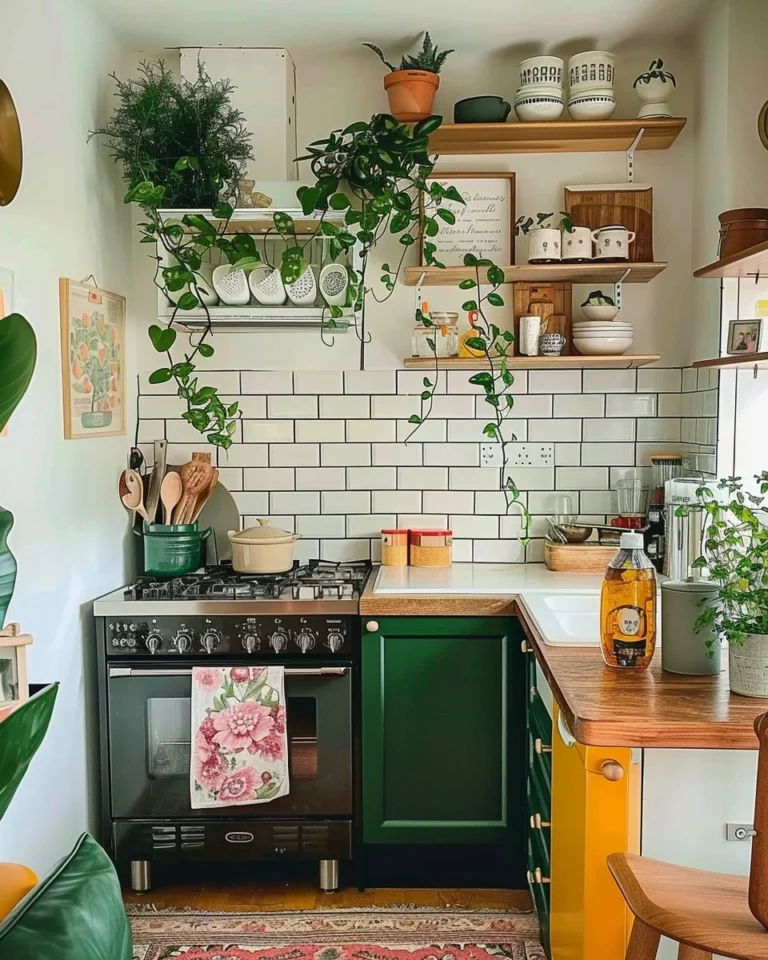
Use wood on a kitchen island, breakfast counter, or designated preparation area to add warmth beside stone or engineered surfaces. A wood island can soften an otherwise cool palette of white cabinets, stainless steel appliances, and gray tile.
Choose a finish specifically intended for your countertop’s use. Food-preparation surfaces may require a different treatment from decorative counters, and all wood surfaces should be maintained according to the manufacturer’s instructions.

5. Quartzite Countertops for a Natural Stone Statement
Quartzite is a natural stone valued for its distinctive veining and often marble-like appearance. Depending on the slab, it can range from soft white and gray to beige, green, or dramatic charcoal.
It is often considered for kitchens where natural stone is a priority, but not all slabs have identical performance. Fabrication, finish, and the stone’s specific characteristics affect how it should be cared for.
How to style quartzite
Choose a slab with veining that complements your cabinetry rather than competing with it. A dramatic pattern can anchor a simple kitchen with flat-front cabinets, while a quieter slab suits a room with detailed millwork or a patterned backsplash.
Ask your fabricator about sealing, stain resistance, and recommended cleaning products for the exact stone you select. Also review the slab in person to understand how the veining will appear across the island and perimeter counters.

6. Porcelain Countertops for a Sleek, Modern Kitchen
Porcelain countertops offer a clean, contemporary look and can be manufactured to resemble marble, concrete, or other natural materials. Many porcelain surfaces resist stains, scratches, and heat well when used according to the manufacturer’s guidelines.
The main consideration is fabrication. Porcelain slabs can be brittle at unsupported edges and may chip if struck, so experienced installation and suitable edge details matter.
Make porcelain feel inviting
Choose a warm stone-inspired pattern for a modern organic kitchen, or select a concrete-look finish for a minimalist space. Pair the surface with natural wood, textured cabinet fronts, or warm metal hardware to balance its streamlined appearance.
Porcelain is also worth considering when you want a visually consistent surface across a large island and surrounding counters. Confirm slab dimensions, seams, edge options, and installation requirements before ordering.

7. Black Countertops for Bold Contrast
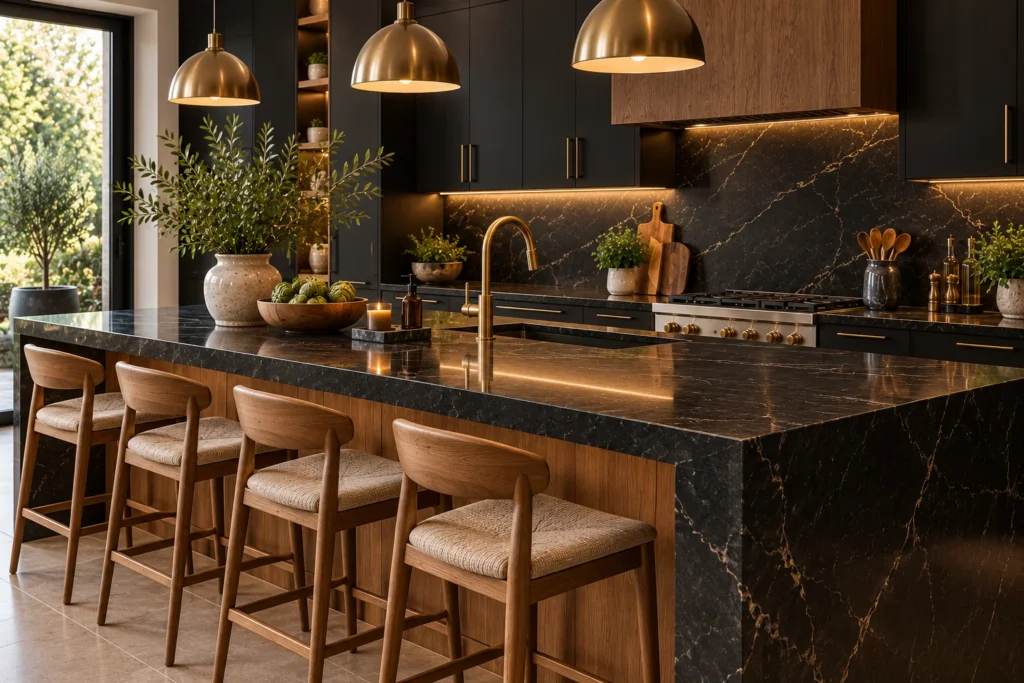
Black countertops create depth and definition, particularly in kitchens with white, cream, or light wood cabinets. Depending on the material and finish, they can feel dramatic, sophisticated, industrial, or quietly modern.
Polished black surfaces reflect light but may make fingerprints, water spots, or dust more noticeable. Matte and honed finishes offer a softer appearance, though they also have specific cleaning and maintenance requirements.
How to balance a dark countertop
Pair black counters with warm wood cabinets, off-white walls, or a light backsplash to prevent the kitchen from feeling too heavy. If you prefer a darker overall palette, layer several finishes rather than using the exact same black everywhere.
Brushed brass, stainless steel, or matte black hardware can all work. Choose one main metal finish and repeat it in a few places for a cohesive result.
8. Concrete Countertops for Industrial and Modern Spaces
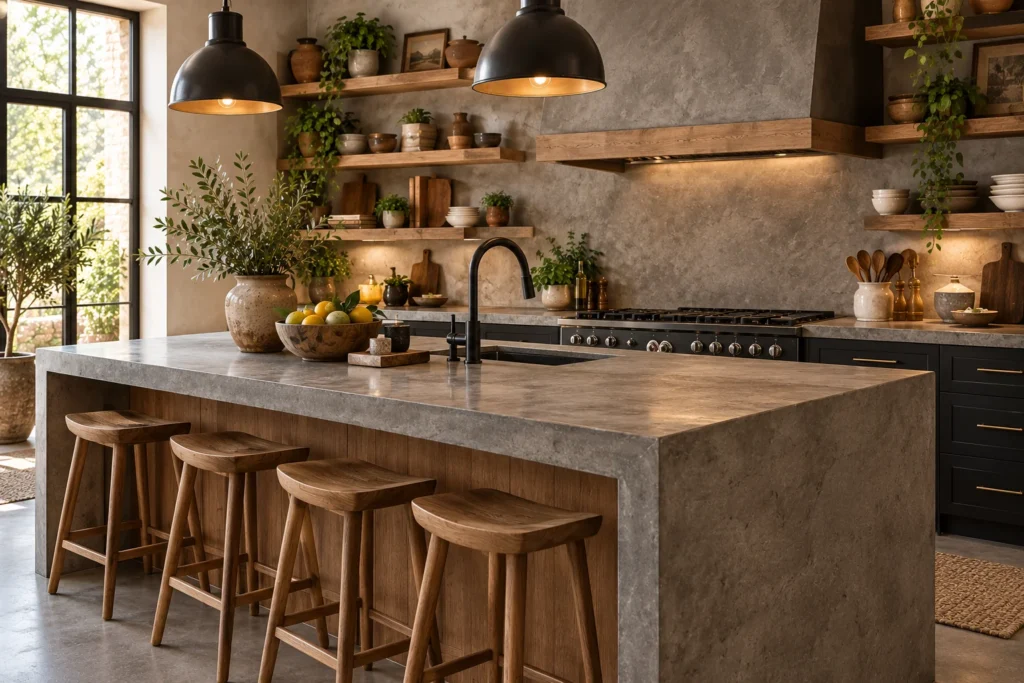
Concrete countertops have a distinctive handcrafted appearance, with subtle tonal variation and a substantial, architectural feel. They suit industrial kitchens, modern farmhouse interiors, and spaces that mix raw materials with warm finishes.
Concrete is not maintenance-free. It is porous unless properly protected, may develop hairline cracks, and can stain or etch depending on the finish and sealer. These characteristics should be discussed with the fabricator before installation.
How to style concrete countertops
Combine a gray concrete surface with white oak, open shelving, simple cabinetry, and understated lighting. For a more dramatic kitchen, pair it with dark cabinets and stainless steel appliances.
If a full concrete countertop is beyond your budget, use concrete-look laminate or porcelain to create a similar visual effect with a different maintenance profile.
9. Budget-Friendly Laminate Countertops That Look High-End
Laminate has come a long way in appearance and design. Modern options can imitate marble, granite, wood, or concrete, making it possible to create a coordinated kitchen without the cost of many natural stone surfaces.
Laminate is generally easy to clean, but it can be scratched, scorched, or damaged by moisture that reaches seams or exposed edges. It is not a surface for placing hot pans directly on.
How to get an elevated look for less
Choose a pattern with realistic variation and a finish that suits the kitchen’s style. A subtle stone-look laminate can complement shaker cabinets, while a warm wood-look design works with white or charcoal cabinetry.
Keep the rest of the kitchen simple: use a well-coordinated backsplash, consistent hardware, and good lighting. Replacing dated knobs or adding under-cabinet lighting can help the whole room feel more considered without changing every surface.
How to Choose the Right Kitchen Countertop
The best material depends on how you use your kitchen, how much maintenance you are comfortable with, and the look you want to create. Before choosing a slab or finish, compare the following factors.
| Material | Visual Style | Main Consideration |
|---|---|---|
| Quartz | Clean, versatile, varied patterns | Protect from excessive heat and follow care guidance |
| Marble | Classic, distinctive veining | Can etch and stain; requires attentive care |
| Granite | Natural, varied, traditional to modern | Slab variation and possible sealing |
| Butcher block | Warm, organic, textured | Needs moisture protection and regular maintenance |
| Quartzite | Natural, often marble-like | Verify the specific stone’s care needs |
| Porcelain | Sleek, modern, stone-inspired | Edge details and skilled fabrication matter |
| Black surfaces | Bold, dramatic, contemporary | Water spots and fingerprints may be visible |
| Concrete | Industrial, handcrafted | Sealing, potential cracking, and upkeep |
| Laminate | Flexible, budget-friendly | Vulnerable to heat, scratches, and moisture at seams |
Consider the countertop’s thickness and edge
A standard-looking countertop can feel very different depending on its edge profile and thickness. A simple eased edge suits many modern and traditional kitchens, while a thicker edge can give an island a substantial appearance.
The right choice depends on the material, cabinet proportions, and overall style. Ask your fabricator which profiles are suitable for the surface you select.
Coordinate the countertop with your cabinets and backsplash
Collect samples of your cabinet finish, flooring, backsplash, and countertop before committing. View them together in both daylight and your kitchen’s evening lighting, because undertones can look different under warm or cool bulbs.
If your countertop has prominent veining or speckles, choose a quieter backsplash. A simpler countertop gives you more freedom to use patterned tile or decorative cabinet details.
Plan for daily use
Think about where water splashes, where food is prepared, and how often you cook. A busy family kitchen may benefit from a low-maintenance surface, while a dedicated baking area might be a good place for a material chosen specifically for its work surface qualities.
Ask suppliers about stain resistance, heat limits, sealing, warranty terms, and repair options. These details are just as important as the sample’s appearance.
Common Mistakes to Avoid
- Choosing a countertop from a tiny sample alone. Large patterns and color shifts may look different across a full slab. View the actual slab whenever possible.
- Ignoring maintenance requirements. Marble, wood, granite, quartzite, and concrete have different care needs. Choose a material that matches the time and attention you are willing to give it.
- Pairing too many competing patterns. A heavily veined countertop, busy backsplash, and strongly patterned floor can make a kitchen feel visually crowded. Let one element lead.
- Forgetting the lighting. A countertop can look warmer, cooler, darker, or more reflective under different lighting. Check samples in the actual kitchen.
- Assuming every stone surface performs the same way. Natural stone varies, and engineered materials differ by manufacturer. Confirm the care guidance for the exact product.
- Overlooking seams and edges. Seams, sink cutouts, and edge profiles affect both appearance and durability. Discuss these details before fabrication begins.
- Putting hot cookware directly on the counter. Even surfaces marketed as heat-resistant may be damaged by thermal shock or extreme temperatures. Use trivets unless the manufacturer explicitly advises otherwise.
Key Pieces to Consider
The countertop is only one part of the finished kitchen. A few carefully chosen elements can help the new surface look intentional.
- Backsplash tile: Choose a backsplash that complements the countertop’s undertones. Simple white or cream tile is versatile, while handmade-look tile adds texture.
- Cabinet hardware: Brass brings warmth, black creates contrast, and brushed nickel offers a quieter metallic accent. Repeat the chosen finish for visual consistency.
- Pendant lighting: Use fixtures that suit the island’s size and leave adequate sightlines. The number and spacing depend on the island dimensions and the fixture’s scale.
- Kitchen stools: For an island with seating, measure the counter height before buying stools. Standard counter-height seating often uses seats around 24–26 inches high, while bar-height counters typically need taller seats.
- Countertop accessories: A wooden cutting board, ceramic utensil holder, or small bowl of fresh produce adds warmth without overcrowding the work surface. Keep frequently used preparation areas clear.
Frequently Asked Questions
What is the best kitchen countertop material overall?
There is no single best option for every kitchen. Quartz suits many homeowners who want a wide range of styles and relatively straightforward maintenance, while granite, quartzite, marble, wood, porcelain, and laminate offer different benefits and trade-offs.
Which countertop is easiest to maintain?
Many quartz and porcelain products are relatively easy to maintain, but care varies by product. Check the manufacturer’s cleaning instructions and avoid assuming that every surface is resistant to all stains, chemicals, or heat.
Are white countertops a good idea for a busy kitchen?
They can be. The best choice depends on the material, finish, and how the kitchen is used. Review stain resistance and cleaning requirements, and remember that crumbs or dark marks may be more visible on a white surface.
Are marble countertops worth it?
Marble may be worth considering if you love its natural veining and are comfortable with patina and ongoing care. If you prefer a surface that is less likely to etch from everyday acidic ingredients, compare marble-look quartz or porcelain.
What countertop looks best with white cabinets?
White cabinets pair well with white quartz, gray-veined marble, natural granite, butcher block, and black countertops. Consider the warmth of the cabinet paint and flooring when choosing the surface’s undertones.
What is the most budget-friendly countertop option?
Laminate is often a cost-conscious choice and comes in many stone- and wood-inspired patterns. Total costs depend on the product, edge details, sink cutouts, installation, and the condition of the existing cabinets.
Can I mix two countertop materials in one kitchen?
Yes. A common approach is to use stone or engineered material around the perimeter and butcher block on an island. Keep the colors and finishes complementary, and make sure the two surfaces have appropriate support and installation details.
How do I choose a countertop color?
Start with your cabinets and flooring, then consider the kitchen’s natural light. Bring samples into the room and view them at different times of day before making a final decision.
Conclusion
The best kitchen countertop ideas combine the appearance you love with the maintenance and durability your household needs. White quartz offers versatility, natural stone brings individual character, butcher block adds warmth, and laminate can deliver an appealing look on a tighter budget.
Take time to compare full-size samples, review care requirements, and coordinate the surface with your cabinets and backsplash. Save these ideas as inspiration for your next kitchen refresh, and choose a countertop that makes the room feel both beautiful and practical.