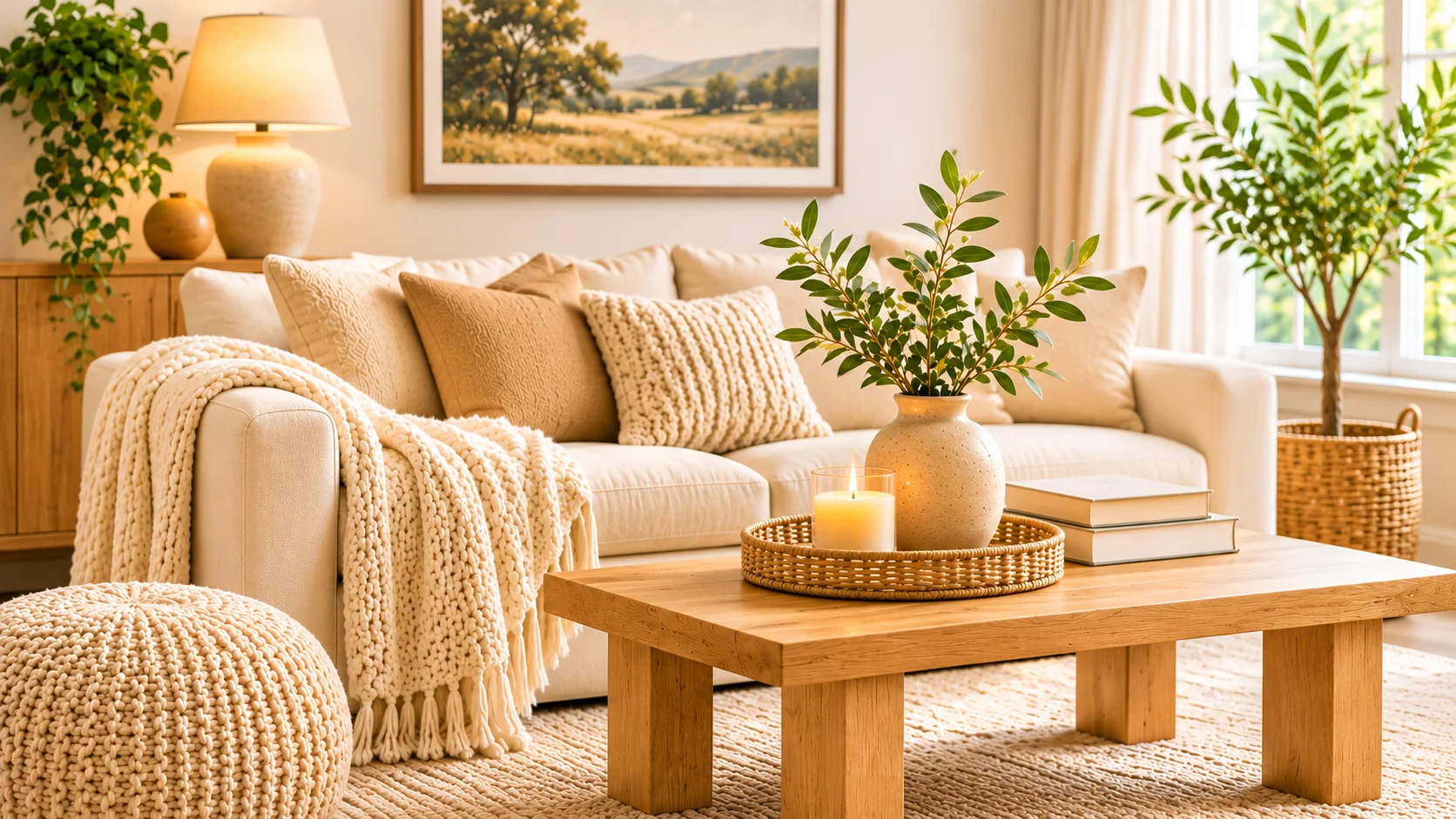
A beautiful home doesn’t need dozens of decorative accessories, oversized furniture, or complicated color schemes. Sometimes, the most inviting spaces are the simplest ones. Minimalist home decor embraces clean lines, thoughtful furniture choices, natural materials, and carefully selected details to create a home that feels peaceful, functional, and effortlessly stylish.
Inspired by simplicity and modern living, minimalist interiors focus on making every element count. Neutral colors, uncluttered surfaces, comfortable furniture, and plenty of natural light help create rooms that feel open without looking empty or cold.
The best part is that you don’t need to replace everything you own to achieve this look. Rearranging furniture, reducing visual clutter, choosing a softer color palette, and introducing a few natural textures can make a noticeable difference.
Here are 12 beautiful minimalist home decor ideas to help you create a timeless, comfortable, and well-balanced interior.
Quick Takeaways
- Choose a simple color palette built around white, beige, gray, and warm neutrals.
- Prioritize functional furniture with clean lines and comfortable proportions.
- Keep decorative accessories intentional rather than filling every surface.
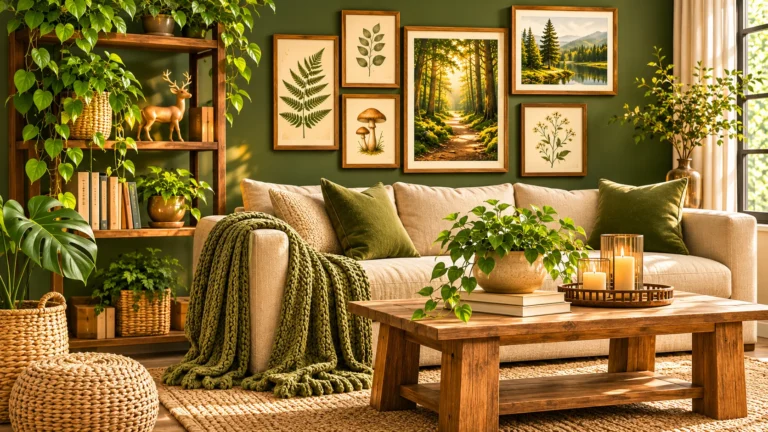
- Use natural materials such as wood, linen, cotton, stone, and wool.
- Maximize natural light and incorporate layered lighting for warmth.
- Make storage part of your design to keep everyday clutter out of sight.
1. Start with a Neutral Color Palette
Color plays an important role in minimalist interior design. A restrained palette helps create visual harmony and allows furniture, materials, and architectural details to stand out.
White, cream, beige, soft gray, and warm taupe are popular choices because they create a light and relaxed atmosphere.
However, minimalist decor doesn’t have to mean an entirely white home. Warm neutrals can make a room feel much more inviting.
Colors That Work Beautifully Together
Warm white: Creates a clean foundation and reflects natural light.
Soft beige: Adds warmth without overwhelming the room.
Light gray: Introduces subtle contrast while maintaining a sophisticated appearance.
Taupe: Works beautifully with wooden furniture and natural textiles.
Muted brown: Adds depth and makes neutral interiors feel grounded.
Soft black: Provides contrast through furniture legs, lighting fixtures, and picture frames.
How to Use a Minimalist Color Scheme
Start with one main wall color, such as warm white or light beige. Use a slightly darker shade for larger furniture pieces and introduce subtle contrast through accessories.
For example, a cream living room with a beige sofa, oak coffee table, and charcoal cushions can look elegant without requiring many decorative elements.
If you want a little more personality, introduce muted sage green, dusty blue, or terracotta through a few carefully selected accessories.
2. Choose Furniture with Clean Lines
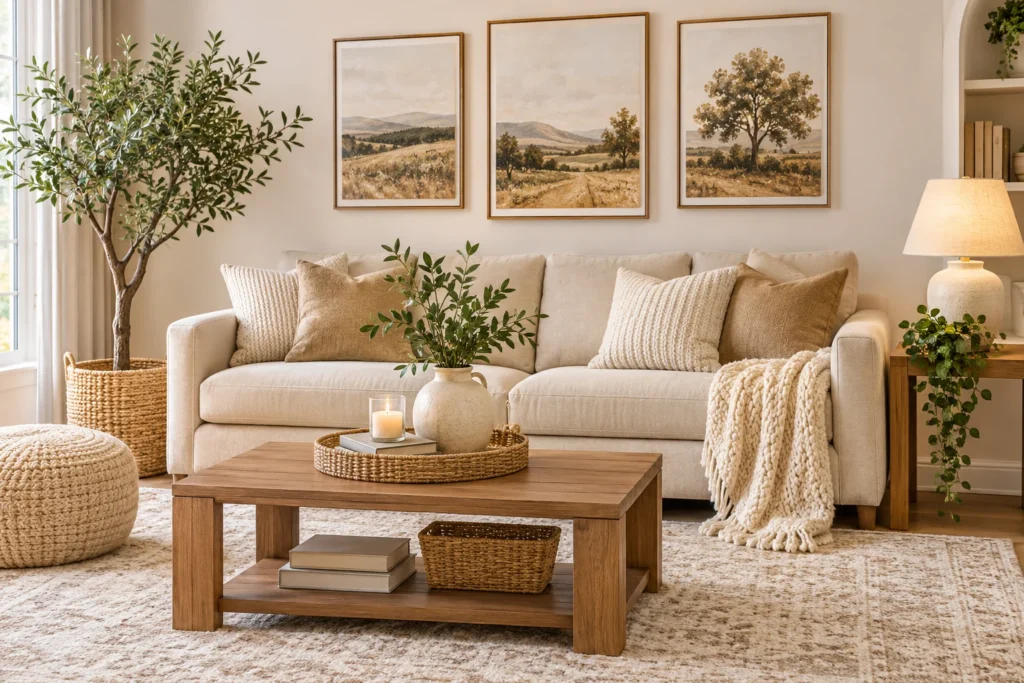
Minimalist furniture is usually defined by simple silhouettes, understated details, and practical functionality.
Instead of choosing furniture with elaborate carvings or excessive ornamentation, look for pieces with balanced proportions and clean shapes.
The goal is to make the room feel visually organized while maintaining everyday comfort.
Furniture Styles to Consider
- Low-profile sofas with simple upholstery.
- Wooden coffee tables with uncomplicated designs.
- Dining tables with slim, elegant legs.
- Platform beds with minimal detailing.
- Open shelving with clean geometric lines.
- Compact accent chairs with neutral upholstery.
Pay Attention to Proportion
Furniture should suit the dimensions of the room.
For example, a large sectional sofa may overwhelm a small apartment living room. A compact two- or three-seat sofa with slim arms can provide comfortable seating while leaving more open floor space.
Similarly, choose a coffee table that allows comfortable movement around the seating area.
Minimalism is not about buying the smallest furniture possible. It is about selecting pieces that fit the room without making it feel crowded.
3. Keep Surfaces Simple and Clutter-Free
One of the most recognizable characteristics of minimalist home decor is the use of uncluttered surfaces.
Kitchen countertops, coffee tables, bedside tables, and shelves should have enough open space to create a sense of visual calm.
This doesn’t mean removing everything you enjoy. Instead, display a smaller selection of meaningful objects.
How to Style Different Surfaces
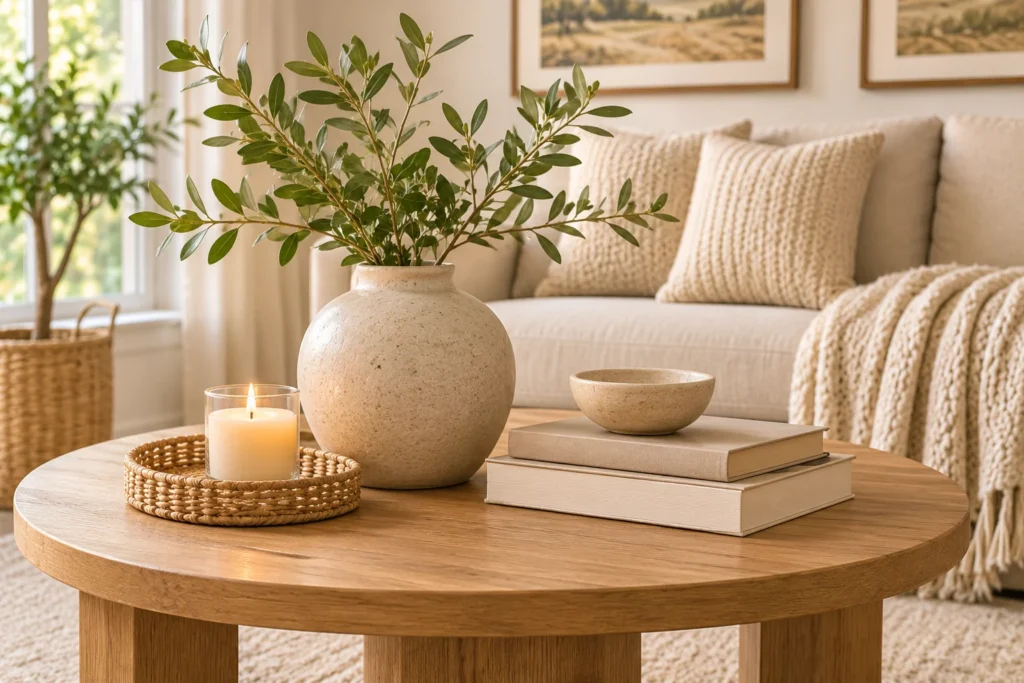
Coffee table: Add a small stack of books, a ceramic vase, or one decorative bowl.
Console table: Choose a simple lamp and a small piece of artwork.
Kitchen countertop: Keep frequently used essentials accessible and store less-used appliances in cabinets.
Bedside table: Use a lamp, a book, and one small decorative object.
Bathroom vanity: Display a soap dispenser and a small tray while keeping personal products organized.
A useful approach is to group small decorative objects together rather than scattering them across every surface.
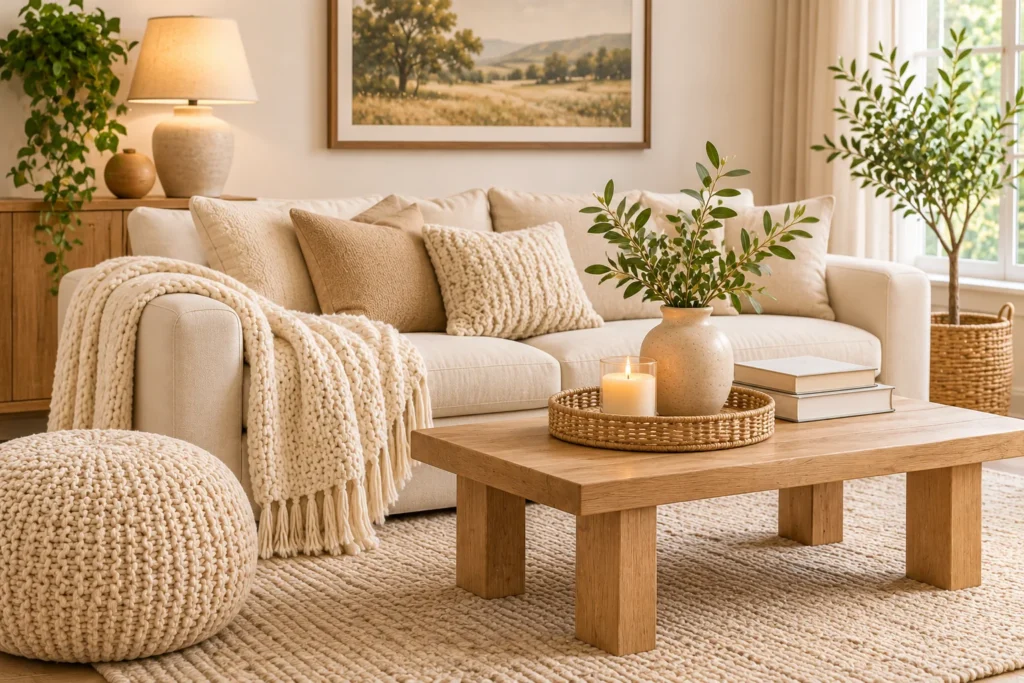
4. Incorporate Natural Materials
Natural materials bring warmth and character to minimalist spaces.
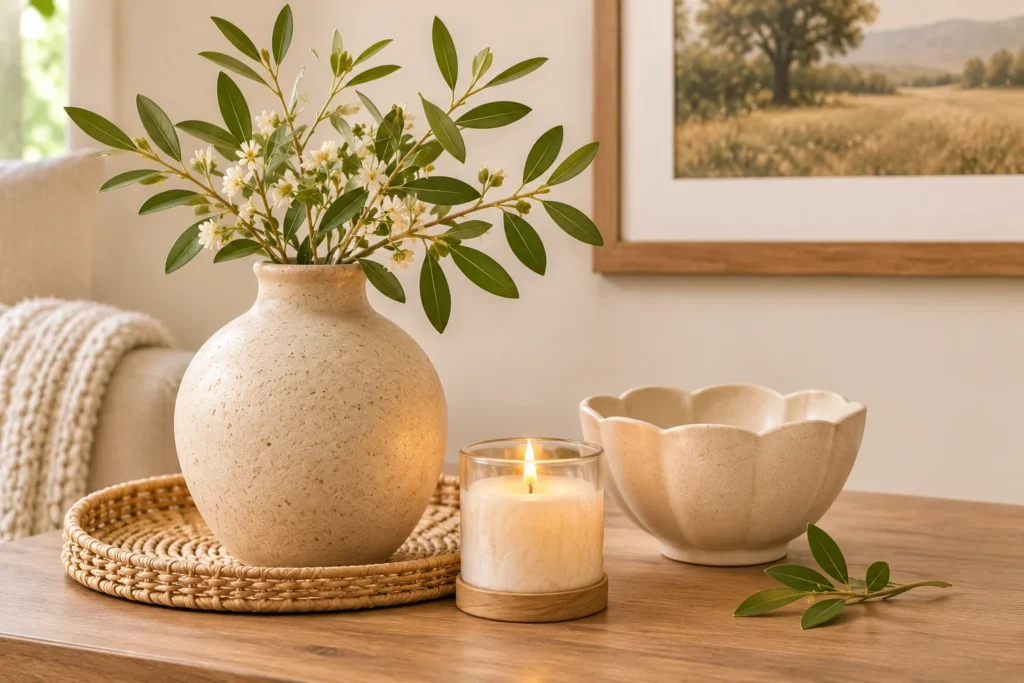
Without different textures, a neutral interior can sometimes feel flat or overly sterile. Wood, linen, wool, stone, and woven fibers introduce subtle variations that make the room more inviting.
Natural Materials to Introduce
Wood: Oak, walnut, ash, and light natural finishes work beautifully with neutral color palettes.
Linen: Ideal for curtains, bedding, and cushion covers because of its relaxed texture.
Cotton: A versatile choice for soft furnishings and everyday textiles.
Wool: Adds warmth through rugs, throws, and upholstered accessories.
Stone: Marble, travertine, and natural stone finishes create understated visual interest.
Rattan: Useful for introducing a little organic texture through baskets, chairs, and decorative accents.
Create a Balanced Combination
Try pairing a light oak coffee table with a linen sofa, wool rug, and stoneware accessories.
In the bedroom, combine cotton bedding with a wooden bed frame and a textured wool throw.
The different materials create depth without requiring bold colors or excessive decoration.
5. Make the Most of Natural Light
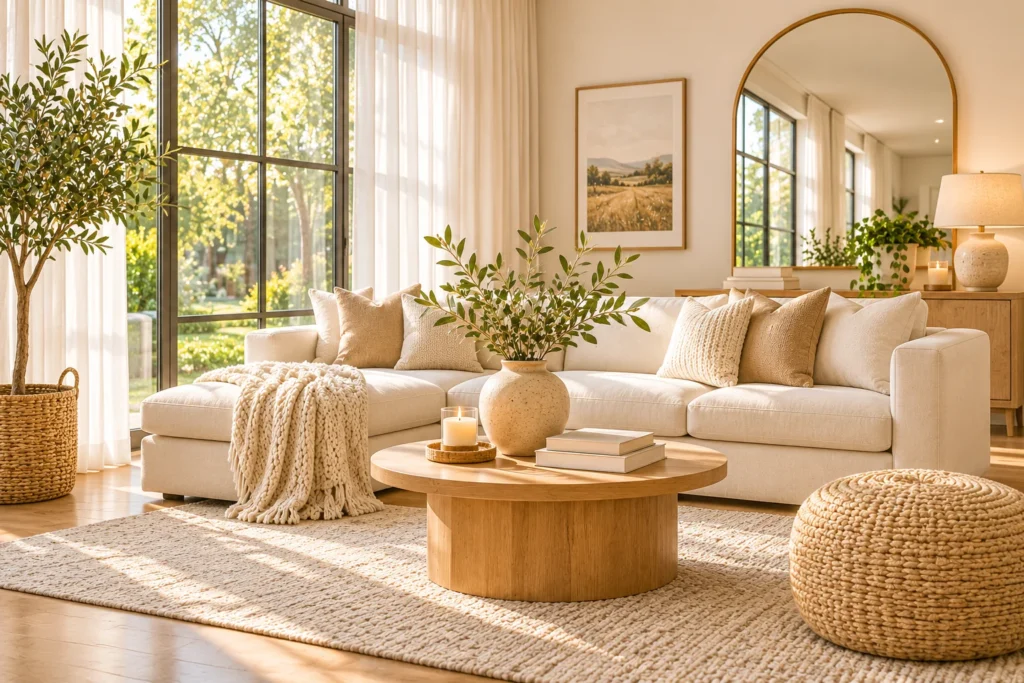
Natural light helps minimalist interiors feel open, fresh, and welcoming.
Large windows, simple window treatments, and reflective surfaces can make a room appear brighter without adding more furniture or decoration.
Choose Simple Window Treatments
Lightweight linen or cotton curtains are excellent options for minimalist interiors.
Hang curtain rods close to the ceiling and allow the curtains to reach the floor. This can create the impression of taller windows and higher ceilings.
If privacy is important, consider sheer curtains layered with light-filtering roller shades.
Use Mirrors Strategically
A large mirror can help reflect daylight and create a greater sense of openness.
Place it opposite or beside a window where it can capture natural light.
Choose simple frames in wood, black metal, or understated finishes to complement the rest of the room.
6. Create a Beautiful Minimalist Bedroom
A minimalist bedroom should feel comfortable, peaceful, and free from unnecessary visual distractions.
Start with a simple foundation and introduce softness through bedding, lighting, and carefully selected furniture.
Choose Simple Bedding
White, cream, oatmeal, and soft gray are excellent bedding colors.
Layer different textures rather than introducing too many patterns. For example, combine cotton sheets, a linen duvet cover, and a knitted throw.
Keep decorative pillows to a manageable number so the bed remains practical for everyday use.
Select Functional Bedside Furniture
Choose compact bedside tables with simple shapes and useful storage.
A pair of matching wooden nightstands can create symmetry, while a single floating shelf works well in smaller bedrooms.
Use Soft Lighting
Bedside lamps with fabric shades or simple wall sconces create a relaxing atmosphere.
Warm-toned lighting is particularly suitable for bedrooms because it helps create a comfortable evening environment.

7. Embrace Smart Storage Solutions
Minimalist interiors look their best when everyday belongings have designated storage spaces.
Instead of relying on decorative boxes scattered throughout the room, incorporate storage into the furniture and layout.
Practical Storage Ideas
- Choose beds with built-in drawers.
- Use closed cabinets to hide everyday household items.
- Install floating shelves for selected decorative pieces.
- Add storage benches near entryways.
- Use drawer organizers to keep smaller belongings accessible.
- Choose multifunctional furniture for compact apartments.
Make Storage Part of the Design
Built-in cabinets that match the wall color can create a streamlined appearance.
In smaller homes, vertical storage can make use of otherwise unused wall space.
Choose storage furniture with simple hardware and understated finishes to maintain visual consistency.
8. Introduce Greenery for a Fresh Touch
Plants are a wonderful addition to minimalist interiors because they introduce natural color without creating visual clutter.
A single large plant can sometimes have more impact than several small decorative objects.
Plants That Suit Minimalist Homes
Fiddle-leaf fig: Its large leaves create a striking focal point in bright rooms.
Snake plant: Its upright shape works well in modern interiors.
Monstera: Its distinctive leaves introduce an organic decorative element.
Pothos: A trailing plant that looks beautiful on shelves.
Olive tree: Adds a subtle Mediterranean touch when the available light and indoor conditions are suitable.
Keep Plant Styling Simple
Choose planters in ceramic, terracotta, concrete, or natural stone finishes.
Place a larger plant beside a window or in an unused corner. Use smaller plants selectively on shelves or side tables.
Avoid filling every available space with greenery. A few thoughtfully positioned plants will maintain the calm appearance of the room.
9. Use Minimalist Lighting as a Design Feature
Lighting should be both practical and decorative in a minimalist home.
Simple fixtures can become beautiful focal points without making the room feel overly decorated.
Lighting Styles to Consider
Pendant lights: Choose simple geometric shapes or understated dome designs for dining areas and kitchens.
Floor lamps: A slim floor lamp beside a sofa can provide reading light without taking up much space.
Table lamps: Ceramic and sculptural lamps add personality to bedside tables and consoles.
Wall sconces: These are useful when you want additional lighting without using table space.
Recessed lighting: Provides general illumination while maintaining a clean ceiling appearance.
Layer Your Lighting
Rather than depending on one ceiling fixture, combine ambient, task, and accent lighting.
For example, a minimalist living room might include a ceiling pendant, a floor lamp beside the sofa, and a small table lamp near the television or reading area.
This creates a more comfortable atmosphere throughout the day.
10. Decorate with Simple Artwork and Accessories
Minimalist decor doesn’t mean leaving every wall empty.
Artwork and decorative accessories help express your personal style while maintaining a clean and balanced appearance.
The key is to choose pieces that complement the room rather than compete for attention.
Artwork Ideas
- Abstract line drawings.
- Neutral landscape photography.
- Minimalist black-and-white prints.
- Subtle geometric artwork.
- Large canvas paintings in earthy tones.
- Simple botanical illustrations.
How to Display Artwork
A single oversized artwork above a sofa can create a strong focal point.
Alternatively, use two or three coordinated prints arranged with consistent spacing.
Choose frames in natural wood, black, or understated metal finishes.
When hanging artwork above furniture, a general guideline is to leave around 6–10 inches between the top of the furniture and the bottom of the frame, adjusting according to the artwork’s size and the room’s proportions.
11. Make Small Spaces Feel More Open
Minimalist home decor is particularly useful in apartments and smaller homes because it encourages thoughtful furniture placement and reduces unnecessary visual distractions.
The goal is to make every area functional while preserving a sense of openness.
Choose Multifunctional Furniture
Consider:
- Nesting coffee tables.
- Storage ottomans.
- Extendable dining tables.
- Wall-mounted desks.
- Floating bedside shelves.
- Compact sofas with raised legs.
These pieces provide practical functions without taking up unnecessary space.
Maintain Clear Walkways
Avoid positioning furniture where it blocks natural pathways.
As a general guideline, aim for around 30–36 inches of clearance in main walkways when the room allows. Smaller clearances may be necessary in compact apartments.
Use Vertical Space
Tall shelving, wall-mounted cabinets, and vertical storage help keep the floor more open.
Choose visually lightweight furniture and avoid filling every corner.
12. Add Personality Without Losing Simplicity
A minimalist home should reflect the people who live in it.
Although the style emphasizes simplicity, it doesn’t mean removing everything personal or meaningful.
A few carefully selected pieces can make the space feel individual and welcoming.
Personal Details That Work Beautifully
- A favorite piece of artwork.
- A handmade ceramic vase.
- A collection of meaningful books.
- A vintage wooden stool.
- A sculptural decorative object.
- A family photograph in a simple frame.
- A beautiful handmade textile.
Try to give special pieces enough room to stand out.
Instead of filling an entire shelf, display a small collection with deliberate spacing. This allows each object to contribute to the overall design.
Common Mistakes to Avoid
Minimalist interiors can look effortless, but achieving the right balance requires a little thought. Avoid these common mistakes when decorating your home.
1. Making the Room Feel Too Empty
Removing too many furnishings and accessories can make a room feel unfinished rather than peaceful.
Better approach: Introduce a few comfortable textiles, meaningful decorative pieces, and natural materials to create warmth.
2. Using Only White
An entirely white interior can sometimes feel flat or cold, especially when there is little natural light.
Better approach: Combine white with beige, taupe, warm wood, and subtle earthy colors.
3. Choosing Furniture That Is Too Large
Oversized sofas, bulky cabinets, and heavy tables can overwhelm minimalist spaces.
Better approach: Measure the room before purchasing furniture and prioritize balanced proportions.
4. Ignoring Storage
Even a beautifully decorated home can quickly look cluttered when everyday belongings have nowhere to go.
Better approach: Invest in functional storage and make use of cabinets, drawers, baskets, and multifunctional furniture.
5. Forgetting About Texture
A room filled with smooth white surfaces can feel visually uninteresting.
Better approach: Mix linen, wool, wood, stone, cotton, and woven materials.
6. Using Too Many Small Decorative Objects
Numerous small accessories can make surfaces look busy.
Better approach: Choose fewer, more meaningful decorative pieces and group them thoughtfully.
7. Relying on One Light Source
A single overhead light can make an otherwise beautiful minimalist room feel flat.
Better approach: Combine ceiling lighting with table lamps, floor lamps, and wall lights.
Key Pieces to Consider for Minimalist Home Decor
If you’re gradually updating your home, focus on versatile pieces that support the overall aesthetic.
1. Neutral Sofa
Choose a cream, beige, light gray, or warm taupe sofa with a simple silhouette.
Look for durable upholstery, comfortable seating, and proportions that suit your living room.
2. Natural Wood Coffee Table
A simple oak or walnut coffee table introduces warmth and works well with neutral furniture.
Round tables can soften angular arrangements, while rectangular designs work particularly well with longer sofas.
3. Minimalist Area Rug
A neutral wool, cotton, or textured synthetic rug helps define a seating area.
Choose a size that allows the front legs of your main seating furniture to rest on the rug.
4. Simple Pendant Light
A clean-lined pendant can become a subtle focal point above a dining table or kitchen island.
Consider matte white, black metal, brushed brass, or natural materials.
5. Functional Storage Cabinet
A low-profile cabinet with concealed storage helps keep everyday belongings organized.
Choose a finish that complements your furniture and wall color.
6. Sculptural Ceramic Accessories
A simple vase, decorative bowl, or handmade ceramic object adds character without creating clutter.
Choose pieces with interesting shapes and natural finishes.
Budget-Friendly Ways to Achieve a Minimalist Look
You don’t need a large decorating budget to create a beautiful minimalist home. Many of the most effective changes involve using what you already own more thoughtfully.
Declutter gradually: Start with one room, removing items you no longer use or need.
Rearrange existing furniture: Create more open space by improving furniture placement and keeping walkways clear.
Refresh cushion covers: Replace busy patterns with simple neutral textiles.
Shop secondhand: Look for simple wooden tables, neutral lamps, ceramic vases, and understated artwork.
Use affordable storage: Baskets, drawer organizers, and simple cabinets can make everyday spaces feel more organized.
DIY your artwork: Create simple abstract prints or frame inexpensive neutral illustrations.
Refresh existing furniture: A suitable paint or wood finish can give an older cabinet or table a cleaner appearance.
Bring in natural elements: A branch arrangement, a few houseplants, or a textured throw can add character without expensive purchases.
Frequently Asked Questions
1. What is minimalist home decor?
Minimalist home decor is an interior design approach that emphasizes simplicity, functionality, clean lines, and intentional decorating. It uses carefully selected furniture, restrained color palettes, and uncluttered spaces to create a calm and balanced home.
2. What colors are best for minimalist interiors?
White, cream, beige, taupe, soft gray, and warm brown are popular choices. Muted green, dusty blue, and charcoal can also introduce subtle contrast without overwhelming the space.
3. How can I make minimalist decor feel cozy?
Layer soft textiles such as linen curtains, wool rugs, knitted throws, and comfortable cushions. Add warm lighting, natural wood furniture, and a few personal accessories to prevent the room from feeling cold.
4. Is minimalist home decor suitable for small apartments?
Yes. Minimalist decorating works particularly well in small apartments because it encourages multifunctional furniture, practical storage, simple color palettes, and clear walkways.
5. Can minimalist decor include colorful accessories?
Absolutely. A neutral foundation allows selected colors to stand out. Introduce muted green cushions, a terracotta vase, or a piece of colorful artwork without making the room feel visually crowded.
6. How do I decorate minimalist walls?
Choose a large statement artwork, a few coordinated prints, or a simple wall mirror. Avoid overcrowding walls with numerous small decorative pieces.
7. What materials work best with minimalist interior design?
Natural wood, linen, cotton, wool, stone, ceramic, glass, and metal are all excellent choices. Combining different textures creates depth while maintaining a simple overall appearance.
8. How do I maintain a minimalist home?
Give everyday belongings designated storage spaces, regularly clear unnecessary clutter, and avoid purchasing decorative objects without considering where they will be placed. A simple organization routine helps maintain the overall look.
Conclusion
Minimalist home decor is about creating a space that feels comfortable, organized, and thoughtfully designed. Through neutral colors, functional furniture, natural materials, layered lighting, and carefully selected accessories, you can create an interior that feels both timeless and personal.
You don’t have to change your entire home overnight. Start with one room, simplify the furniture arrangement, introduce a few natural textures, and keep the details that genuinely make you happy.
Save these minimalist decorating ideas for your next home refresh and create a space where simplicity and comfort come together beautifully.