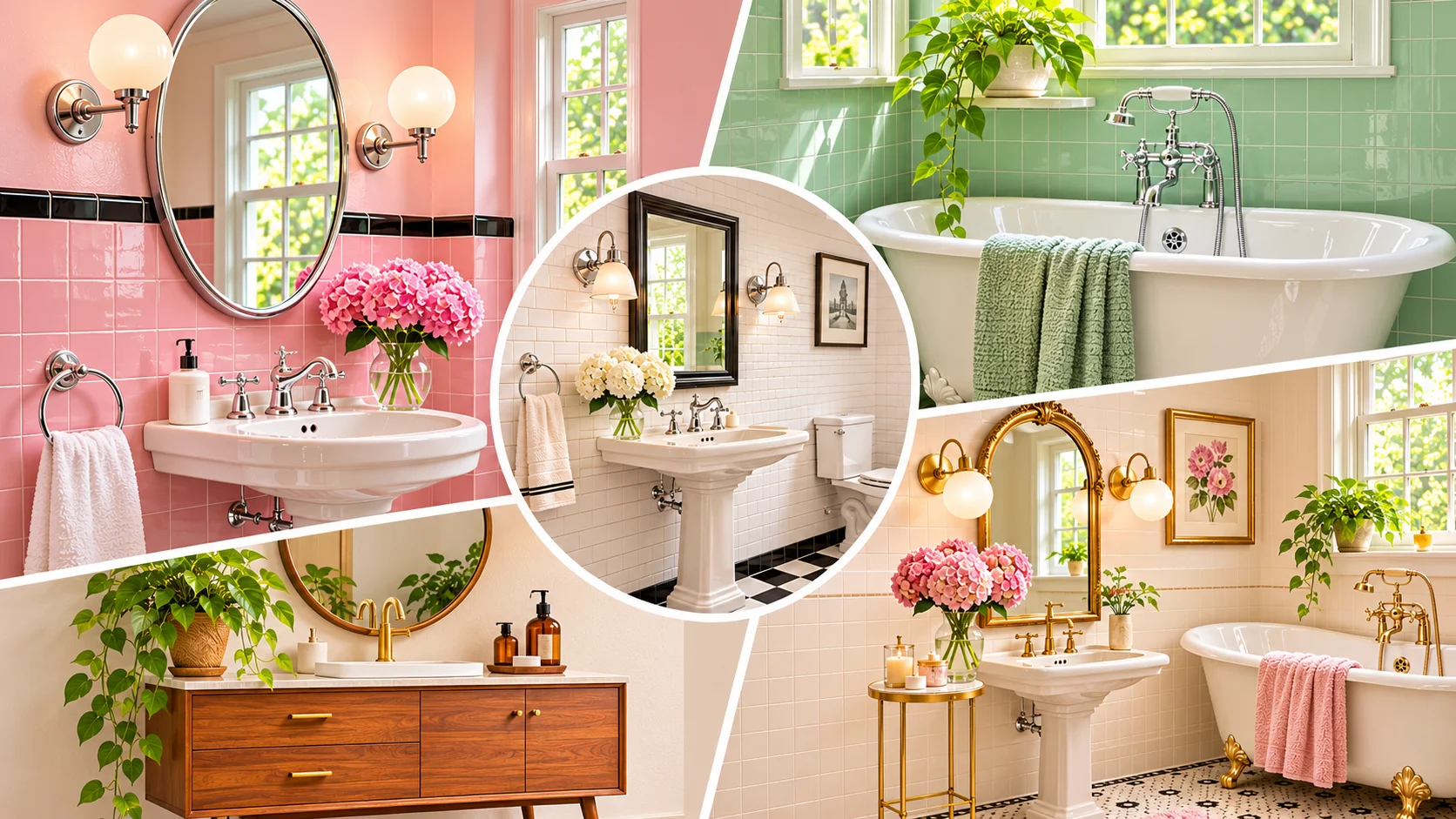
A bathroom doesn’t have to look brand-new to feel beautiful. Some of the most inviting bathrooms borrow their charm from the past, combining nostalgic colors, distinctive tile patterns, vintage-inspired fixtures, and warm materials that give the space personality.
Retro bathroom styles are popular because they bring character into a room that can otherwise feel overly functional. From pastel pink bathrooms inspired by the 1950s to sleek mid-century designs with walnut cabinetry and geometric tiles, there are plenty of ways to introduce vintage charm without making your bathroom feel outdated.
The secret is finding the right balance between old-fashioned details and modern comfort. A vintage vanity can look beautiful alongside contemporary lighting, while classic checkerboard flooring can feel surprisingly fresh when paired with simple walls and polished fixtures.
Here are 10 retro bathroom ideas to help you create a space that feels nostalgic, stylish, and practical.
Quick Takeaways
-
Embrace pastel colors such as dusty pink, mint green, pale blue, and butter yellow.
-
Use geometric, checkerboard, or small-format tiles to introduce vintage character.
-
Choose vintage-inspired vanities with curved edges, wooden finishes, or decorative hardware.
-
Incorporate chrome fixtures, globe lighting, and framed mirrors for an authentic retro atmosphere.
-
Balance nostalgic details with modern storage, lighting, and bathroom conveniences.
1. Bring Back the Charm of 1950s Pink Bathrooms
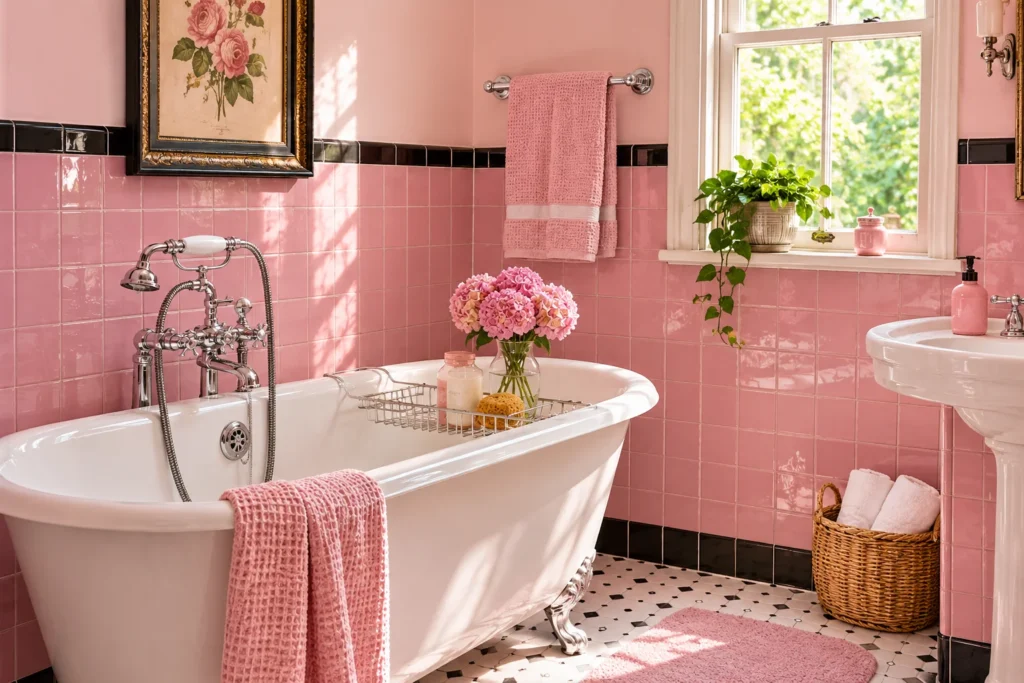
Few bathroom styles are as recognizable as the classic pink bathroom. Popular in mid-century American homes, this look featured soft pink ceramic tiles, white porcelain fixtures, chrome hardware, and occasionally contrasting black details.
Today, pink bathrooms can feel elegant rather than old-fashioned when the color palette is carefully chosen.
How to Recreate the Look
Start with a gentle shade of pink rather than an overly bright version. Dusty rose, blush, and pale pink work particularly well with white, cream, and warm metallic accents.
Consider these combinations:
-
Blush pink tiles with white grout and chrome fixtures.
-
Dusty rose walls with a white pedestal sink.
-
Pink and black checkerboard flooring with white walls.
-
Pale pink cabinetry with brushed nickel hardware.
If replacing your tiles isn’t practical, introduce pink through painted cabinetry, towels, shower curtains, or accessories.
Design tip: Keep larger surfaces relatively simple if you’re using pink tiles. Too many competing patterns can make a small bathroom feel visually busy.
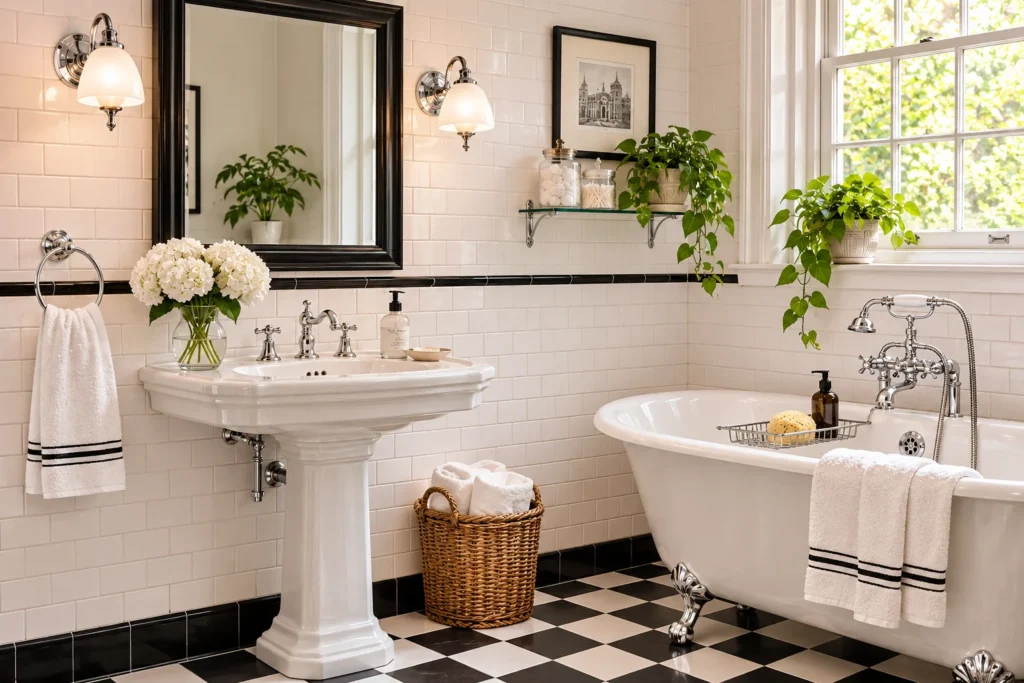
2. Choose Classic Black and White Checkerboard Flooring
Checkerboard flooring is one of the easiest ways to give a bathroom a vintage appearance. Its bold geometric pattern was popular in traditional and mid-century interiors, and it continues to work beautifully in contemporary homes.
The contrast between black and white creates visual interest without requiring multiple colors or complicated decorative details.
How to Style Checkerboard Floors
For a classic look, combine black and white floor tiles with:
-
White subway wall tiles.
-
A traditional white bathtub.
-
Chrome or polished nickel faucets.
-
A black-framed mirror.
-
Simple white towels and understated accessories.
The size of the tiles makes a difference. Smaller squares can create a traditional, detailed appearance, while larger squares feel more graphic and modern.
In a compact bathroom, consider using checkerboard flooring only on the floor and keeping the walls light. This prevents the pattern from overwhelming the room.
Budget-friendly idea: If replacing flooring isn’t an option, look into suitable waterproof floor decals designed for your existing surface. Check the manufacturer’s instructions for bathroom use and slip resistance.
3. Embrace Mint Green and Soft Pastel Colors
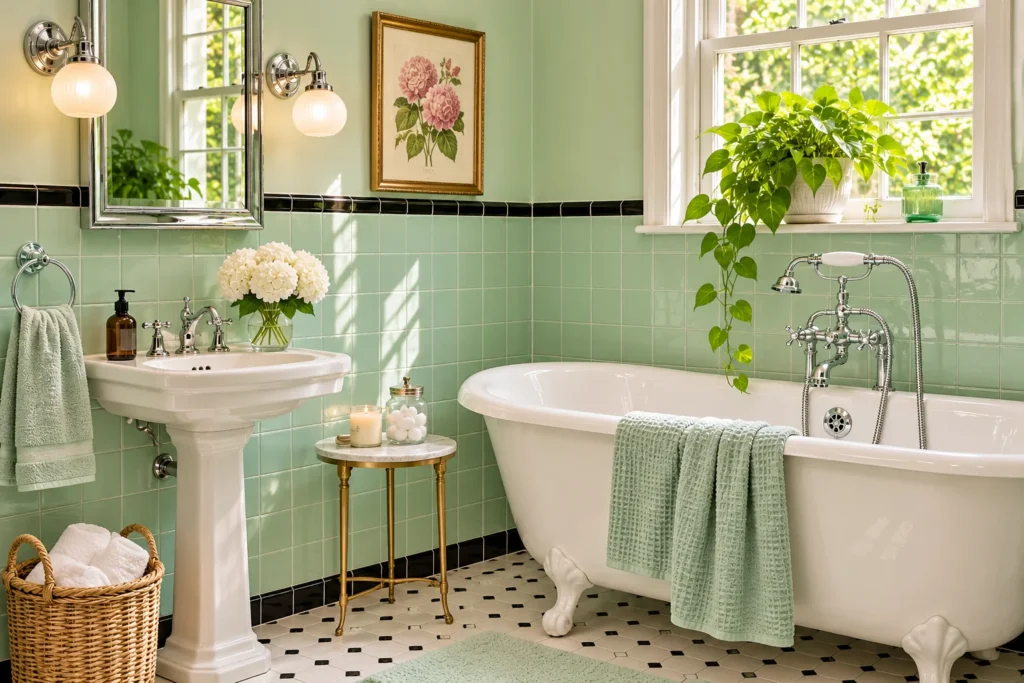
Mint green is another signature color associated with vintage bathroom design. It has a fresh, calming quality that works especially well with white porcelain, chrome, and natural wood.
Unlike stronger greens, pale mint can brighten a bathroom without making it feel overly colorful.
Beautiful Retro Color Combinations
| Color Combination | Overall Atmosphere |
|---|---|
| Mint green and white | Fresh and classic |
| Sage green and cream | Soft and sophisticated |
| Pale blue and chrome | Cool and nostalgic |
| Butter yellow and white | Cheerful and sunny |
| Mint green and black | Bold and graphic |
You can introduce these colors through ceramic tiles, painted walls, bathroom cabinetry, or decorative accessories.
For a more subtle interpretation, keep the walls white and use a mint green vanity or vintage-inspired mirror.
Design tip: If your bathroom receives little natural light, choose lighter pastel shades and combine them with warm artificial lighting.
4. Install Vintage-Inspired Subway and Geometric Tiles
Tiles are one of the defining elements of retro bathroom styles. Their color, shape, arrangement, and grout can completely change the character of a room.
Traditional subway tiles offer a timeless starting point, while small mosaic tiles and geometric patterns introduce more distinctive vintage details.
Tile Styles Worth Considering
Classic subway tiles
White rectangular subway tiles are ideal for recreating traditional bathrooms. Arrange them in a brick pattern for a familiar vintage appearance.
Small hexagonal tiles
Hexagon mosaics create an intricate floor pattern that works particularly well in traditional bathrooms.
Penny round tiles
These small circular tiles have a distinctly nostalgic appearance. They look especially charming in white, black, or pale pastel shades.
Geometric patterned tiles
Diamond, star, and repeating decorative patterns can introduce color and personality without requiring elaborate accessories.
How to Make the Combination Work
Try pairing white subway wall tiles with a patterned floor. This creates contrast while allowing each surface to stand out.
For a more authentic vintage look, consider contrasting grout, decorative tile borders, or a small mosaic accent area.

5. Add a Mid-Century Modern Bathroom Vanity
Not every retro bathroom needs pastel tiles and traditional porcelain fixtures. Mid-century modern design offers a more understated interpretation of vintage style.
This approach focuses on clean lines, warm wood, organic shapes, and functional furniture.
A wooden vanity can instantly soften a bathroom filled with hard surfaces such as ceramic, porcelain, and glass.
What to Look for in a Vintage-Inspired Vanity
-
Walnut or teak-inspired finishes.
-
Tapered legs or floating cabinetry.
-
Flat-front drawers and simple cabinet doors.
-
Brass, bronze, or chrome hardware.
-
Integrated or gently curved sink designs.
For a small bathroom, a floating vanity is particularly useful because the visible floor underneath helps the room feel less crowded.
If you prefer a traditional furniture-style vanity, choose one with slim legs rather than a bulky cabinet base.
Pair the vanity with a round mirror, simple wall sconces, and white or cream tiles to keep the overall appearance balanced.
Budget-friendly idea: An existing wooden cabinet can sometimes be transformed into a vanity with suitable waterproof finishing, plumbing modifications, and a countertop basin. Make sure the cabinet is appropriate for bathroom moisture.

6. Use Retro Lighting to Create a Warm Atmosphere
Lighting can make the difference between a bathroom that simply looks old-fashioned and one that feels thoughtfully designed.
Vintage-inspired lighting often features rounded glass shades, exposed decorative details, polished metals, and simple geometric silhouettes.
Lighting Styles That Suit Retro Bathrooms
Opal glass globe sconces
These create a soft, diffused appearance and work beautifully beside a bathroom mirror.
Chrome wall lights
Polished chrome is ideal for a traditional 1950s-inspired bathroom.
Brass fixtures
Warm brass adds richness to pastel colors, wooden vanities, and cream-colored tiles.
Milk glass ceiling lights
These offer a classic vintage appearance while providing useful general illumination.
Where Should Bathroom Lighting Go?
For comfortable mirror lighting, consider placing sconces on either side of the mirror, with the light sources positioned around face height where practical.
A general guideline is to place them approximately 60–66 inches above the finished floor, adjusting for the mirror, ceiling, and occupants’ height.
Use suitable damp- or wet-rated fixtures for their installation locations, and follow local electrical requirements.
Design tip: Choose warm-white lighting for a relaxed atmosphere, while ensuring the mirror area still provides enough light for everyday grooming.

7. Incorporate Vintage Mirrors and Decorative Details
Accessories are often the finishing touch that makes a retro bathroom feel authentic.
Instead of filling every surface with decorative objects, choose a few distinctive pieces that complement the architectural details and color palette.
Decorative Elements to Consider
-
Rounded or oval mirrors.
-
Vintage-style medicine cabinets.
-
Chrome or brass towel bars.
-
Ceramic soap dishes.
-
Glass storage jars.
-
Traditional wall hooks.
-
Framed botanical or abstract prints.
-
Small decorative trays.
An arched mirror can soften a bathroom with strong geometric tiles, while a rectangular mirror with a decorative metal frame works well in more traditional interiors.
If you have limited counter space, use wall-mounted accessories instead of decorative objects that compete with everyday essentials.
Budget-friendly idea: Visit thrift stores, antique shops, and flea markets for unique mirrors, ceramic containers, and small decorative accessories. Check that mirrors and metal finishes are in suitable condition for a humid environment.
8. Choose a Classic Freestanding or Clawfoot Bathtub
A clawfoot bathtub is one of the most recognizable features of traditional vintage bathroom design.
Its sculptural shape creates a beautiful focal point and adds a sense of timeless character. Even in a relatively simple bathroom, the bathtub can make the entire space feel more distinctive.
How to Style a Clawfoot Tub
For a traditional appearance, consider a white bathtub with chrome feet and matching exposed plumbing.
For something more decorative, choose a tub with a painted exterior in a muted color such as charcoal, dusty blue, or sage green.
The surrounding finishes should support the bathtub rather than compete with it.
Good combinations include:
-
White clawfoot tubs with black and white flooring.
-
Freestanding tubs with pale green wall tiles.
-
Traditional tubs with brass fittings and cream walls.
-
White bathtubs with warm wooden accents.
Think About Placement
A freestanding tub needs enough surrounding clearance for comfortable access, cleaning, and maintenance. Its placement should also account for plumbing connections and floor load requirements.
If your bathroom is too small for a traditional clawfoot tub, a compact freestanding-style bathtub or a vintage-inspired shower curtain can still introduce the same nostalgic character.
9. Mix Chrome, Brass, and Traditional Bathroom Hardware
Hardware might seem like a small detail, but it has a noticeable effect on the overall style of a bathroom.
Traditional retro bathrooms often feature polished chrome, which creates a clean, reflective finish against pastel tiles and white porcelain.
Mid-century-inspired interiors can also benefit from brass, bronze, and warm metallic details.
How to Choose the Right Finish
Polished chrome: Ideal for classic 1950s bathrooms, white tiles, and traditional porcelain sinks.
Brushed brass: Works beautifully with walnut vanities, cream tiles, and muted green shades.
Polished nickel: A softer alternative to chrome that suits traditional and transitional interiors.
Oil-rubbed bronze: Creates a deeper, more traditional appearance when paired with warm neutral colors.
You don’t necessarily need to use the same metal everywhere, but try to establish a dominant finish.
For example, use chrome for faucets and shower hardware, then introduce small brass accents through a mirror frame or decorative accessories.
The result feels more intentional than mixing several unrelated finishes.
10. Create a Retro Bathroom With Warm Wood and Natural Textures
Retro bathroom design doesn’t have to rely entirely on bright colors and bold patterns.
Warm wood, woven textures, natural stone, and earthy shades can create a softer interpretation of vintage style.
This approach works particularly well for people who appreciate mid-century design but prefer neutral interiors.
Ways to Introduce Natural Materials
-
Use walnut or teak-inspired cabinetry.
-
Add a wooden-framed mirror.
-
Introduce woven baskets for towels and toiletries.
-
Choose cream or beige ceramic tiles.
-
Add a small wooden stool beside the bathtub.
-
Incorporate plants that tolerate your bathroom’s light and humidity conditions.
Wood adds visual warmth and helps soften the hard surfaces typically found in bathrooms.
For practical reasons, choose appropriately sealed materials and keep wooden accessories away from standing water.
Design tip: Combine warm wood with cream tiles, muted green accessories, and brushed brass fixtures for a relaxed, sophisticated retro look.
How to Combine Retro and Modern Bathroom Design
A retro bathroom doesn’t need to look like a perfectly preserved room from another decade.
In fact, some of the most successful designs combine vintage-inspired features with modern materials and conveniences.
The key is to decide which elements will provide the nostalgic character and which will keep the bathroom practical.
Keep the Vintage Details Focused
Choose two or three recognizable retro features rather than introducing every vintage detail at once.
For example:
-
Pink ceramic tiles.
-
A traditional chrome faucet.
-
An oval vintage mirror.
Keep the remaining elements relatively simple.
Update the Practical Features
Modern improvements can include:
-
Efficient bathroom ventilation.
-
Contemporary plumbing.
-
Easy-to-clean shower enclosures.
-
Moisture-resistant cabinetry.
-
Modern storage solutions.
-
Proper task and ambient lighting.
These features can make an older-looking bathroom more comfortable without taking away its personality.
Maintain a Consistent Color Palette
Choose one main color, one supporting neutral, and one accent finish.
A combination such as mint green, warm white, and chrome feels cohesive because each material has a clear role.
Common Mistakes to Avoid
Retro bathroom styles are full of personality, but combining too many nostalgic elements can make a bathroom feel cluttered or dated in an unintended way.
Here are some mistakes to watch out for.
1. Using Too Many Bold Patterns
Checkerboard floors, patterned wall tiles, decorative borders, and colorful shower curtains can compete for attention.
Better approach: Choose one dominant pattern and let the remaining surfaces provide visual breathing room.
2. Choosing the Wrong Shade of Pastel
Some pastel colors can appear overly bright or washed out depending on the lighting.
Better approach: Test paint samples and tile samples in the actual bathroom before committing. Look at them during both daytime and evening lighting.
3. Overloading the Bathroom With Vintage Accessories
Too many decorative containers, signs, framed pictures, and antique-inspired objects can make the space feel crowded.
Better approach: Select a few meaningful decorative pieces and leave enough clear counter space for everyday essentials.
4. Ignoring Storage
A beautiful retro vanity won’t feel practical if toiletries, cleaning products, and towels have nowhere to go.
Better approach: Combine vintage-inspired furniture with modern drawer organizers, recessed shelving, and concealed storage.
5. Mixing Too Many Metal Finishes
Chrome, brass, bronze, and black hardware can work together, but an unplanned combination can make the bathroom feel inconsistent.
Better approach: Choose one primary metal finish and introduce a second one sparingly.
6. Forgetting About Lighting
A bathroom with beautiful vintage tiles can still feel uninviting if the lighting is too harsh or poorly positioned.
Better approach: Combine general ceiling lighting with flattering mirror lighting and suitable accent illumination.
7. Sacrificing Function for Appearance
Vintage-style fixtures can be beautiful, but not every traditional design is convenient for modern daily use.
Better approach: Prioritize comfortable clearances, reliable plumbing, slip-resistant flooring, adequate ventilation, and practical storage.
Key Pieces to Consider for a Retro Bathroom
If you’re planning a bathroom makeover, a few carefully selected pieces can establish the entire design direction.
1. Mid-Century Wooden Vanity
Look for walnut-inspired finishes, clean lines, and simple hardware. A floating design works especially well in smaller bathrooms.
2. Vintage-Inspired Mirror
Oval, round, and arched mirrors complement traditional bathroom furniture. Choose a frame that coordinates with your hardware.
3. Globe Wall Sconces
Opal glass shades create a soft, classic appearance. Select bathroom-appropriate fixtures for the intended installation area.
4. Decorative Mosaic Tiles
Hexagonal, penny-round, and small square tiles are excellent for introducing vintage character. Choose a suitable slip-resistant floor finish.
5. Traditional Pedestal Sink
A white porcelain pedestal sink is a classic choice for smaller retro bathrooms. Add wall-mounted storage to compensate for limited counter space.
6. Clawfoot Bathtub
A traditional freestanding tub creates a dramatic focal point. Check dimensions, access, plumbing, and floor requirements before purchasing.
Budget-Friendly Ways to Get the Retro Bathroom Look
A complete renovation isn’t necessary to introduce vintage character. Small, carefully chosen updates can make a noticeable difference.
Here are some affordable ideas:
| Update | Why It Works |
|---|---|
| Replace cabinet handles | Adds vintage character without replacing furniture |
| Install a rounded mirror | Introduces softer, nostalgic shapes |
| Change the shower curtain | Creates an inexpensive focal point |
| Add pastel towels | Brings color into a neutral bathroom |
| Update the lighting | Changes the atmosphere and visual style |
| Thrift decorative accessories | Adds individuality and character |
| Paint suitable cabinetry | Refreshes existing furniture |
| Add framed artwork | Makes the bathroom feel more personal |
A particularly effective approach is to work with the bathroom’s existing features.
If you already have white tiles, consider adding a mint green vanity, chrome accessories, and a vintage-style mirror. If the floor has an attractive geometric pattern, keep the rest of the room relatively understated.
The goal is to create a recognizable retro atmosphere without spending money on unnecessary replacements.
Frequently Asked Questions About Retro Bathroom Styles
1. What colors are most popular in retro bathroom styles?
Classic retro bathroom colors include pastel pink, mint green, pale blue, butter yellow, black, and white. Mid-century-inspired bathrooms also use warm wood tones, cream, olive green, and earthy neutrals.
2. How can I make a small bathroom look retro?
Start with a vintage-inspired mirror, chrome fixtures, and a distinctive tile pattern. A pedestal sink or floating vanity can help preserve floor space, while light wall colors keep the room feeling open.
3. Are pink bathrooms still stylish?
Yes. Pink bathrooms can look sophisticated when paired with white porcelain, chrome fixtures, black accents, or warm brass. Muted blush and dusty rose shades offer a particularly timeless appearance.
4. What flooring works best in a vintage bathroom?
Checkerboard tiles, small hexagonal mosaics, penny-round tiles, and geometric ceramic patterns all suit vintage bathroom design. Always choose a floor finish appropriate for wet areas, with slip resistance as an important consideration.
5. How do I create a retro bathroom without renovating?
Focus on accessories and smaller updates. Replace cabinet hardware, add a vintage-inspired mirror, introduce pastel towels, update suitable lighting, and incorporate decorative storage containers.
6. What is the difference between retro and vintage bathroom design?
Vintage design generally incorporates authentic older pieces or reproductions of specific historical styles. Retro design often takes inspiration from past decades but combines those details with contemporary materials, fixtures, and conveniences.
7. Which metal finishes look best in a retro bathroom?
Polished chrome is a classic choice for 1950s-inspired bathrooms. Brass and bronze work particularly well with mid-century wooden cabinetry, cream tiles, and earthy color palettes.
8. Can I combine modern and retro bathroom styles?
Absolutely. Try pairing vintage-inspired tiles or a traditional vanity with a modern walk-in shower, contemporary storage, and updated plumbing. Keeping the color palette consistent helps the different elements feel connected.
Final Thoughts
Retro bathroom styles offer a wonderful opportunity to bring personality, warmth, and timeless character into your home. From pastel pink tiles and checkerboard floors to walnut vanities and elegant globe lighting, even a few carefully selected details can transform an ordinary bathroom.
The most successful designs don’t try to recreate the past perfectly. Instead, they borrow the details that make vintage interiors special and combine them with the comfort and functionality of modern living.
Start with one feature you love, build a complementary color palette around it, and introduce vintage-inspired accessories gradually.
Save your favorite ideas from this article and use them to create a retro bathroom that feels both nostalgic and beautifully suited to modern life.