
An apartment laundry area doesn’t need a dedicated room to be organized, attractive, and easy to use. Even a small laundry closet, a corner beside the bathroom, or a narrow space near the kitchen can become a practical laundry station with the right storage, lighting, and layout.
The best apartment laundry room ideas combine clever space-saving solutions with simple decorating details. Think stacked washer and dryer units, floating shelves, slim rolling carts, coordinated storage baskets, and light colors that help a compact area feel more open.
Whether you’re working with a full laundry room or a tiny apartment laundry closet, these ideas will help you make better use of every inch while keeping laundry supplies accessible and clutter under control.
Quick Takeaways
- Use vertical space: Install shelves above your washer and dryer to store detergent, towels, and laundry essentials.
- Consider stacked appliances: A compatible stacked washer and dryer can free up valuable floor space.
- Choose concealed storage: Cabinets, baskets, and closed containers help a small laundry area look organized.
- Improve the lighting: Bright, even lighting makes a narrow laundry closet feel more functional.
- Personalize the space: Add washable rugs, framed artwork, or coordinated containers for a finished look.
1. Stack the Washer and Dryer to Save Space
Stacking your washer and dryer is one of the most effective ways to create more room in a compact apartment laundry area. By using vertical space instead of placing both appliances side by side, you can free up floor space for storage, a laundry basket, or a narrow utility cart.
How to Make a Stacked Laundry Setup Work
Choose a washer and dryer specifically designed to be stacked together, using the manufacturer’s approved stacking kit. Measure the width, depth, and height of the appliances, including the space needed for hoses, ventilation, doors, and maintenance access.
Place a narrow shelf or cabinet beside the units if space allows. Keep detergent and frequently used supplies within easy reach, and store heavier items on lower shelves rather than above shoulder height.
For a clean appearance, use matching appliances or coordinate their visible finishes with surrounding cabinetry.
Budget-friendly tip: If you already own compatible front-loading machines, check whether an approved stacking kit is available before purchasing new appliances.

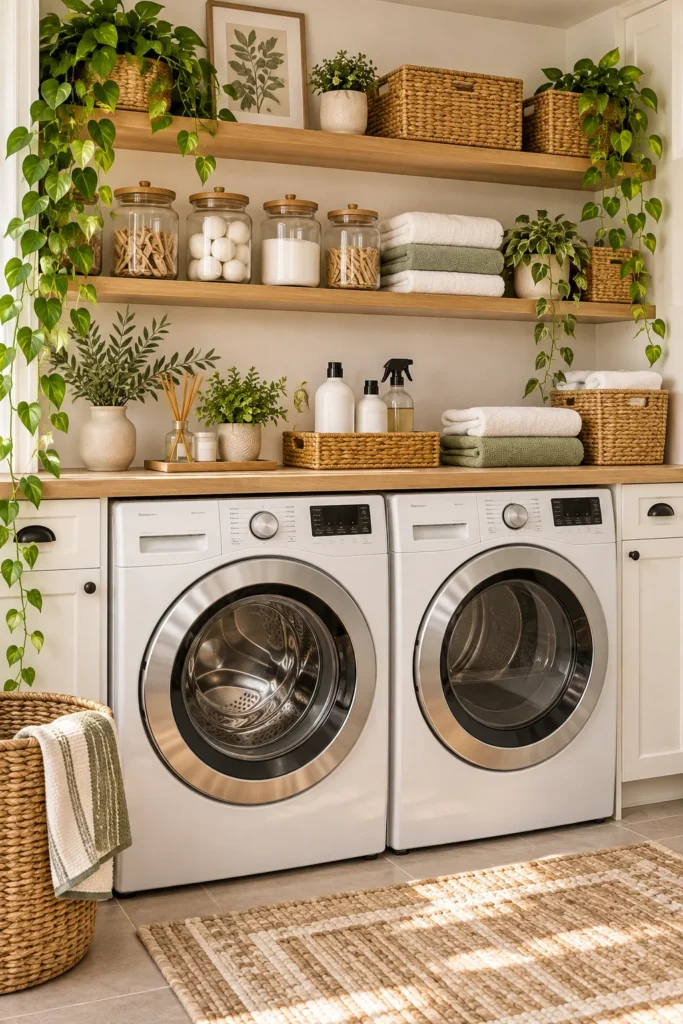
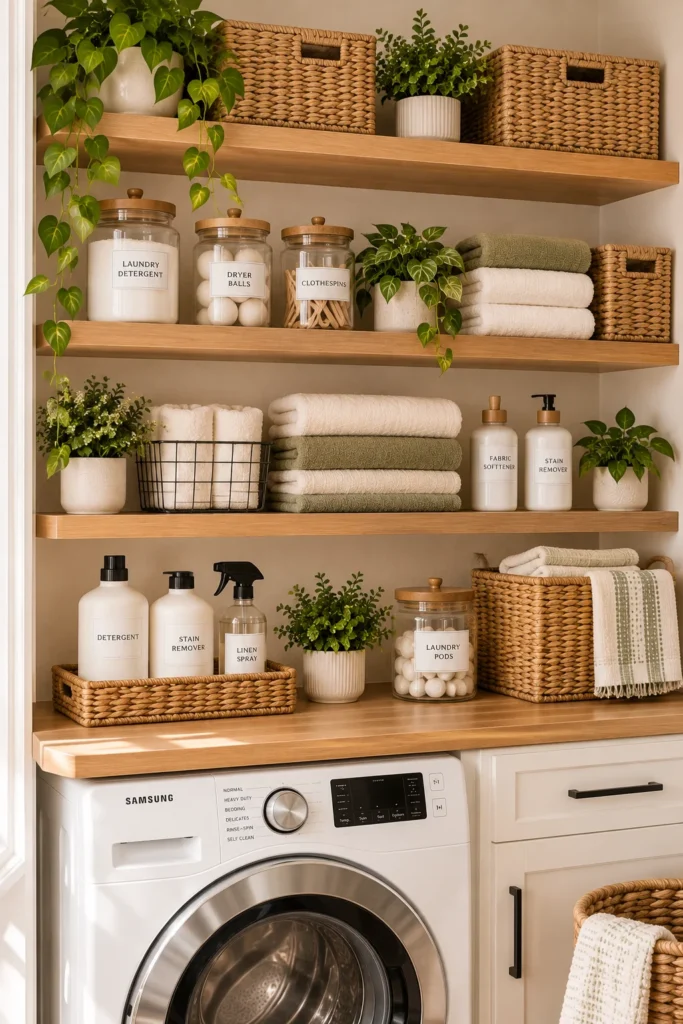
2. Install Floating Shelves Above the Washer and Dryer
Floating shelves make use of wall space that often goes unused in apartment laundry areas. They provide convenient storage without taking up the floor area needed for baskets or movement.
What to Store on Laundry Shelves
Use shelves for detergent, stain removers, dryer balls, folded towels, and small laundry accessories. Store frequently used products on the lowest accessible shelf and reserve higher shelves for lightweight items you use less often.
For a coordinated look, transfer suitable laundry products into clearly labeled containers, keeping their original instructions and safety information accessible. Always keep chemicals in their original packaging when transferring them would create a safety risk, and store detergents away from children and pets.
Choose moisture-resistant shelving materials and secure the shelves to suitable wall supports.
Styling tip: Combine practical storage containers with one small decorative element, such as a framed print, but avoid crowding the shelves.
3. Create a Laundry Closet With Sliding or Folding Doors
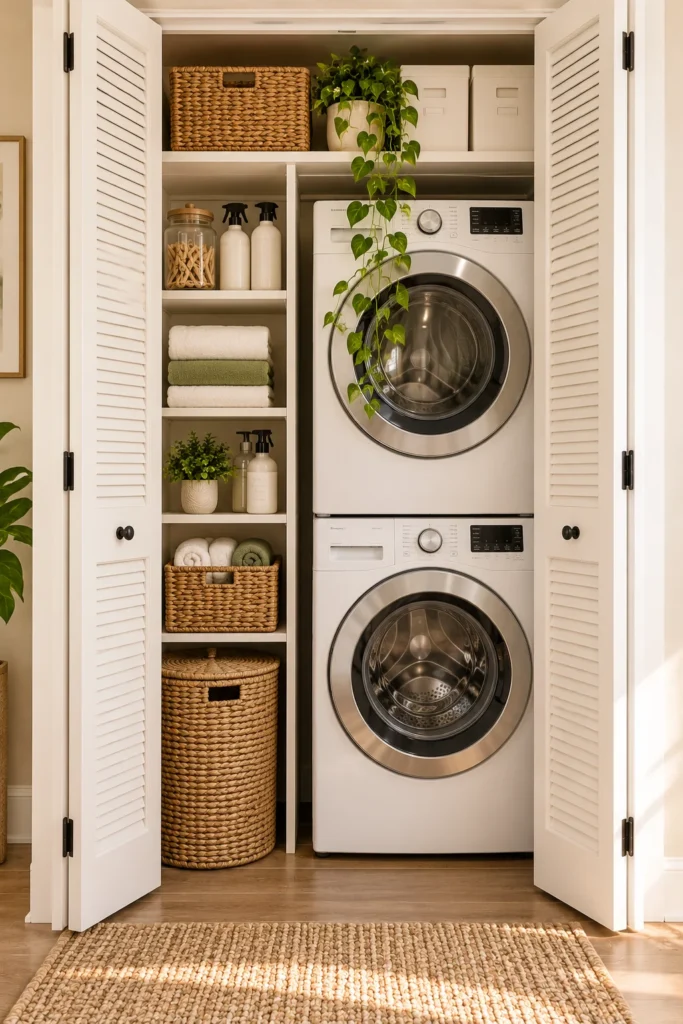
A laundry closet is a practical solution for apartments without a separate laundry room. It allows you to keep appliances and supplies in one designated area while concealing visual clutter when the laundry is not in use.
Choose Doors That Suit Your Layout
Sliding doors can be useful when there isn’t enough room for a traditional door to swing open. Folding doors may also work in narrow spaces, depending on the closet dimensions and appliance access requirements.
If you are updating an existing closet, consider painting the interior a light neutral color and adding a simple overhead light.
Make sure the doors do not block appliance controls, ventilation, required clearances, or access to shutoff valves. Laundry closets also need appropriate airflow and moisture management according to the appliance manufacturer’s instructions and local requirements.
Budget-friendly tip: Organize the existing closet with a slim shelf, matching baskets, and a simple curtain if your lease permits the change and the curtain does not interfere with appliance safety.
4. Add Cabinets for a Clean, Clutter-Free Look
Cabinets are ideal for apartment laundry areas where visible detergent bottles, cleaning supplies, and spare household items make the space feel crowded.
Closed storage creates a more streamlined appearance and helps separate laundry essentials from the rest of the home.
How to Plan Laundry Cabinet Storage
Install wall cabinets above or beside the machines, provided the placement does not interfere with appliance operation or maintenance. Use adjustable shelves to accommodate different bottle heights and laundry accessories.
If a renovation isn’t possible, consider a freestanding cabinet or a compact storage unit that fits safely beside the appliances.
White cabinets create a fresh, simple look, while natural wood finishes add warmth. Matte black or brushed metal hardware can introduce contrast without overwhelming a small space.
Practical tip: Reserve a dedicated shelf or bin for stain removers, laundry bags, and spare supplies so that everything has a predictable place.

5. Use a Slim Rolling Cart Between Appliances
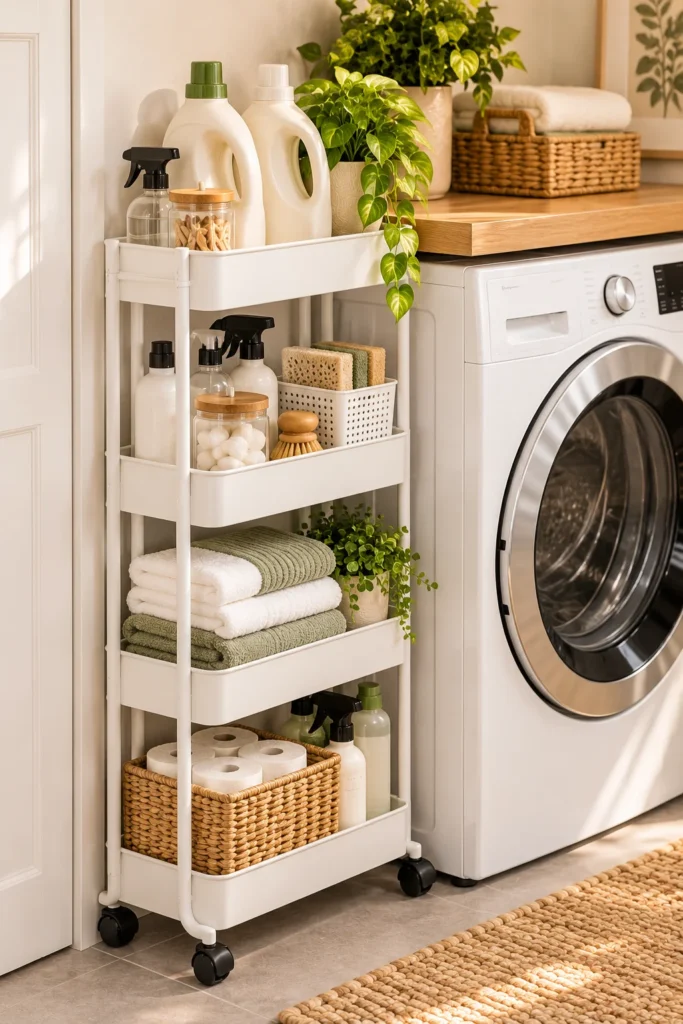
A narrow rolling cart can turn a small gap into useful storage. These carts are particularly helpful in apartment laundry closets where traditional shelving or cabinets may not fit.
Make the Most of a Narrow Gap
Measure the available width carefully, including the space needed to pull the cart out. Choose a model with wheels that lock when stationary and shelves tall enough to accommodate the items you plan to store.
Use the cart for detergent, fabric care products, dryer sheets, and small cleaning tools. If the space is beside a washer or dryer, make sure the cart doesn’t obstruct ventilation, hoses, electrical connections, or service access.
A white or neutral cart blends easily into most interiors, while a black metal design can complement a contemporary laundry area.
Budget-friendly tip: A simple three-tier utility cart can often provide flexible storage without requiring permanent installation.
6. Add a Countertop Above Front-Loading Machines
A countertop over compatible front-loading appliances creates a useful folding surface in a compact laundry room. It can also make the area look more cohesive by visually connecting the machines.
Choose the Right Countertop
Measure the machines and confirm that the proposed countertop can be installed without interfering with vibration, ventilation, controls, or maintenance access. A purpose-designed countertop or surrounding cabinet structure is preferable to placing a heavy slab directly on appliances without manufacturer approval.
Laminate, sealed wood, and suitable solid-surface materials can all be considered, depending on your budget and installation requirements.
Use the surface for folding clothes, sorting small items, or placing a laundry basket temporarily. Keep the area clear of detergent spills and avoid storing objects that could fall into appliance openings.
Styling tip: Pair a light countertop with white appliances and simple storage baskets for a bright, coordinated look.
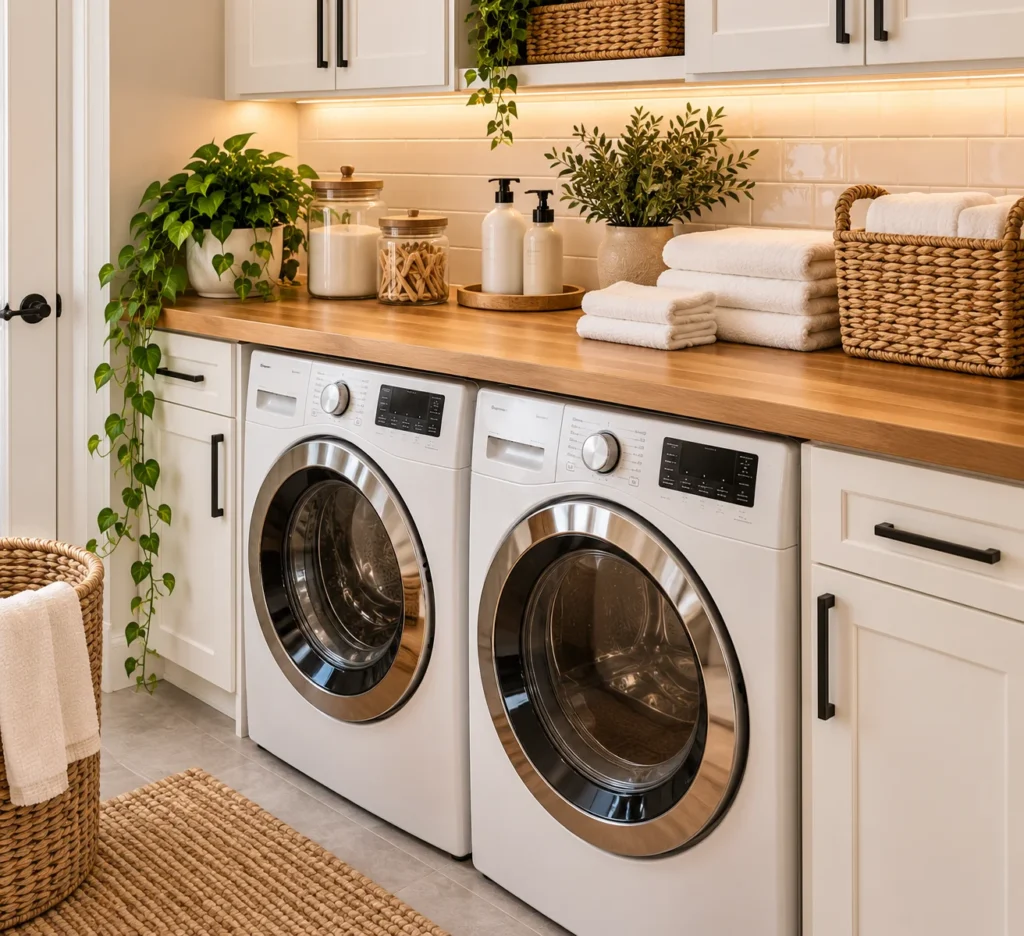
7. Make a Small Laundry Room Feel Bigger With Light Colors
Light colors can help a compact apartment laundry room feel brighter and more open. White, warm ivory, pale gray, and soft beige work well because they create a clean visual background for appliances and storage.
Build a Bright, Cohesive Palette
Use one main neutral color for the walls and cabinets, then introduce a second shade through baskets, hardware, or a small rug.
For example, white walls and cabinets paired with pale wood shelving create a warm Scandinavian-inspired look. Warm beige walls and black hardware offer a slightly more contemporary finish.
Mirrors may help reflect available light in suitable locations, but avoid placing them where they could create glare or interfere with access.
Budget-friendly tip: A fresh coat of appropriate paint and a brighter light fixture can refresh an existing laundry area without a full renovation.

8. Use Baskets and Labeled Containers for Better Organization
Laundry rooms become easier to maintain when every category of item has a designated place. Baskets and labeled containers help organize supplies while reducing the appearance of clutter.
Organize by Function
- Laundry baskets: Separate clean clothes, dirty laundry, and items that need special treatment.
- Small bins: Group dryer accessories, clothespins, and mesh laundry bags.
- Containers: Keep frequently used supplies organized and easy to identify.
- Shelving baskets: Store spare towels and less frequently used products.
- Wall hooks: Hang reusable laundry bags, cleaning cloths, or lightweight accessories.
Choose containers that fit the shelves rather than buying storage pieces before measuring. Matching baskets can create a coordinated look, but practical sizing matters more than having an identical set.
Keep laundry chemicals securely stored in their original labeled containers and away from children and pets.
Styling tip: Use a limited palette of white, beige, gray, or natural woven textures to make the storage feel intentional.
9. Create a Functional Laundry Area in a Bathroom
In many apartments, the washer and dryer are located in a bathroom or near the bathroom vanity. With thoughtful organization, this arrangement can work well without making the room feel crowded.
Separate Laundry From Bathroom Essentials
If the machines fit beneath a suitable counter or inside a dedicated enclosure, use the surrounding space for a small laundry basket or wall-mounted shelf.
Choose moisture-resistant storage and keep textiles away from areas where they may become damp. Use the bathroom exhaust fan as appropriate and follow appliance instructions for ventilation and humidity control.
Avoid placing electrical connections, extension cords, or laundry supplies where they can be exposed to water. Any required electrical work should meet local codes and be handled by a qualified professional.
Budget-friendly tip: A wall-mounted drying rack, a compact hamper, and a few coordinated containers can improve organization without changing the room’s layout.

10. Add a Wall-Mounted Drying Rack
A wall-mounted drying rack is especially useful in apartments without outdoor drying space or a dedicated utility room. It provides a place to air-dry delicate garments without permanently occupying valuable floor space.
Choose a Space-Saving Design
Look for a folding rack that closes against the wall when not in use. Install it where clothes can hang without blocking doors, walkways, or appliance access.
Before installation, check the wall construction and the rack’s load rating. Use appropriate anchors or wall supports and follow the manufacturer’s instructions.
If drilling isn’t allowed, consider a freestanding folding drying rack that can be stored behind a door or beside a cabinet.
Practical tip: Allow adequate spacing between garments for airflow and avoid drying wet clothes in a poorly ventilated closet.
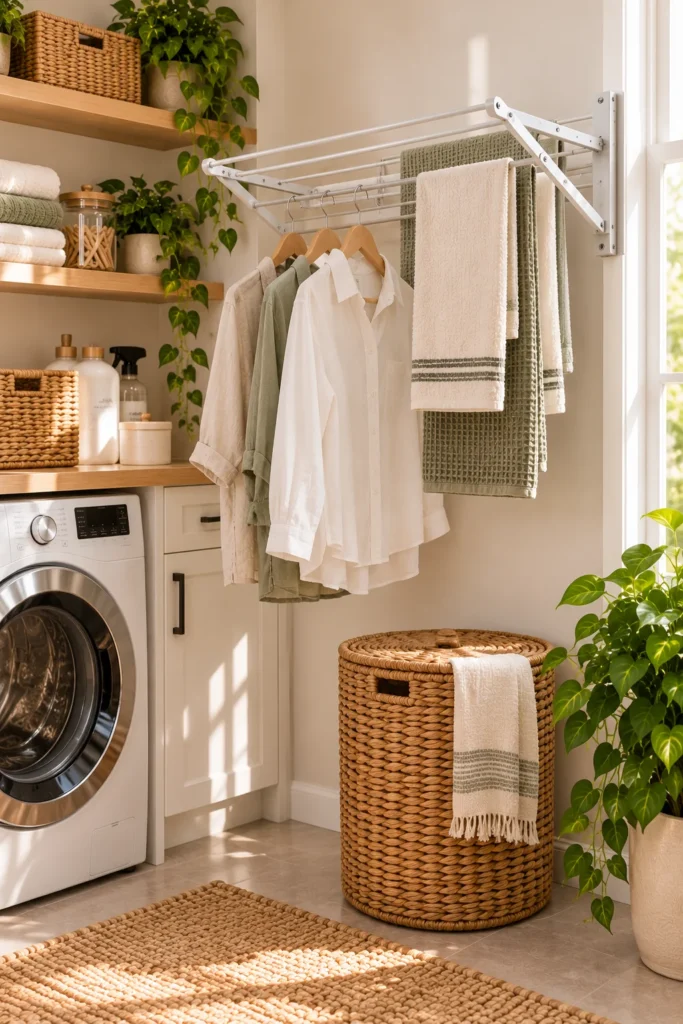
11. Personalize Your Laundry Room With Simple Decor
A laundry room can be functional and attractive at the same time. A few thoughtful details make the area feel like part of your home rather than a forgotten utility space.
Add Style Without Losing Function
Consider a framed laundry print, a small wall clock, a washable runner, or a decorative container for dryer balls. Natural wood shelves and woven baskets can soften the appearance of white appliances.
If you prefer a minimalist look, keep decorative items to a minimum and focus on coordinated materials. For a farmhouse-inspired space, use simple wood accents, black hardware, and neutral textiles.
Avoid decorations that could fall onto appliances, block vents, or become damaged by moisture.
Budget-friendly tip: Frame an inexpensive print or reuse a small basket you already own instead of buying an entirely new decor collection.
12. Design a Budget-Friendly Apartment Laundry Makeover
A stylish laundry area doesn’t have to require new appliances or custom cabinetry. Small, carefully chosen changes can improve both appearance and functionality.
A Simple, Affordable Plan
Step 1: Declutter the area. Remove empty bottles, expired products, and items that don’t belong in the laundry space.
Step 2: Measure before buying storage. Check the width, height, and depth of available shelves, cabinets, and appliance gaps.
Step 3: Use vertical space. Add suitable shelving or a wall-mounted rack where installation is safe and permitted.
Step 4: Organize supplies. Group laundry products by use and assign a basket or container to each category.
Step 5: Improve the lighting. Replace a dim bulb with a suitable brighter option or update the fixture if the installation allows it.
Step 6: Add one decorative detail. Choose a washable rug, a framed print, or coordinated baskets to finish the room.
Step 7: Keep maintenance simple. Clean lint filters according to the appliance instructions, wipe up spills, and maintain the ventilation and drainage systems.
For renters, removable labels, freestanding carts, portable drying racks, and reusable storage baskets can deliver meaningful improvements without permanent changes.
Common Mistakes to Avoid
1. Ignoring Appliance Clearances
Placing appliances too close to walls or storage units can interfere with ventilation, connections, and maintenance.
Better approach: Follow the manufacturer’s installation instructions and measure the full operating space before adding shelves or cabinets.
2. Overloading Shelves
Too many detergent bottles and heavy supplies can make shelves unsafe and difficult to access.
Better approach: Check shelf weight limits and store heavier products lower down.
3. Choosing Storage Before Measuring
A cart or cabinet that looks small online may block a door or leave insufficient room to open an appliance.
Better approach: Measure the available width, depth, height, and movement clearance before purchasing.
4. Using Materials That Cannot Handle Moisture
Untreated wood, unsuitable textiles, and poorly finished shelving may deteriorate in damp environments.
Better approach: Choose moisture-resistant materials and maintain adequate ventilation.
5. Neglecting Lighting
A poorly lit laundry closet makes it harder to read labels, sort clothing, and spot spills.
Better approach: Use suitable lighting that illuminates the work area without obstructing appliances.
6. Creating Too Much Open Storage
Visible bottles, baskets, and accessories can make a small room look crowded.
Better approach: Combine open shelves for frequently used items with closed cabinets or baskets for less attractive supplies.
7. Forgetting Safety and Maintenance
Blocked vents, accumulated dryer lint, and improperly stored chemicals can create avoidable hazards.
Better approach: Follow appliance maintenance instructions, keep ventilation paths clear, and store cleaning products safely.
Key Pieces to Consider for an Apartment Laundry Room
1. A Stacked Washer and Dryer
Consider a compatible pair if floor space is limited. Check appliance dimensions, stacking requirements, access needs, and ventilation before choosing a model.
2. Wall-Mounted Shelves or Cabinets
Look for moisture-resistant materials and enough depth for your laundry supplies. Confirm that the wall can support the installation safely.
3. A Slim Rolling Cart
Choose a cart that fits the available gap without obstructing hoses, vents, doors, or service access. Locking wheels can help keep it stable.
4. A Folding Drying Rack
A wall-mounted or freestanding folding rack offers a practical place to air-dry delicate garments. Consider capacity, mounting requirements, and storage when not in use.
5. Coordinated Laundry Baskets
Choose baskets that fit your storage area and suit your routine. Separate hampers can make sorting easier, while a single compact basket may be better for very small spaces.
6. A Suitable Folding Surface
A countertop or dedicated folding shelf provides a convenient work area. Make sure its construction and installation are compatible with the appliances and their maintenance requirements.
Frequently Asked Questions
1. How Can I Make a Small Apartment Laundry Room Look Bigger?
Use light colors, organized storage, and vertical shelving. Stacked appliances can free up floor space, while matching baskets and concealed cabinets help reduce visual clutter.
2. What Is the Best Way to Organize a Laundry Closet?
Group supplies by function, store frequently used items within easy reach, and use shelves or a slim cart where space allows. Keep appliance access, ventilation, and maintenance clearances unobstructed.
3. Can I Stack a Washer and Dryer in an Apartment?
Yes, if the appliances are compatible and the installation meets the manufacturer’s requirements. Use the approved stacking kit and confirm that the closet has sufficient height, ventilation, and service access.
4. How Can I Add Storage Without Drilling Into Walls?
Use freestanding shelving, a rolling cart, stackable bins, and portable drying racks. Check that the furniture is stable and doesn’t interfere with appliance operation or access.
5. What Should I Store Above the Washer and Dryer?
Lightweight laundry supplies, spare towels, and small accessories can work well on appropriately installed shelves. Avoid heavy objects above shoulder height and keep chemicals securely stored away from children and pets.
6. How Do I Make a Laundry Area Look More Stylish on a Budget?
Declutter, coordinate storage baskets, improve lighting, and add a simple decorative detail. A fresh coat of paint, where permitted, can also refresh the space without replacing appliances.
7. Can I Put a Washer and Dryer in a Bathroom?
This depends on the apartment layout, local electrical and plumbing requirements, appliance specifications, and available ventilation. The installation must be designed to protect electrical components from water and provide appropriate drainage and access.
8. How Can I Air-Dry Clothes in a Small Apartment?
Use a folding drying rack, a properly installed wall-mounted rack, or a suitable retractable clothesline. Provide enough airflow and avoid drying large quantities of wet laundry in a poorly ventilated space.
Final Thoughts
The best apartment laundry room ideas make everyday chores easier while helping a small space feel organized and attractive. Stacked appliances, floating shelves, slim rolling carts, coordinated baskets, and folding drying racks can all improve the way a compact laundry area works.
Start by identifying your biggest challenge, whether it’s limited storage, a lack of folding space, or a cluttered laundry closet. Then introduce one or two practical changes that fit your apartment, budget, and lease restrictions.
Save these ideas for your next laundry-area refresh and create a space that works beautifully for your daily routine.