

The right bedding set can transform the entire look of a bedroom. Fresh colors, inviting textures, and thoughtfully layered pillows can make an ordinary bed feel like the centerpiece of a beautifully styled home.
The best bedding set ideas combine comfort with a color palette that complements your furniture, walls, and overall decorating style. You might prefer crisp white sheets for a clean, hotel-inspired look, soft neutral layers for a calming retreat, or colorful patterns that bring personality to the room.
You don’t need to replace everything to achieve a fresh look. A new duvet cover, coordinated pillowcases, or a textured throw can make a noticeable difference without requiring a complete bedroom makeover.
Quick Takeaways
- Choose a cohesive color palette: Combine two or three complementary colors for a coordinated look.
- Mix textures for depth: Pair cotton, linen, velvet accents, or knitted throws to create a more inviting bed.
- Layer your bedding: Combine fitted sheets, a duvet or comforter, decorative pillows, and a throw for a finished appearance.
- Match the bedding to your bedroom style: White and beige suit minimalist interiors, while floral prints and rich colors create more distinctive looks.
- Prioritize comfort and practicality: Consider fabric breathability, washing instructions, mattress depth, and seasonal needs before buying a new set.
1. White Bedding Sets for a Timeless, Hotel-Inspired Look
White bedding remains a favorite because it creates a fresh, uncluttered appearance that works with almost any bedroom style. It can make the bed feel crisp and inviting while allowing other design elements, such as artwork, furniture, and accent walls, to stand out.
How to Style White Bedding
Start with white sheets, a white duvet cover or comforter, and matching pillowcases. Then introduce subtle variations through texture rather than adding lots of color.
A quilted coverlet, a chunky cream throw, or linen pillow shams can give the bed dimension without disrupting the clean palette. Light oak nightstands and warm bedside lighting help soften the overall look.
For a more luxurious effect, arrange sleeping pillows neatly against the headboard and add one or two decorative cushions in a complementary neutral shade.
Budget-friendly tip: Keep your existing white bedding and invest in a textured throw or a pair of quality pillow shams to refresh the appearance.

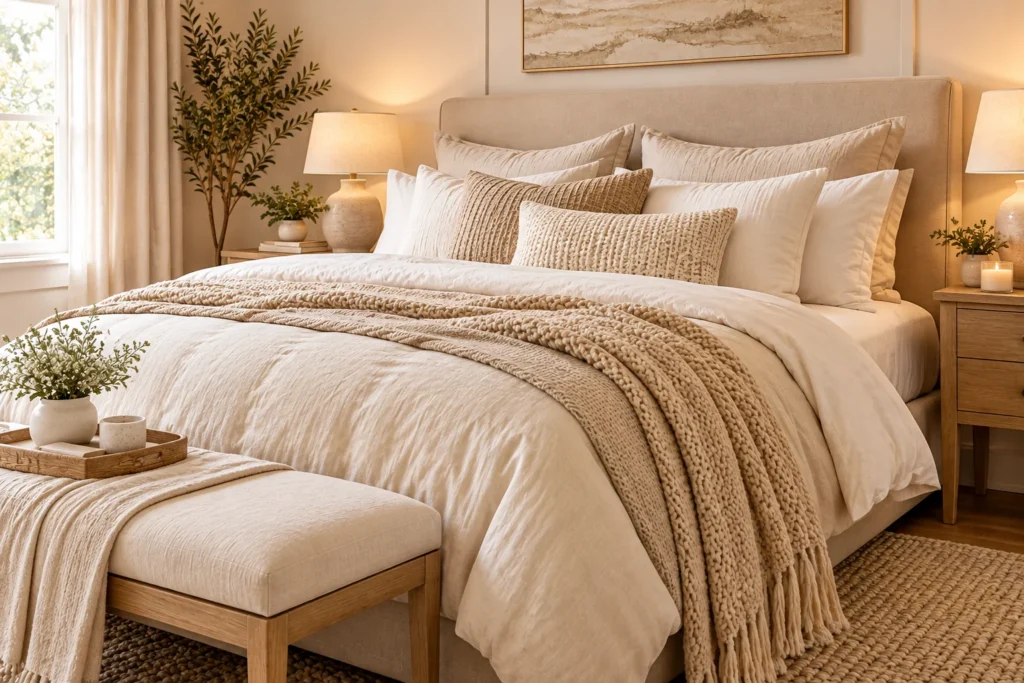
2. Beige and Cream Bedding Sets for a Cozy Neutral Bedroom
Beige and cream bedding creates a warm, relaxed atmosphere that feels especially inviting in bedrooms designed around natural materials. These colors work beautifully with wooden furniture, woven accessories, and soft lighting.
Unlike an all-white arrangement, a tonal neutral palette introduces subtle warmth and variation.
Create a Layered Neutral Bed
Begin with ivory or cream sheets and add a beige duvet cover. Introduce another shade through a taupe quilt, oatmeal-colored cushions, or a sandy linen throw.
The secret is to vary the textures and tones. Pair smooth cotton sheets with a slightly rumpled linen duvet and a knitted blanket to keep the bed from looking flat.
If your walls are also beige, choose bedding that is slightly lighter or darker than the surrounding surfaces to create definition.
Styling tip: Use warm wood, ceramic lamps, and woven baskets to reinforce the natural, understated palette.
3. Sage Green Bedding Sets for a Calm, Nature-Inspired Bedroom
Sage green bedding brings a gentle touch of color into the bedroom without overwhelming the space. Its muted appearance pairs well with warm white, cream, pale gray, and natural wood.
This color is particularly appealing in modern organic, Scandinavian, and relaxed cottage-inspired interiors.
How to Style Sage Green Bedding
Choose a sage duvet cover with white or ivory sheets. Add a cream throw at the foot of the bed and finish with a few cushions in beige or a deeper olive shade.
For a more cohesive look, repeat green elsewhere in the room through a botanical print, a small ceramic accessory, or an indoor plant.
In a compact bedroom, sage bedding can introduce color while keeping the walls and larger furniture pieces neutral.
Budget-friendly tip: Replace only your duvet cover and pillowcases instead of purchasing an entirely new bedding set.

4. Floral Bedding Sets for a Soft, Romantic Bedroom
Floral bedding can bring charm, color, and personality to a bedroom. Depending on the pattern, it can feel vintage-inspired, cottage-like, modern, or softly romantic.
Small floral prints create a delicate appearance, while oversized botanical patterns make a stronger visual statement.
Choose the Right Floral Pattern
For a traditional bedroom, look for small-scale flowers in muted pink, sage, cream, and dusty blue. For a contemporary space, choose larger botanical designs with a restrained background color.
Keep the rest of the bedroom relatively simple when the bedding has a busy print. Solid-colored curtains, understated lamps, and neutral rugs help the pattern remain the focal point.
You can also pull one color from the floral design and repeat it in a cushion or throw for a coordinated finish.
Styling tip: Pair floral bedding with natural wood, woven textures, and simple ceramic accessories to prevent the room from feeling overly decorative.

5. Blue Bedding Sets for a Fresh and Relaxing Feel
Blue bedding offers a versatile way to add color while maintaining a peaceful bedroom atmosphere. Pale blue feels light and airy, navy creates a more dramatic look, and dusty blue adds a softer, understated touch.
Blue works particularly well with white, cream, light gray, and warm wood.
How to Style Blue Bedding
For a fresh coastal-inspired bedroom, choose pale blue bedding with crisp white sheets and natural wood furniture. Add woven baskets or a textured rug for warmth.
If you prefer a more sophisticated look, choose navy bedding with ivory pillowcases and subtle brass accents.
Dusty blue is an excellent middle ground for bedrooms that need color without a strong contrast. Pair it with beige, warm gray, or oatmeal textiles for a comfortable, balanced palette.
Budget-friendly tip: A blue duvet cover can refresh a neutral bedroom without requiring new furniture, curtains, or wall paint.

6. Pink Bedding Sets for a Soft and Elegant Bedroom
Pink bedding doesn’t have to feel overly sweet. Dusty rose, muted blush, and soft terracotta-pink shades can create a refined and welcoming bedroom when paired with the right materials and colors.
These shades work particularly well with cream, warm white, beige, light oak, and brushed brass.
Create a Balanced Pink Bedding Look
Start with blush or dusty pink bedding and layer it with cream sheets. Add neutral cushions and a beige throw to keep the overall effect understated.
For a more sophisticated finish, choose matte cotton or linen rather than combining several shiny fabrics. A velvet accent cushion can introduce a little richness without dominating the bed.
If you prefer a modern look, combine dusty pink with charcoal accents or dark wood furniture for contrast.
Styling tip: Keep the pink muted and repeat it in just one or two accessories elsewhere in the room.

7. Gray Bedding Sets for a Modern, Minimalist Bedroom
Gray bedding is a practical choice for contemporary bedrooms because it pairs easily with white, black, wood, and many accent colors. Light gray feels airy, while charcoal creates a deeper, more dramatic appearance.
The key is choosing a gray with an undertone that complements the rest of the room.
How to Style Gray Bedding
Combine light gray bedding with white sheets and a cream throw for a soft, balanced look. Add pale wood furniture and simple artwork to keep the bedroom from feeling too cool.
For a more dramatic arrangement, use charcoal bedding with white pillowcases and warm bedside lighting.
If your room already has gray walls or flooring, introduce contrast with ivory textiles, wood accents, or a muted accent color such as sage green.
Budget-friendly tip: Gray bedding can be a useful long-term foundation because you can change the look of the bedroom simply by switching accent pillows and throws.

8. Striped Bedding Sets for a Classic, Tailored Look
Striped bedding introduces pattern while remaining relatively easy to coordinate with other bedroom decor. Fine pinstripes feel subtle and traditional, while wider stripes can create a relaxed coastal or contemporary look.
How to Decorate With Stripes
Choose a striped duvet cover in white and blue for a coastal-inspired bedroom, or opt for beige and white stripes for a softer neutral scheme.
Keep decorative pillows simple if the stripes are prominent. Solid-colored cushions and a textured throw create variety without introducing too many competing patterns.
You can also mix stripes with a small floral print or a subtle check, provided the colors are related and the patterns differ in scale.
Styling tip: Repeat one color from the striped bedding in the curtains, artwork, or bedside accessories to make the room feel coordinated.
9. Luxury Satin and Velvet Bedding Accents
If you want a more glamorous bedroom, satin-finish bedding and velvet accents can add a polished, tactile quality. These materials catch light differently from matte cotton and linen, creating visual variation across the bed.
The effect depends on the finish. Smooth satin creates a sleek appearance, while velvet cushions and throws introduce a richer, softer texture.
How to Create a Refined Look
Choose a restrained palette such as ivory, navy and cream, or forest green and beige. Use smooth bedding as the foundation and introduce velvet through a few accent pillows.
Avoid using too many shiny fabrics together, as the bed can start to look visually busy. A matte duvet cover combined with two velvet cushions often creates a more balanced result.
Check fabric composition and care instructions before buying. Satin describes a weave rather than a specific fiber, so satin bedding can have different breathability, durability, and maintenance requirements depending on the material.
Budget-friendly tip: Add one or two velvet pillow covers instead of replacing the entire bedding set.
10. Boho Bedding Sets With Relaxed Layers and Natural Textures
Bohemian-inspired bedding is ideal for anyone who enjoys a relaxed, collected look. It often combines earthy colors, soft patterns, layered textiles, and natural materials.
Terracotta, rust, olive, cream, and muted mustard work particularly well for this style.
Build a Relaxed Boho Bed
Begin with neutral or earthy bedding, then layer a patterned quilt or textured throw over the duvet. Add cushions in different shapes and fabrics, such as washed cotton, woven textures, or subtle embroidery.
Introduce warmth through rattan furniture, a woven pendant, or a natural-fiber rug. The goal is to create a bed that feels comfortable and personal rather than perfectly matched.
To avoid visual clutter, choose a limited color palette and repeat those colors across the bedding and accessories.
Styling tip: Combine one patterned textile with several solid-colored pieces to maintain a relaxed but cohesive appearance.
11. Seasonal Bedding Sets for Year-Round Comfort
Changing bedding with the seasons can refresh the bedroom while helping you adapt to different temperatures and sleeping preferences.
You don’t necessarily need separate complete bedding sets for every season. Swapping the duvet cover, blanket, or a few pillowcases may be enough.
Spring and Summer Bedding
Choose breathable cotton or linen in lighter colors such as white, pale blue, sage, or soft beige. Lightweight quilts and blankets are useful when a thick comforter feels too warm.
Fall and Winter Bedding
Introduce richer colors such as forest green, burgundy, navy, or warm brown. Add a heavier duvet appropriate for your room temperature and layer a knitted throw at the foot of the bed.
For comfort, consider the warmth of your duvet, your home’s heating and cooling, and whether you tend to sleep hot or cold. A heavier-looking bed doesn’t always need heavier materials.
Budget-friendly tip: Keep neutral sheets throughout the year and change just the duvet cover and accent throw with the season.
12. Affordable Bedding Set Ideas for a Beautiful Bedroom on a Budget
A stylish bed doesn’t depend on purchasing an expensive matching set. A few well-chosen pieces can create a coordinated look while allowing you to replace items individually as needed.
Refresh Your Bedding Without Overspending
Step 1: Start with the essentials. Use a comfortable fitted sheet, a duvet cover or comforter, and pillowcases in complementary colors.
Step 2: Choose one accent color. Add green, blue, blush, or terracotta through a duvet cover or a pair of cushions.
Step 3: Shop for individual pieces. Compare separate pillowcases, quilts, and duvet covers instead of assuming a complete set offers the best value.
Step 4: Add texture affordably. A simple cotton throw, a knitted blanket, or textured cushion covers can make basic bedding look more layered.
Step 5: Take care of what you own. Follow laundering instructions, avoid excessive heat when it may damage the fabric, and store seasonal bedding in a clean, dry place.
Step 6: Focus on the visible details. Smooth the duvet, arrange pillows neatly, and fold a throw across the foot of the bed.
A restrained palette and thoughtful arrangement can look more polished than an expensive set that doesn’t suit the room.
Common Bedding Mistakes to Avoid
1. Choosing Colors That Clash With the Bedroom
Bedding can look disconnected when its undertones conflict with the walls, flooring, or furniture.
Better approach: Choose colors that complement the room’s existing palette. Warm beige generally works well with warm wood, while cooler grays often suit contemporary spaces with cooler accents.
2. Buying the Wrong Size
A fitted sheet that is too shallow may slip off the mattress, while an oversized duvet may look disproportionate on a smaller bed.
Better approach: Check mattress dimensions, mattress depth, and the bedding manufacturer’s size chart before purchasing.
3. Ignoring Fabric Breathability
Thick, synthetic, or heavily brushed fabrics may feel too warm for some sleepers.
Better approach: Consider cotton or linen if breathability is important, and check the fiber composition and care label rather than relying on the product’s appearance alone.
4. Using Too Many Decorative Pillows
An excessive number of pillows can make the bed difficult to use and create unnecessary clutter.
Better approach: Keep the sleeping pillows you need and add one or two decorative cushions if they suit your style.
5. Mixing Too Many Patterns
Combining floral prints, stripes, geometric designs, and bold colors without a unifying palette can make the bed look busy.
Better approach: Choose one dominant pattern and balance it with solid colors or smaller-scale prints.
6. Forgetting About Maintenance
Some fabrics wrinkle easily, require special care, or show stains more readily than others.
Better approach: Check washing instructions and choose bedding that suits your daily routine.
7. Matching Every Piece Exactly
A perfectly matching set can sometimes look flat if the colors and textures are identical throughout.
Better approach: Add subtle contrast with a textured throw, different pillow shams, or a complementary accent color.
Key Pieces to Consider for a Beautiful Bedding Setup
1. A Comfortable Duvet Cover or Comforter
Choose a color and fabric that complement your room. Cotton is a versatile option, linen offers a relaxed texture, and warmer comforters may be suitable for colder bedrooms. Check the size and care instructions before buying.
2. Well-Fitting Sheets
Look for fitted sheets that match your mattress dimensions and depth. Consider fabric feel, breathability, and ease of laundering. Cotton percale often feels crisp, while cotton sateen has a smoother finish.
3. Coordinated Pillowcases and Shams
Pillowcases provide everyday comfort, while decorative shams help create a more finished look. Choose matching tones or introduce a subtle contrast through texture.
4. A Textured Throw Blanket
A knitted, quilted, or woven throw adds depth and can provide an extra layer when needed. Fold it across the foot of the bed or drape it neatly over one corner.
5. Decorative Accent Pillows
Use a small number of cushions to introduce a complementary color, subtle pattern, or different fabric. Consider removable covers if you want an affordable way to change your bedroom’s look.
6. A Lightweight Coverlet or Quilt
A coverlet can add another layer over the duvet or serve as a lighter bed covering in warmer weather. Choose a size that fits your mattress and preferred drape.
Frequently Asked Questions
1. What Is the Best Color for a Bedding Set?
White, beige, and cream are versatile choices because they coordinate with many bedroom styles. Sage green, blue, blush, and gray are also popular options. The best color depends on your wall color, furniture, lighting, and preferred atmosphere.
2. What Should a Complete Bedding Set Include?
The contents vary by manufacturer. A set may include a duvet cover and pillowcases, or it may contain a comforter, sheets, pillowcases, and decorative shams. Always check the product description rather than assuming every set includes the same pieces.
3. Which Bedding Fabric Is Best for Everyday Use?
Cotton is a versatile everyday option, with different weaves offering different textures. Linen is valued for its relaxed appearance and breathability, while microfiber is often easy to care for. The best choice depends on your comfort preferences, climate, budget, and laundry routine.
4. How Can I Make My Bed Look Like a Hotel Bed?
Use coordinated sheets, a neatly arranged duvet or comforter, and a small number of well-placed pillows. Choose a restrained color palette and add a folded throw for a finished appearance. Crisp white bedding is a classic choice, but neutral colors can create a similarly polished effect.
5. How Many Pillows Should I Put on My Bed?
Start with the sleeping pillows you actually use, then add one or two decorative cushions if desired. Larger beds can accommodate more layers, but the arrangement should remain practical and easy to maintain.
6. How Often Should I Change My Bedding?
Sheets and pillowcases are commonly washed about once a week, although personal needs, allergies, sweating, and other circumstances may call for more frequent washing. Follow the care instructions for each fabric and wash duvet covers and blankets according to their use and cleaning requirements.
7. How Can I Make Cheap Bedding Look More Expensive?
Choose a cohesive palette, smooth the duvet, arrange pillows neatly, and add one textured throw. A few coordinated pieces in complementary colors often look more refined than numerous inexpensive accessories in competing patterns.
8. Should My Bedding Match My Curtains?
Your bedding and curtains don’t need to match exactly. They should work together through complementary colors, undertones, or textures. For example, sage bedding can pair beautifully with cream curtains, while navy bedding can work with white or warm beige window treatments.
Final Thoughts
The best bedding set ideas combine comfort, color, and texture to create a bedroom that feels personal and inviting. From timeless white bedding to earthy neutrals, soft pastels, and bold botanical prints, there are plenty of ways to refresh your bed without changing the entire room.
Start with a color palette you love, choose fabrics that feel comfortable against your skin, and add a few carefully selected layers to complete the look. Even a simple duvet cover and a textured throw can make your bedroom feel more thoughtfully styled.
Save these bedding ideas for your next bedroom refresh, and experiment with colors and textures that make your space feel like home.