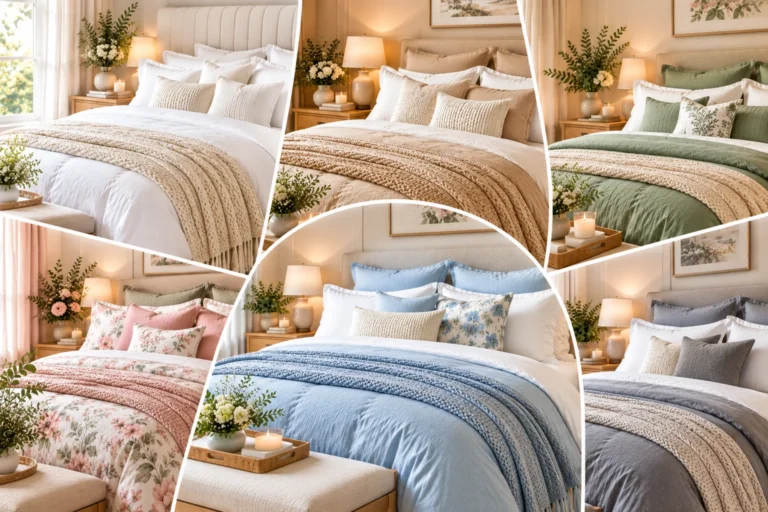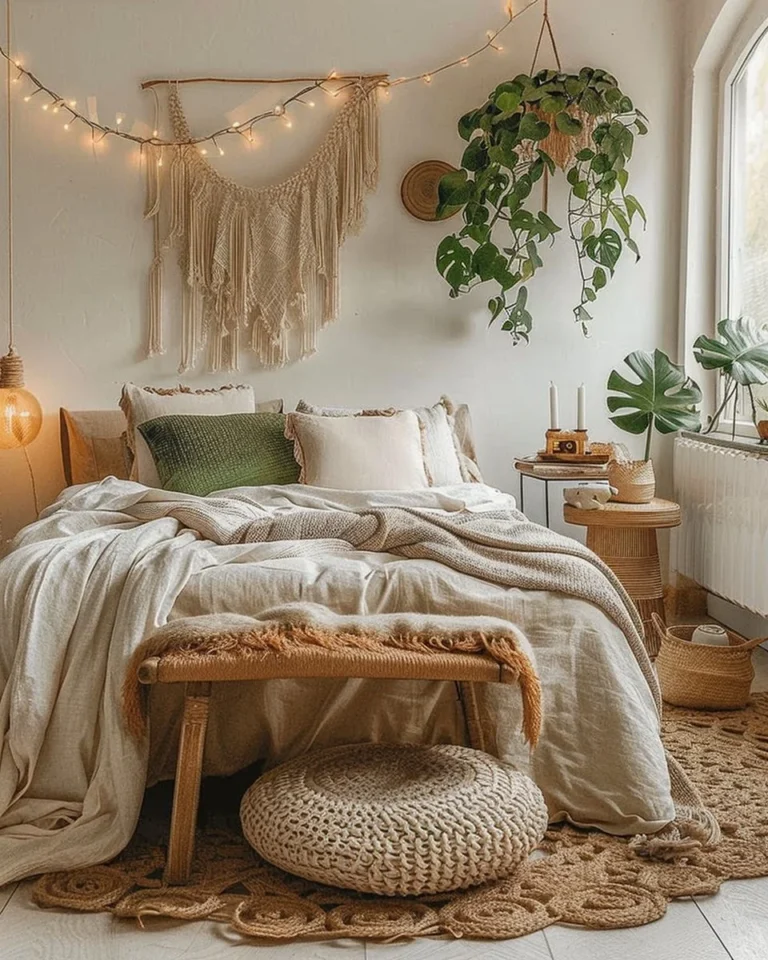
A bedroom filled with greenery has a special kind of appeal. Soft green tones, leafy plants, natural wood, and breathable fabrics can make the space feel peaceful and inviting without sacrificing a polished, modern look.
The secret to beautiful greenery bedroom ideas is balance. You don’t need to cover every wall in green or fill every corner with houseplants. A sage green accent wall, a few well-placed plants, and natural textures can transform even a small apartment bedroom into a restful retreat.
Whether you love modern botanical interiors, cozy cottage-inspired spaces, or minimalist bedrooms with subtle earthy accents, these ideas will help you bring nature indoors in a way that feels intentional and easy to maintain.
Quick Takeaways
- Start with a soft green palette: Sage, olive, and muted eucalyptus green create a soothing foundation.
- Layer natural materials: Combine green with oak, linen, rattan, jute, and warm neutral fabrics.
- Use plants strategically: Place greenery near windows, on nightstands, or in empty corners without crowding the room.
- Create contrast: Add cream bedding, warm wood, or black accents to keep green interiors from feeling flat.
- Decorate on a budget: Refresh pillow covers, thrift planters, or introduce botanical prints before investing in new furniture.
1. Create a Sage Green Bedroom for a Relaxing Atmosphere
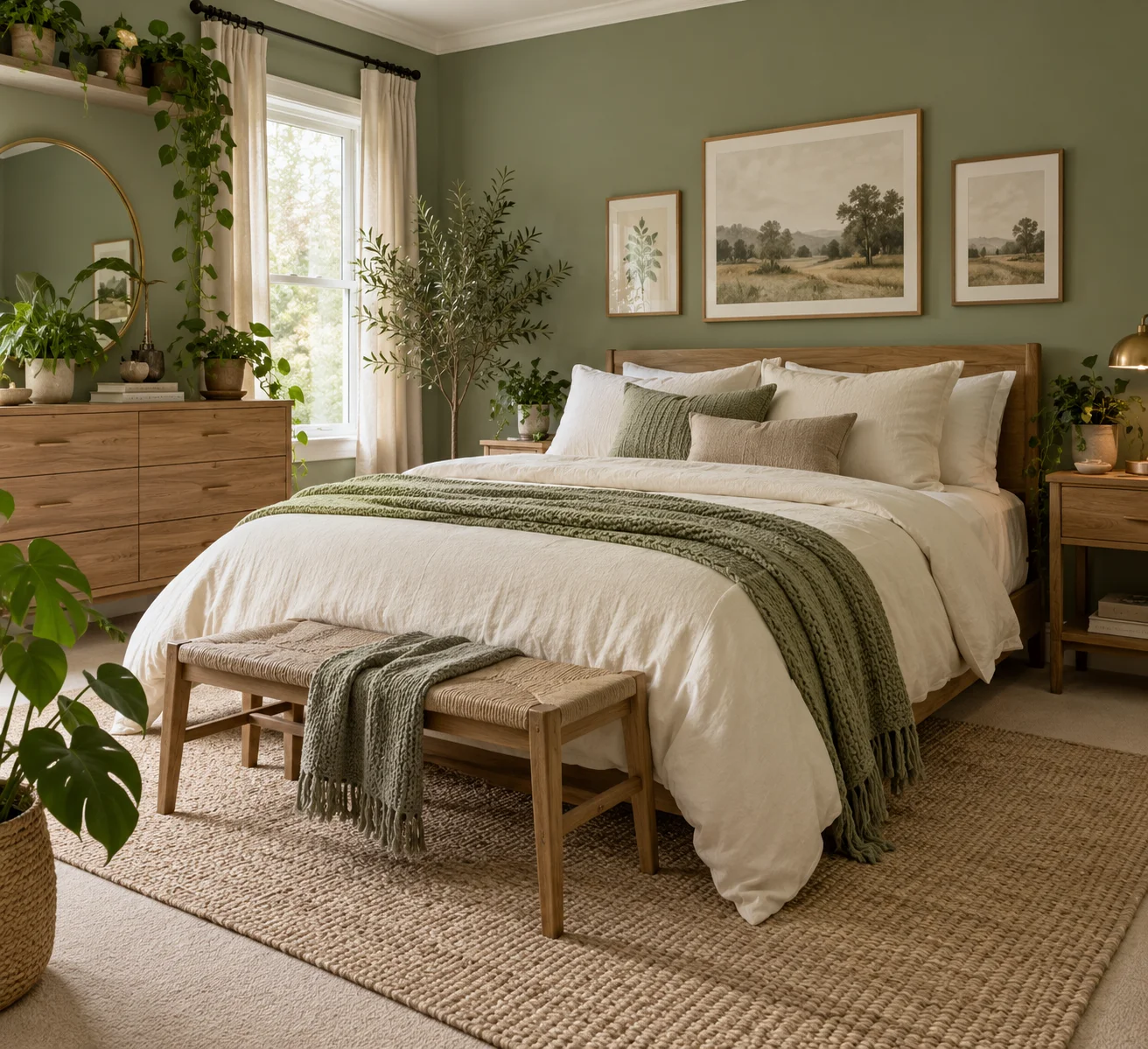
Sage green is an ideal starting point for a nature-inspired bedroom. Its muted, slightly gray undertone makes it softer than brighter greens, allowing it to feel restful rather than overwhelming.
How to Get the Look
Paint the wall behind your bed in sage green and keep the remaining walls warm white or a gentle off-white. This creates a focal point while allowing the room to remain bright.
Layer the bed with cream or ivory bedding, a textured beige throw, and a few sage or olive accent pillows. Light oak furniture works particularly well because its warm undertones complement the cooler qualities of sage.
For a more finished look, add a ceramic lamp, a framed botanical print, and one leafy plant on the nightstand.
Budget-friendly tip: If painting isn’t an option, use sage green duvet covers, pillowcases, or curtains to introduce the same color without making permanent changes.

2. Bring Nature Indoors With Layered Houseplants
Living plants add organic shapes and varying shades of green that paint and textiles alone cannot replicate. Their leaves introduce movement and texture, helping a bedroom feel connected to the outdoors.
The key is to choose plants that suit your available light, rather than buying plants simply because they look attractive.
Where to Place Bedroom Plants
- Beside the window: Place a light-loving plant where it receives suitable indirect or direct light for its species.
- In an empty corner: A taller floor plant can soften a bare wall and balance the visual weight of a bed.
- On a dresser: Small potted plants add life to otherwise simple furniture.
- On a shelf: Trailing plants can create a relaxed botanical effect without using floor space.
For lower-light rooms, consider a snake plant or a ZZ plant, while pothos can work well in suitable indirect light. Remember that low-light tolerance doesn’t mean a plant can survive without light.
Choose pots in terracotta, matte ceramic, woven-look finishes, or natural stone colors to keep the arrangement cohesive. Use waterproof saucers and avoid leaving excess water where it could damage furniture or flooring.
Styling tip: Group plants of different heights instead of scattering many tiny pots throughout the room. A tall plant, a medium tabletop plant, and a trailing variety can create a more deliberate composition.
3. Pair Olive Green With Warm Wood for an Earthy Look
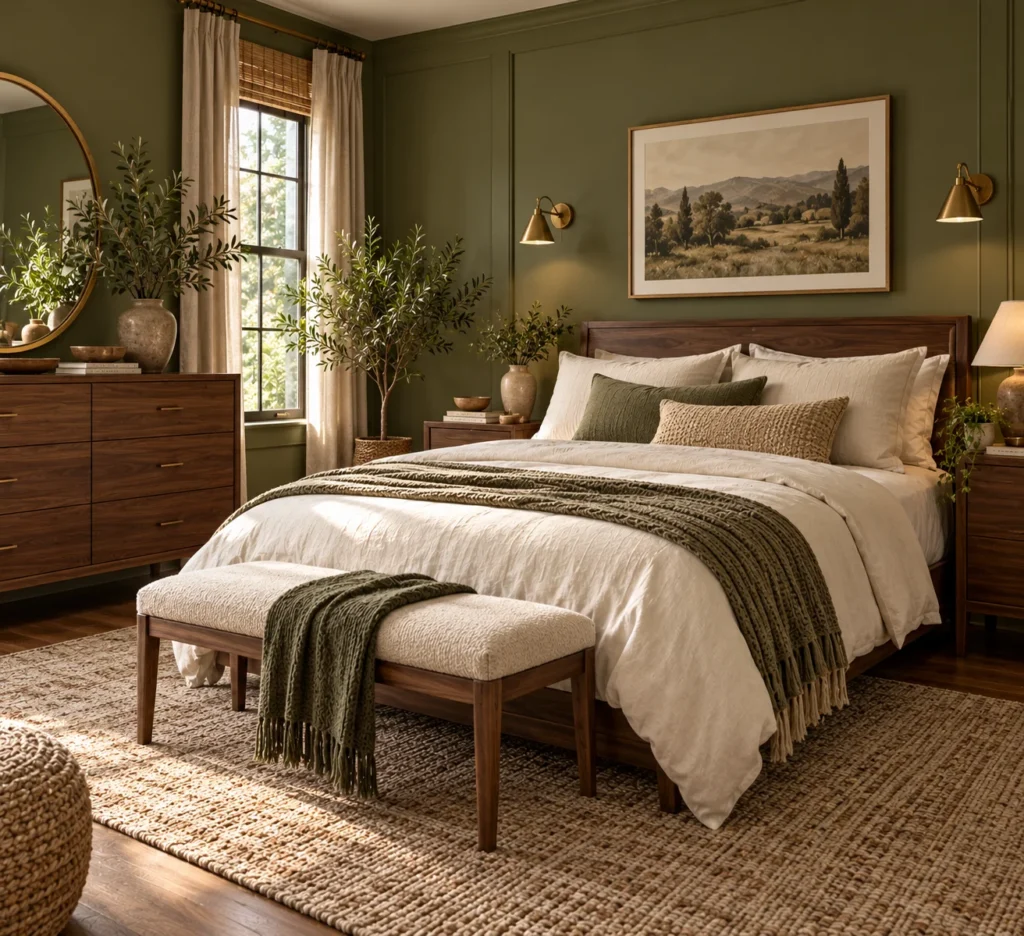
Olive green brings depth and warmth to a bedroom. Compared with pale sage, it feels richer and more grounded, making it especially attractive in interiors inspired by nature, rustic homes, and modern organic design.
Wood furniture enhances this effect by introducing another natural material with its own grain, color, and texture.
How to Style Olive Green
Start with olive green on one wall or across the entire room if you have enough natural light and prefer a more enveloping atmosphere. Add a walnut or oak bed frame, cream bedding, and textured cushions in sand or camel.
For additional warmth, introduce a small terracotta vase, a woven basket, or an earthy-toned bedside lamp. These details keep the palette from feeling too uniform.
In a small bedroom, use olive green mainly through bedding, artwork, and accessories. You can still enjoy the rich color without making every surface dark.
Styling tip: Mix two wood tones only when they share a compatible undertone or have enough contrast to look intentional. A warm walnut bed and pale oak nightstands can work beautifully when the rest of the palette ties them together.
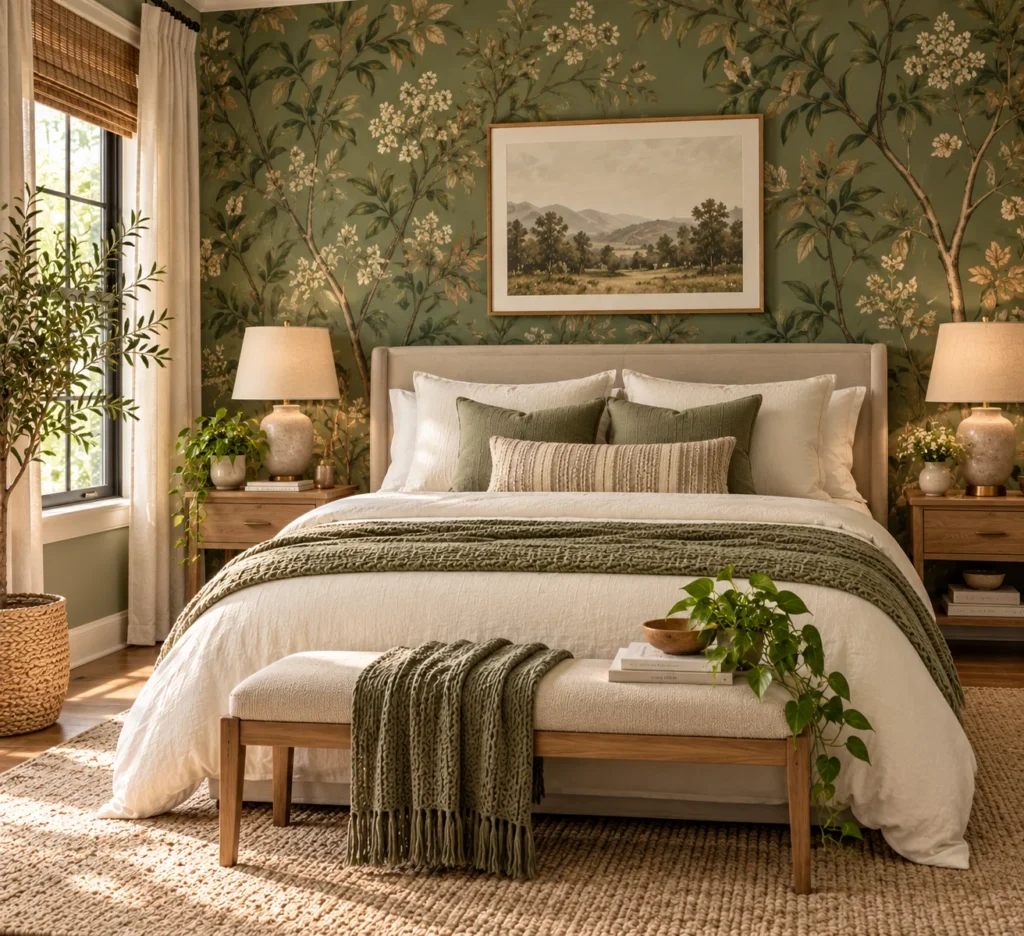
4. Make a Statement With Botanical Wallpaper
Botanical wallpaper brings greenery into a bedroom even when there is little space for actual plants. Delicate leaf patterns feel understated and romantic, while oversized tropical foliage creates a bolder statement.
For a bedroom that feels sophisticated rather than busy, choose a pattern with a restrained color palette and repeat one or two of its colors elsewhere in the room.
Choose a Pattern That Suits Your Style
- Small leafy prints: Best for cottage-inspired, traditional, or softly romantic bedrooms.
- Oversized botanical designs: Ideal for a dramatic accent wall behind the bed.
- Watercolor leaves: A softer option for relaxed, contemporary interiors.
- Dark green botanical prints: Well suited to moody bedrooms with warm lighting and natural wood.
Keep bedding relatively simple when the wallpaper has a strong pattern. Solid cream sheets, a textured duvet, and understated bedside lamps allow the wall to remain the focal point.
Renters can achieve a similar effect with removable wallpaper, provided it is suitable for the wall finish and approved by the property owner when necessary.
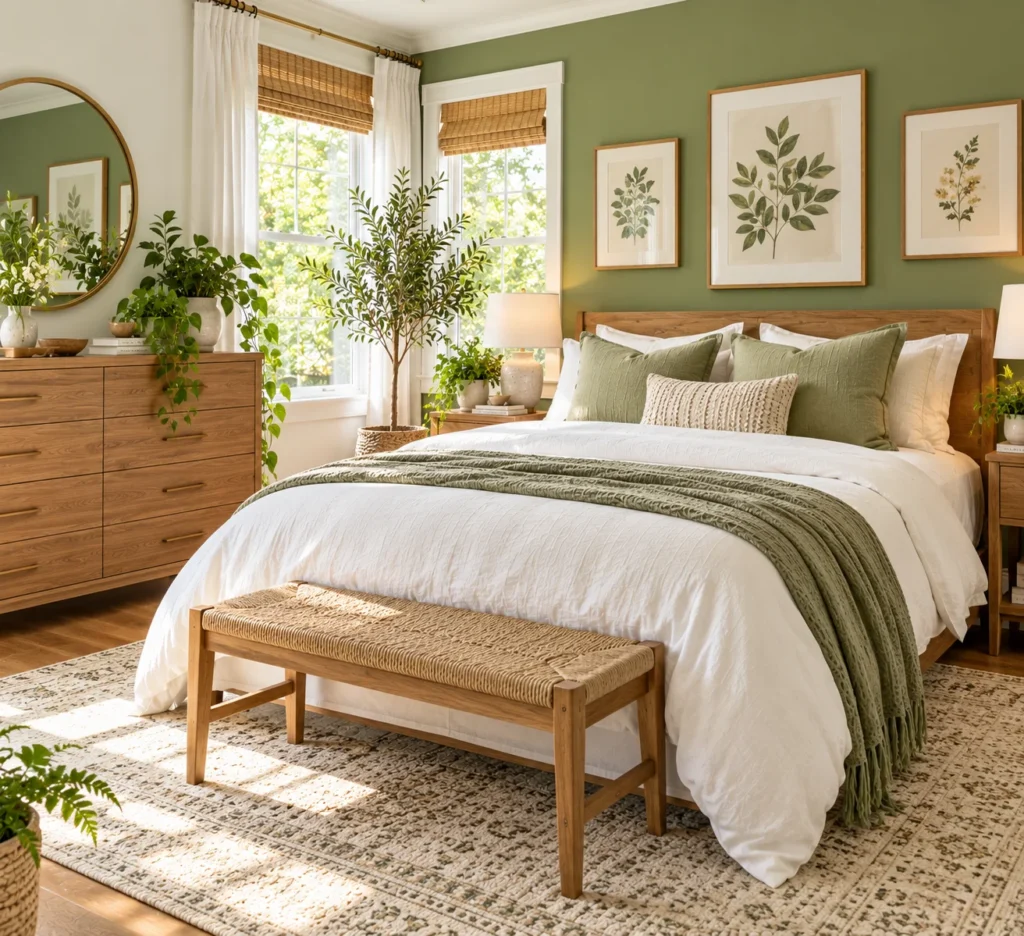
5. Design a Green and White Bedroom That Feels Bright
Green and white is a timeless combination for anyone who wants a fresh, uncluttered bedroom. White reflects available light, while green adds color and personality.
This pairing is particularly useful in smaller bedrooms, where too many dark colors or competing patterns can make the space feel visually crowded.
Create the Right Balance
Use white or warm ivory for the largest surfaces, including the bedding and most of the walls. Introduce green through an upholstered headboard, a duvet cover, curtains, or artwork.
For a softer finish, choose cream rather than a stark, cool white. Add light wood, woven textures, or a jute rug to prevent the room from looking overly crisp.
You can also bring in several shades of green, such as sage pillows, deeper olive artwork, and fresh foliage. Repeating the color in different strengths creates depth without requiring more patterns.
Budget-friendly tip: Keep your existing white bedding and replace just the pillow covers, throw blanket, and one or two decorative accessories.
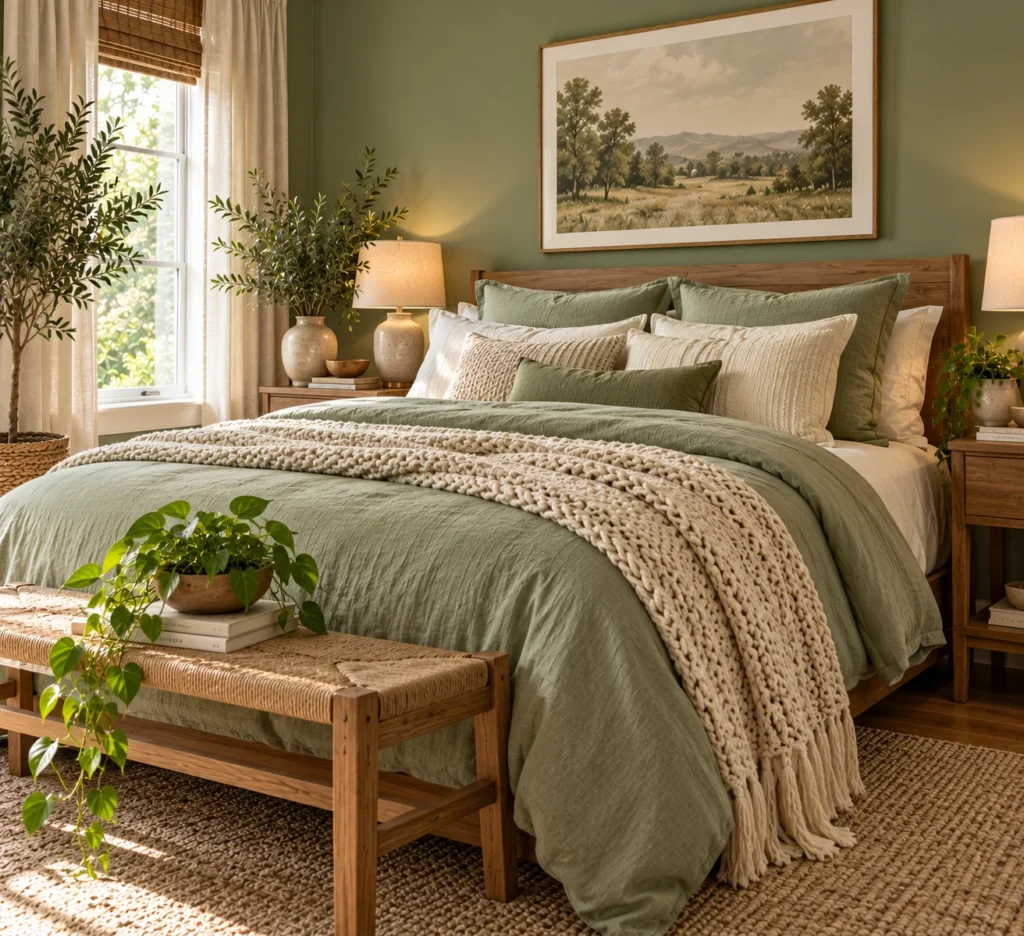
6. Use Green Bedding for an Easy Seasonal Refresh
Changing your bedding is one of the simplest ways to introduce greenery into a bedroom. Green duvet covers and quilts can make a noticeable difference without requiring paint, new furniture, or a major decorating project.
The fabric matters just as much as the color. Washed cotton and linen offer a relaxed, slightly textured finish, while velvet accent cushions add richness to a more polished scheme.
Build a Layered Bed
- Start with white, ivory, or oatmeal sheets.
- Add a sage, eucalyptus, or olive duvet cover.
- Layer a cream knitted throw across the foot of the bed.
- Mix two or three pillows in complementary shades.
- Finish with a restrained pattern, such as thin stripes or small botanical motifs.
Avoid buying every item in exactly the same shade of green. Slight variations in tone and texture make the bed feel more collected and natural.
For a darker, cozier bedroom, choose forest green bedding against warm white walls. For an airy look, opt for pale sage with cream and light gray-beige accents.
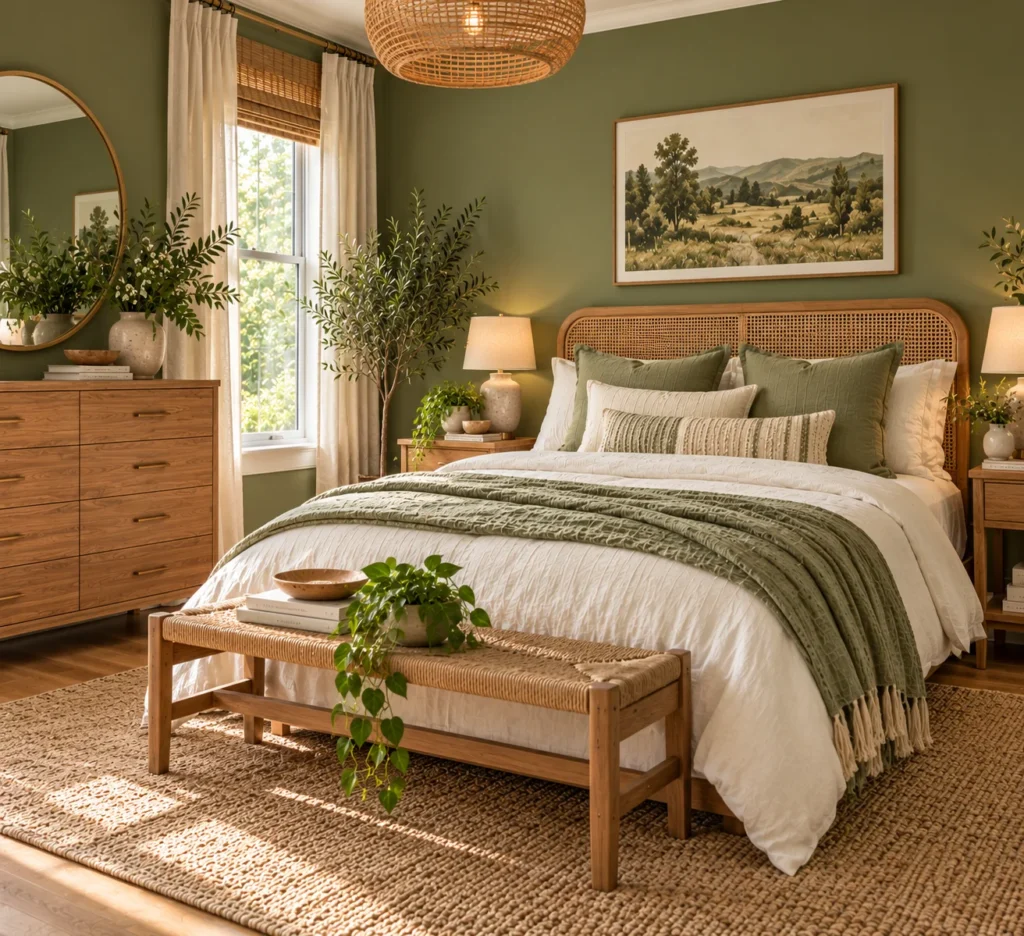
7. Add Rattan, Jute, and Natural Textures
Green can sometimes feel flat when it is surrounded by smooth, similar-looking surfaces. Natural textures add the contrast needed to make the room feel layered and comfortable.
Rattan, cane, jute, linen, unfinished wood, and handmade ceramics all complement botanical colors without competing for attention.
Where Natural Materials Work Best
- Headboard: A cane or woven headboard introduces texture near the center of the room.
- Rug: A jute or wool-blend rug adds softness and helps define the sleeping area.
- Lighting: A woven pendant or textured bedside lamp creates visual interest.
- Storage: Woven baskets can hold extra blankets, books, or laundry.
- Accessories: Stoneware vases and wooden trays provide smaller textural details.
In a compact apartment, choose just two or three materials and repeat them. A cane headboard, oak nightstands, and a woven basket are often enough.
For bedside rugs, a larger rug extending beyond the sides and foot of the bed can help anchor the furniture. Common sizes such as 5-by-8-foot and 8-by-10-foot rugs may work depending on the bed and room dimensions, but measure before buying.

8. Create a Moody Forest Green Bedroom
For a more dramatic interpretation of greenery bedroom ideas, consider forest green, deep moss, or a muted pine shade. These colors create a cocoon-like atmosphere that feels especially inviting with warm lighting and tactile fabrics.
A dark bedroom does not have to feel gloomy. The secret is to balance the depth of the walls with lighter bedding, reflective accents, and carefully placed light sources.
Make Dark Green Feel Inviting
Paint the wall behind the bed or use deep green throughout the room for a more immersive effect. Pair it with ivory bedding, walnut furniture, and brass or aged-gold lighting details.
Use table lamps or wall sconces with warm-toned bulbs to create a softer evening atmosphere. If the room receives limited daylight, test paint samples at different times before committing to the color.
A large mirror can help distribute available light, while cream curtains and lighter textiles keep the room from becoming visually heavy.
Small-room tip: If you love dark green but worry about the room feeling smaller, use it on the headboard wall and repeat it in smaller accessories around the room.
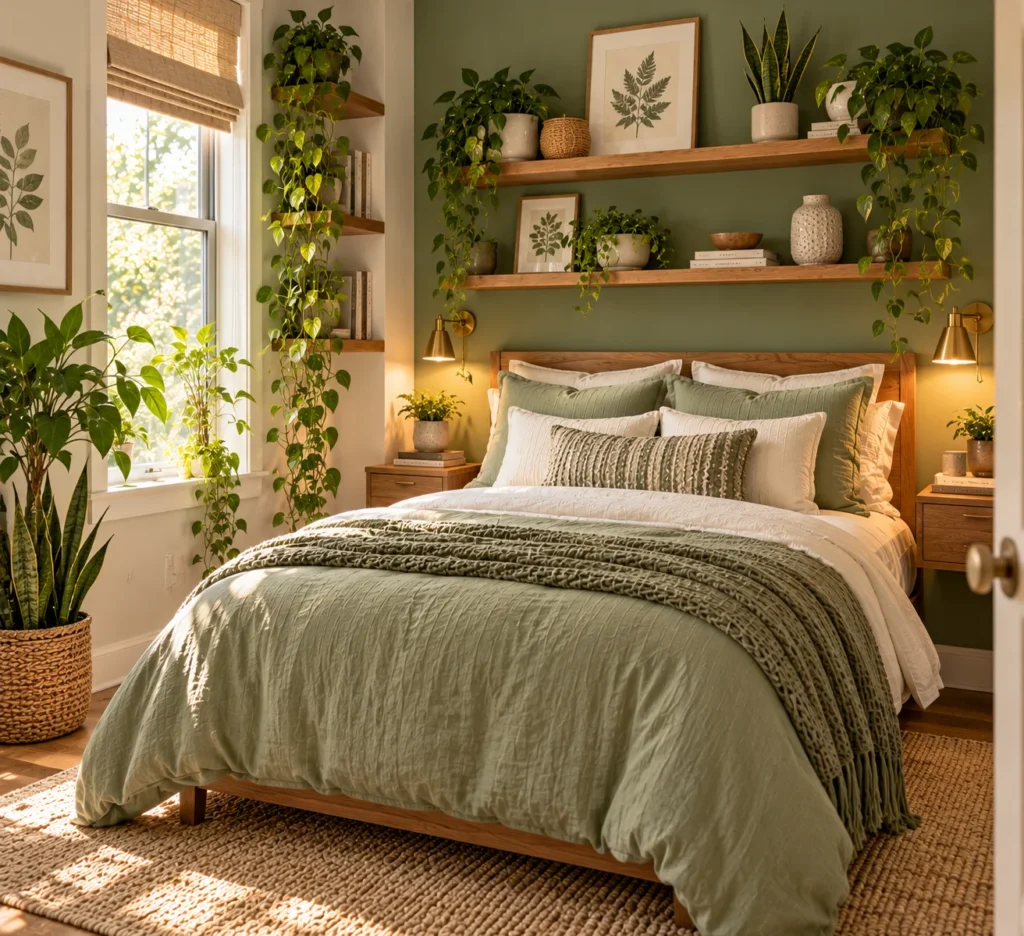
9. Decorate a Small Bedroom With Vertical Greenery
A small bedroom can still feel lush without sacrificing valuable floor space. The trick is to use vertical surfaces and keep plant arrangements proportionate to the room.
Instead of filling every corner with pots, choose a few plants that create height and variation.
Smart Greenery Solutions for Compact Rooms
- Install a narrow shelf for small planters and botanical artwork.
- Use a hanging planter where the ceiling height and placement allow comfortable clearance.
- Place a slim floor plant beside a dresser rather than beside a narrow walkway.
- Choose bedding with a subtle leafy pattern instead of adding several bulky accessories.
- Use a tall mirror to complement the vertical arrangement and reflect available light.
Keep shelves securely anchored and avoid placing heavy pots above the bed. For trailing plants, make sure the foliage does not obstruct walkways, lights, or doors.
Furniture placement matters just as much as the plants themselves. As a general guideline, aim for around 24–30 inches of clear space along frequently used walking routes where the room allows. In a very small apartment, prioritize safe and comfortable movement over hitting a particular measurement.
Budget-friendly tip: Propagate suitable plants from cuttings or reuse attractive containers you already own, making sure each has appropriate drainage.
10. Bring Greenery Into a Minimalist Bedroom
Minimalist greenery bedroom ideas focus on a few carefully chosen elements rather than a large collection of decorations. The result is a space that feels calm, considered, and easy to maintain.
Start with a restrained palette of soft green, warm white, and natural wood. Keep the furniture simple and let the shape of a plant, the grain of a wooden surface, or the texture of the bedding provide visual interest.
Keep the Styling Intentional
Choose one statement plant or a small arrangement of two plants. Add a single framed botanical print or a ceramic vase with leafy branches, then leave some surfaces empty.
Avoid placing too many small accessories on nightstands. A lamp, a book, and a small plant often create a more balanced composition than a crowded display.
In minimalist interiors, quality of placement matters more than quantity. Position the plant where its shape complements the furniture rather than blocking the window or competing with artwork.
11. Choose Green Bedroom Decor That Complements Your Style
Green is versatile enough to suit many decorating styles. The key is to coordinate the shade, materials, and decorative details with the overall feeling you want to create.
| Bedroom style | Green shades | Materials and accents |
|---|---|---|
| Modern organic | Sage, eucalyptus | Oak, linen, stoneware |
| Cottage-inspired | Moss, soft olive | Floral fabrics, vintage wood, cotton |
| Contemporary | Forest, muted emerald | Upholstery, black metal, cream textiles |
| Scandinavian | Pale sage, gray-green | Light wood, white bedding, simple ceramics |
| Bohemian | Olive, deep botanical green | Rattan, woven textiles, layered patterns |
| Classic elegant | Deep olive, muted emerald | Walnut, velvet, brass accents |
The Finishing Touches That Make a Difference
Use artwork to connect different shades of green across the room. A botanical print can repeat the color of the bedding, while a ceramic lamp in a similar tone makes the arrangement feel coordinated.
Introduce contrast with small amounts of another color. Terracotta warms up sage, blush softens olive, and black adds definition to pale green and white interiors.
For a polished result, repeat your main accent color at least twice in different areas of the room. Green cushions and a matching plant pot, for example, help the palette feel connected without making everything identical.
12. Refresh Your Bedroom Greenery on a Budget
A beautiful green bedroom doesn’t require a complete makeover. Often, the biggest improvement comes from simplifying the palette, rearranging existing furniture, and adding a few thoughtful details.
An Affordable Decorating Plan
Step 1: Work with what you own. Move furniture to improve the layout and clear unnecessary items from nightstands and dressers.
Step 2: Introduce green through textiles. Replace a few pillow covers, add a throw, or switch to a green duvet cover rather than buying a new bed frame.
Step 3: Shop secondhand. Look for wooden bedside tables, ceramic pots, woven baskets, and inexpensive frames at thrift stores or local resale shops.
Step 4: Add one or two plants. Choose varieties that suit your lighting and your willingness to care for them. A single healthy plant can have more impact than several struggling ones.
Step 5: Improve the lighting. Replace harsh lighting with warm-toned bulbs where appropriate, and add a table lamp if your current setup feels flat.
Step 6: Finish with natural textures. Use a woven basket, a linen cushion, or a wooden tray to introduce warmth without buying an entire matching decor set.
If you’re renting, removable wallpaper, washable textiles, freestanding shelves, and artwork hung with wall-safe hardware can offer flexibility. Always check the product instructions and your lease before making changes.
Common Mistakes to Avoid
Even a beautiful green palette can feel disconnected if the colors, furniture, and plants aren’t balanced. These common mistakes are easy to correct.
1. Using Too Many Shades of Green Without a Plan
Combining sage, emerald, lime, and olive can make the room feel busy if the colors have no clear relationship.
Better approach: Choose one main green, one supporting shade, and a neutral base. Add other greens only when they complement the palette.
2. Ignoring the Room’s Natural Light
A deep green paint color may look dramatically different in a north-facing bedroom than in a bright, sunny space.
Better approach: Test large paint samples on different walls and observe them during the day and evening before painting the entire room.
3. Buying Plants That Don’t Suit the Space
A plant that requires bright light may struggle in a dim bedroom, even if it looks perfect beside the bed.
Better approach: Check the plant’s light requirements and place it accordingly. Choose a suitable artificial plant if maintaining a living one isn’t practical.
4. Overcrowding the Bedroom With Greenery
Too many pots can compete with furniture, block natural light, and make small rooms difficult to navigate.
Better approach: Start with one floor plant and one or two smaller plants. Add more only if there is enough space and light.
5. Matching Every Accessory
Buying the same green shade for the bedding, curtains, lamps, and wall decor can leave the room looking flat.
Better approach: Vary the materials and tones. Pair matte green paint with textured linen, natural wood, and cream ceramics.
6. Forgetting Practical Plant Care
Water spills, excess humidity, and poorly drained pots can damage furniture and fabrics.
Better approach: Use saucers, remove standing water, provide suitable ventilation, and follow the care needs of each plant.
7. Choosing a Rug That’s Too Small
A tiny rug floating in front of the bed can make the furniture arrangement feel disconnected.
Better approach: Measure the bed and surrounding space first. Choose a rug that extends beyond the bed where possible, or use appropriately sized runners along the sides.
Key Pieces to Consider for a Greenery-Inspired Bedroom
If you’re building your bedroom decor gradually, prioritize pieces that establish the palette and provide useful everyday function.
1. A Green or Neutral Upholstered Headboard
Look for a simple silhouette in sage, olive, or warm beige. A neutral headboard offers more flexibility if you want to change your bedding colors later, while green upholstery creates a stronger focal point.
2. A Statement Indoor Plant
Choose a plant whose mature size and light needs suit your bedroom. A taller plant works well in an empty corner, while a smaller tabletop variety is ideal for compact rooms. Use a stable planter with a waterproof saucer.
3. A Natural Wood Nightstand
Oak and walnut both pair beautifully with green. Choose a size that leaves comfortable clearance beside the bed and provides enough surface area for a lamp and essential items.
4. Textured Green Bedding
Linen, washed cotton, and cotton quilts offer different levels of texture. Look for a green that complements the wall color and choose fabrics that suit your climate and washing preferences.
5. Botanical Wall Art
A pair of framed leaf prints or one larger botanical illustration can tie the color scheme together. Center artwork above the bed or dresser, and choose a frame that complements the room’s wood tones.
6. A Natural-Texture Rug
Consider wool, cotton, or a natural-fiber blend in beige, ivory, or muted earth tones. Measure your furniture layout before choosing a size, and consider softness and ease of cleaning for a bedroom.
Frequently Asked Questions
1. What Is the Best Shade of Green for a Bedroom?
Sage green is a versatile starting point because it is muted and easy to combine with neutrals. Olive works well for an earthy look, while forest green suits more dramatic interiors. The best choice depends on your natural light, existing furniture, and preferred atmosphere.
2. How Can I Decorate a Bedroom With Greenery Without Painting the Walls?
Use green bedding, cushions, curtains, botanical artwork, and indoor plants. A green throw and two coordinating pillow covers can introduce color without requiring permanent changes, making this approach particularly suitable for renters.
3. Which Indoor Plants Are Suitable for Bedrooms?
Snake plants, ZZ plants, and pothos are common options, provided their individual light and care requirements are met. Consider the amount of daylight available, room temperature, and your ability to water them consistently. Keep plants away from pets that may chew on them if the species is toxic to animals.
4. Does Green Make a Small Bedroom Look Smaller?
Not necessarily. Pale sage and gray-green can feel airy when paired with light bedding and uncluttered furniture. Deep green can also look attractive in a small bedroom, especially on one accent wall, but its effect depends on lighting, contrast, and the room’s proportions.
5. What Colors Go Best With Green Bedroom Decor?
Cream, ivory, beige, warm white, and natural wood are reliable partners. Terracotta adds warmth, blush creates a softer contrast, and black introduces a more contemporary edge. Olive pairs especially well with walnut, while sage looks lovely with pale oak.
6. How Many Plants Should I Put in My Bedroom?
There is no fixed number. Start with one to three plants, depending on the available space, light, and care requirements. A tall floor plant and one or two smaller plants can create a layered effect without making the bedroom feel crowded.
7. How Can I Make a Green Bedroom Look More Expensive?
Keep the palette consistent, choose well-proportioned furniture, layer quality-looking textures, and use warm, coordinated lighting. A neatly made bed, full-length curtains, framed artwork, and a few thoughtfully placed accessories can create a refined look without expensive renovations.
8. Can I Combine Green Walls With Green Bedding?
Yes. The key is to vary the shades or textures so the room doesn’t feel overly uniform. For example, pair sage walls with deeper olive bedding and cream pillows, or use forest green walls with pale sage accents and ivory linens.
Final Thoughts
Greenery bedroom ideas work best when they combine color, natural materials, and thoughtful styling. You might prefer the softness of sage walls, the richness of olive bedding, or the organic character of living plants against warm wood.
Start with one change that suits your room and budget. Add green textiles, rearrange your plants, or create a simple botanical focal point above the bed. Small, considered choices can bring a fresh, nature-inspired feeling to your bedroom without making the space complicated or expensive.
Save this guide for your next bedroom refresh, and explore which shade of green and natural textures feel most at home in your space.